


Programmable DC Power Supply Calibration Service
In automated test benches, electronics manufacturing, and R&D labs, a programmable power source is only as reliable as the values it actually delivers. When voltage, current, or control response drift away from the intended output, even a well-designed setup can produce misleading results. That is why Programmable DC Power Supply Calibration Service plays an important role in maintaining measurement confidence, process stability, and traceable performance across technical operations.
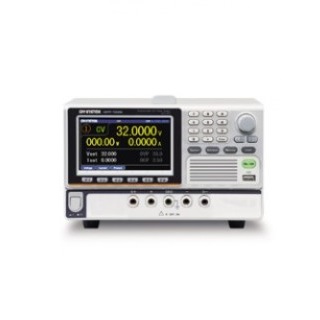
Why calibration matters for programmable DC power supplies
Unlike basic fixed-output supplies, programmable DC units are often integrated into validation systems, production fixtures, burn-in stations, and automated test environments. In these applications, the power supply is not just providing energy; it is part of the measurement and control chain. Small deviations in programmed output can affect product testing, component characterization, and pass/fail decisions.
Regular calibration helps verify that key parameters such as output voltage, output current, and programmed setpoint behavior remain within acceptable tolerance. It also supports quality systems that require documented equipment performance over time. For organizations using multiple types of sources, it may also be useful to review broader DC power supply calibration services when non-programmable units are also in scope.
What this service typically covers
A programmable DC power supply calibration process generally focuses on verifying how accurately the instrument delivers commanded output values and how consistently it behaves across its operating range. This often includes checks at multiple voltage and current points rather than a single nominal setting, since programmable supplies are commonly used under varying test conditions.
Depending on the unit and application, calibration may also evaluate front-panel programming behavior, remote control output consistency, and output stability under defined load conditions. The goal is not to restate a datasheet, but to confirm that the instrument performs as expected in real operating scenarios where repeatability and traceability matter.
Suitable for a wide range of brands used in test and production
This category is relevant for many widely used laboratory and industrial platforms. Typical examples include services for equipment from KEYSIGHT, TEKTRONIX, YOKOGAWA, KEITHLEY, Rohde & Schwarz, OMRON, BKPRECISION, EXTECH, GW INSTEK, and Advanced Energy. Brand coverage matters because programmable supplies are deployed across very different environments, from bench verification to embedded system validation and production support.
Representative services in this category include KEYSIGHT DC Power Supply Calibration Service, TEKTRONIX DC Power supply calibration service, OMRON DC Power supply calibration service, Advanced Energy DC Power supply calibration service, and YOKOGAWA DC Power supply cablibration service. These examples illustrate the scope of supported equipment without limiting the category to only one manufacturer family or one style of programmable source.
When to consider recalibration
Calibration intervals are usually determined by quality procedures, usage frequency, operating environment, and the criticality of the power source in the process. A supply used daily in production or verification workflows may need closer control than one used occasionally for general bench work. Environments with thermal variation, transport between sites, or heavy electrical loading can also increase the need for periodic checks.
Recalibration is often worth considering after repair, after unexpected overload events, when test results begin to drift, or when an audit requires updated traceable records. In regulated or tightly controlled industries, documented calibration status supports both internal quality management and customer-facing compliance expectations.
How programmable models differ from general DC supplies
The defining value of these instruments is programmability: users can set outputs precisely, sequence conditions, or integrate the supply into software-driven systems. Because of that, calibration is not only about confirming that output exists, but about confirming that commanded values correspond accurately to delivered values across the intended use range.
This distinction becomes especially important in automated environments where a power supply may change levels repeatedly during a test script. If your operation uses a mix of standard and programmable units, comparing this category with AC power supply calibration services or other related service groups can help define the right maintenance approach for each instrument type.
Common application environments
Programmable DC power supplies are commonly found in electronics development, product validation, service centers, industrial maintenance labs, educational research facilities, and automated manufacturing lines. In each case, the instrument may be used to simulate operating conditions, stress devices, power prototypes, or verify system behavior under controlled electrical inputs.
Where the power supply becomes part of a larger measurement workflow, calibration contributes to overall test reliability. It reduces uncertainty when engineers compare results over time, across stations, or between production lots. This is particularly valuable when data quality affects troubleshooting decisions, release criteria, or customer acceptance testing.
Choosing the right calibration path
Not every power source should be handled under the same service scope. The correct option depends on whether the unit is programmable, whether it belongs to a specialized class, and how it is used in practice. For example, highly application-specific sources may require a different service path than a standard bench supply. If your equipment portfolio includes more advanced source architectures, you may also want to review plasma power supply calibration services for systems outside conventional DC bench applications.
It is also helpful to identify the manufacturer family early, especially when managing mixed fleets. Users working with platforms from Advanced Energy, KEITHLEY, or YOKOGAWA often have different operational contexts than teams using compact bench supplies from GW INSTEK or EXTECH, even though the need for verified output accuracy remains the same.
Support for traceable maintenance and long-term equipment performance
Calibration is part of a broader asset management strategy for electrical test equipment. A properly maintained programmable power supply helps reduce avoidable troubleshooting time, supports repeatable setups, and keeps critical test infrastructure aligned with quality requirements. Over time, this can improve confidence not just in the instrument itself, but in the products and processes that depend on it.
Whether you are managing a single lab source or a larger installed base across engineering and production, this category helps you find the appropriate service support for programmable DC power equipment. Reviewing the available brand-specific services in this section is a practical starting point for matching your instrument type, usage pattern, and calibration needs.
-
-
-
-
-
-
-
-
-
-
-
-
-
-
-
-
-
-
-
-
-
-
-
-