


Water bath calibration service
Reliable temperature control is essential in many laboratory workflows, from sample preparation and reagent warming to stability studies and routine quality control. When a water bath drifts away from its setpoint or develops uneven temperature distribution, the impact can extend to repeatability, traceability, and confidence in test results. This is why water bath calibration service is an important part of laboratory equipment maintenance.
On this page, you can explore calibration support for common laboratory water bath systems used in research, testing, pharmaceutical, and industrial lab environments. The goal is not only to confirm temperature performance, but also to help laboratories keep critical thermal processes aligned with internal quality requirements and practical operating needs.
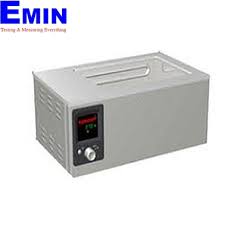
Why water bath calibration matters in laboratory work
A water bath is often treated as a simple heating device, but in practice it supports processes that depend on stable and verifiable thermal conditions. Even small deviations in temperature can affect incubation steps, viscosity behavior, warming times, or sample handling consistency. Regular calibration helps verify that the displayed value and the actual bath condition remain within an acceptable range for the intended task.
Calibration is also useful for identifying issues that may not be obvious during day-to-day use, such as sensor drift, control instability, or non-uniform heating within the bath chamber. For laboratories working under internal SOPs or regulated quality systems, documented calibration supports better traceability and can simplify equipment review during audits.
What is typically evaluated during calibration
In most cases, a calibration process focuses on the thermal performance that matters in actual use. This commonly includes checking the relationship between the set temperature and the measured temperature, assessing temperature accuracy, and reviewing whether the bath maintains stable conditions over time. Depending on the equipment and service scope, temperature uniformity across the working area may also be considered.
For users selecting a service, it is helpful to think beyond a single reading at one point. A laboratory water bath may appear functional while still showing meaningful variation under operating conditions. A good calibration approach helps establish whether the unit is suitable for routine tasks, comparison work, or more tightly controlled applications where thermal consistency is especially important.
Suitable for common laboratory water bath brands
This category includes service options for well-known laboratory equipment manufacturers. Examples available here include support related to Lauda, MEMMERT, CRYSTE, and DaiHan water bath systems. Brand-specific references can be helpful when laboratories need calibration aligned with the equipment they already use across multiple benches or departments.
Representative services in this category include Lauda Laboratory Water Bath Calibration Service, MEMMERT Water Bath Calibration Service, CRYSTE Water Bath Calibration Service, and DAIHAN Shaking Water Bath Calibration Service. These examples reflect the practical need to calibrate both standard laboratory baths and models used in applications where agitation or process consistency is part of the workflow.
How to choose the right calibration service
The best fit usually depends on how the water bath is used, how critical the temperature control is, and what level of documentation your laboratory requires. A unit used for general warming may need a different evaluation depth than a bath supporting validated methods, sample conditioning, or repeatable analytical preparation. Before booking service, it is useful to confirm the operating range normally used, the measurement points of interest, and whether the bath is a standard or shaking model.
It is also worth considering the wider equipment environment in the lab. If thermal control and sample preparation are part of a broader quality program, related services such as pharmacy refrigerators calibration or rotary evaporator calibration may help maintain a more consistent equipment management strategy across the laboratory.
Common applications that benefit from calibrated water baths
Water baths are widely used wherever gentle and controlled heating is required. Typical applications include warming media and reagents, preparing samples prior to analysis, supporting microbiology or biochemical procedures, and maintaining materials at a target temperature during processing. In these contexts, calibration supports better confidence that the actual bath condition matches the process expectation.
The value of calibration becomes even clearer when laboratories compare data over time or across multiple instruments. If several departments rely on water baths for similar procedures, calibration helps reduce uncertainty caused by equipment-to-equipment variation. This can be especially relevant in pharmaceutical, clinical, educational, and industrial QA laboratories.
Calibration support for standard and shaking water baths
Not all water baths operate in exactly the same way. Standard baths focus primarily on controlled heating, while shaking models add motion to improve mixing, heat transfer, or process consistency for certain applications. Because of this, the service approach may need to reflect the equipment design and the way the bath is actually used in routine work.
For example, the DAIHAN Shaking Water Bath Calibration Service is relevant for users who need confidence in a system where temperature performance is part of a more dynamic operating environment. Likewise, laboratories using CRYSTE, MEMMERT, or Lauda units may prefer brand-referenced service options that align naturally with their installed equipment base and maintenance planning.
Related calibration services in the laboratory environment
Water baths are only one part of a controlled laboratory setup. In many facilities, calibration planning covers multiple devices that affect safety, storage conditions, and process reliability. Depending on your workflow, it may also be useful to review services such as biosafety cabinet calibration for controlled work areas or other equipment categories linked to method quality and compliance.
Looking at calibration as a connected system rather than a single service often makes equipment management more practical. It helps laboratories align maintenance intervals, reduce unplanned performance issues, and keep critical devices under better operational control throughout their service life.
Choosing a service with practical laboratory needs in mind
When reviewing options in this category, focus on the intended application, the type of water bath in use, and the level of confidence required for your process. A service that fits actual operating conditions is more useful than one chosen only by equipment name. This is particularly true for laboratories that use baths daily for repeatable preparation steps or temperature-sensitive handling.
Whether you are working with a Lauda, MEMMERT, CRYSTE, or DaiHan unit, a well-matched calibration service helps support temperature stability, equipment traceability, and more dependable laboratory operation. If your team manages several controlled devices, combining water bath calibration with other relevant lab equipment services can also make long-term maintenance planning more efficient.
-
-
-
-
-
-
-
-
-
-
-
-
-
-
-
-
-
-
-
-
-
-
-
-