


Counting Scale Inspection Service
Accurate piece counting is critical in inventory control, packing, kitting, and incoming goods verification. When a counting scale drifts out of tolerance or no longer performs consistently, even small errors can multiply into stock discrepancies, production delays, and avoidable waste. A professional Counting Scale Inspection Service helps verify that the equipment is functioning properly and remains suitable for day-to-day counting tasks.
This service category is intended for companies that rely on counting scales in manufacturing, warehouses, electronics assembly, parts distribution, and general industrial operations. Whether you use compact bench units for small components or counting systems integrated into broader weighing workflows, regular inspection supports more reliable results and helps reduce uncertainty in piece-count-based processes.
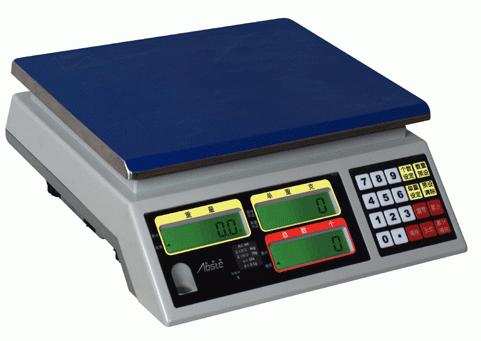
Why counting scale inspection matters
A counting scale does more than display weight. In practical use, it estimates quantity based on unit weight, which means performance depends on stable weighing behavior, proper resolution, and consistent response under normal operating conditions. If the scale is affected by mechanical wear, environmental influences, or setup issues, count accuracy can be compromised even when the problem is not immediately obvious.
Routine inspection is useful for businesses that handle screws, fasteners, electronic parts, molded items, small metal components, or other repetitive products where quantity verification is part of the process. In these environments, counting accuracy directly affects stock records, order fulfillment, and internal traceability.
What is typically checked during the service
A counting scale inspection generally focuses on the condition and performance of the instrument in relation to its intended application. This can include checking weighing behavior, display response, repeatability, general operating condition, and whether the scale performs consistently enough for reliable counting work. The goal is not simply to confirm that the device powers on, but to assess whether it remains dependable in real operating use.
Because counting scales are often used in repetitive workflows, inspection also helps identify issues that may not be noticed during routine operation, such as unstable readings, drift, poor zero return, or inconsistent response with small loads. These checks are especially important where operators depend on the scale for batch preparation, inventory counts, or packaging verification.
Suitable for a wide range of brands and installed fleets
Many industrial sites operate mixed fleets of weighing equipment from multiple manufacturers. This category includes service options for commonly used brands such as AND, OHAUS, KERN, PCE, CAS, and JADEVER. This makes it easier to align inspection planning with the equipment already in use across different departments or locations.
Examples in this category include the AND Counting Scale Inspection Service, OHAUS Counting Scale Inspection Service, KERN Counting Scale Inspection Service, PCE Counting Scale Inspection Service, CAS Counting Scale Inspection Service, and JADEVER Counting Scale Inspection Service. These listings help buyers identify a service path that matches the brand of scale deployed on site, while keeping the focus on inspection suitability rather than on unnecessary model-by-model complexity.
When to schedule a counting scale inspection
Inspection is commonly considered when a counting scale is used frequently, moved between workstations, exposed to vibration or dust, or involved in quality-sensitive inventory handling. It is also sensible after a long period of operation, after unusual readings have been observed, or before internal audits where weighing and counting records need to be more dependable.
For many companies, the right timing depends on usage intensity and process risk. A scale used occasionally for non-critical stock checks may have a different inspection interval from one used daily for packing accuracy or component issuing. In practice, inspection intervals are often determined by how heavily the equipment is used and how costly a counting error would be in the process.
How to choose the right service category
The best fit depends on the type of weighing equipment and the way it is used. If the main task is piece counting of uniform items, this category is the most relevant starting point. If your operation relies on other weighing formats, a more specialized service may be more appropriate, such as precision scale inspection for higher-resolution weighing tasks or floor scales inspection service for larger platform-based weighing applications.
Choosing the correct category helps ensure that the inspection approach matches the equipment’s role in production or logistics. It also supports clearer service planning for maintenance teams that manage multiple scale types across the same facility.
Common application environments
Counting scales are widely used where fast quantity determination is needed without counting each item manually. Typical environments include spare-parts stores, assembly lines, packaging stations, component warehouses, and incoming inspection areas. In these settings, the scale often becomes part of a larger operational chain that includes stock control, replenishment, and order preparation.
Because these workflows depend on repeatable results, inspection has a practical role in helping maintain process consistency. A scale that behaves reliably can support smoother transactions between warehouse, production, and quality teams, especially where large volumes of small parts are handled every day.
Related inspection services in a broader weighing program
Some companies manage weighing equipment as part of a wider inspection and maintenance program rather than treating each device separately. In that context, counting scales may sit alongside other devices used for specialized weighing tasks, including crane scale inspection service in lifting applications or moisture analyzer inspection service where material moisture is part of quality control.
Looking at the full weighing environment can simplify planning, especially for plants with multiple departments and different equipment risks. It also helps maintenance and purchasing teams organize service decisions more effectively across the installed base.
Supporting more reliable counting workflows
A well-planned inspection process helps reduce uncertainty in operations where quantity matters as much as weight. For businesses that rely on counting scales to support inventory accuracy, packing efficiency, and repeatable production handling, this service category provides a practical route to keep equipment performance under review.
If your team uses branded systems from AND, OHAUS, KERN, PCE, CAS, or JADEVER, selecting the appropriate inspection service is a straightforward way to support operational reliability. Over time, that can contribute to better control of counting-related errors and more confidence in daily weighing-based decisions.
-
-
-
-
-
-
-
-
-
-
-
-
-
-
-
-
-
-
-
-
-
-
-
-