


Surface Grinder Repair Service
When a surface grinder starts losing accuracy, the impact usually appears quickly on part quality, surface finish, and downstream inspection results. In production, toolroom, and maintenance environments, even small issues such as spindle vibration, feed inconsistency, or table movement errors can lead to scrap, rework, and avoidable machine downtime. A reliable Surface Grinder Repair Service helps restore machine condition so grinding operations can return to stable, repeatable performance.
This category is intended for businesses that need support for diagnosing, repairing, and restoring industrial surface grinding equipment. Whether the issue involves wear from long-term use or an unexpected mechanical fault, repair work is often the most practical path to extending machine life while protecting process consistency.
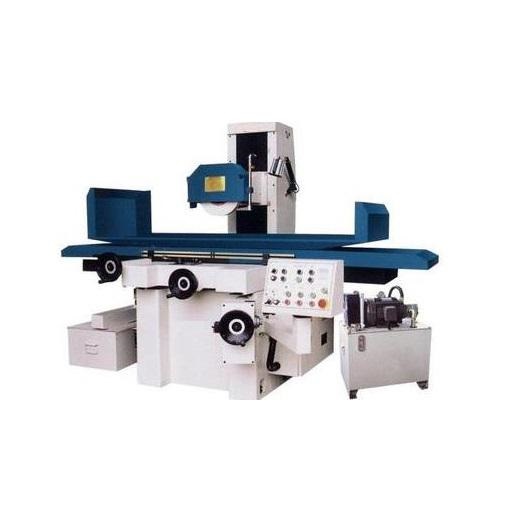
Why surface grinder repair matters in industrial environments
Surface grinders are used where flatness, finish quality, and dimensional control are important. Because these machines depend on precise motion and stable grinding conditions, deterioration in one subsystem can affect the entire process. Common symptoms may include reduced surface quality, difficulty holding tolerances, unusual noise, overheating, or irregular table travel.
Timely repair can help prevent a minor fault from becoming a larger mechanical or operational problem. In many cases, addressing wear, alignment issues, or damaged components early supports better machine availability and reduces disruption to production schedules, tool maintenance, or specimen preparation workflows.
Typical service scope for surface grinder repair
A surface grinder repair request often begins with fault identification and condition assessment. Depending on the machine and the symptoms observed, service may involve inspection of the spindle system, drive mechanisms, table movement, feed components, controls, and other critical assemblies that influence grinding accuracy and repeatability.
The goal of repair service is not only to get the machine running again, but to restore dependable operation for the intended application. This is especially important when the grinder supports precision work, metrology-related preparation steps, or repeat production tasks where inconsistency can create a chain of quality problems.
Examples of repair services in this category
This category includes representative services for different machine types and brands. Examples include the SMAC Surface Grinder Repair Service, which is relevant for facilities using SMAC grinding equipment, as well as the INSIZE Caliper End Grinding Machine Repair Service and the HST Belt Surface Grinding Specimen Machine Repair Service for more specialized grinding-related applications.
These examples show that repair needs can vary significantly depending on machine design and use case. Some equipment is focused on general surface grinding, while others are tied to inspection preparation or end-finishing tasks. For buyers and maintenance teams, this makes it important to match the service request to the actual machine type, fault symptoms, and operational role of the equipment.
How to choose the right repair service
The most effective starting point is a clear description of the problem. Useful information often includes the machine brand, service history, fault behavior, operating condition, and whether the issue affects accuracy, movement, grinding quality, or overall machine startup. When this information is available early, service planning becomes more efficient and the repair path is easier to define.
It is also helpful to consider whether the machine is part of a broader equipment line from manufacturers such as INSIZE, SMAC, or HST. Brand context can support parts identification and service alignment, but the core selection criteria should still be based on the machine’s actual condition, process role, and the business impact of downtime.
Related machinery service needs across the workshop
Surface grinders are rarely the only machines that require maintenance attention in an industrial facility. Workshops that operate forming, cutting, and finishing equipment often need coordinated support across multiple machine groups. In that context, it can be useful to review related services such as cutting machine repair service when troubleshooting production bottlenecks that involve more than one process step.
Facilities with heavy fabrication or press-based operations may also need complementary support like hydraulic stamping machine repair service. Looking at machinery maintenance as a connected system often helps reduce repeated downtime and improves planning for both urgent repairs and preventive service activities.
Applications where repair support is especially important
Repair demand is often highest in environments where grinding equipment is used regularly for finishing, reconditioning, preparation, or dimensional correction. This includes toolrooms, maintenance departments, industrial manufacturing sites, and quality-related workflows where the grinder contributes directly to functional part quality or test preparation.
In these settings, machine reliability affects more than a single workstation. A grinder that performs inconsistently can delay inspection, disrupt supporting operations, and create uncertainty in process outcomes. Repair support therefore plays both a maintenance role and a quality-control role within the broader production environment.
Supporting longer machine life and more stable operation
Well-managed repair work can be an important part of extending the usable life of industrial grinding equipment. Instead of replacing a machine immediately after faults appear, many businesses first evaluate whether targeted restoration can recover acceptable performance and return the asset to productive use.
For organizations that rely on precision grinding or grinding-related finishing equipment, this category provides a focused starting point for identifying suitable surface grinder service options. Reviewing the available repair offerings and matching them to the specific machine condition can help maintenance and purchasing teams make a more informed decision with less operational risk.
Choosing the right service ultimately comes down to machine type, fault symptoms, and the level of performance the application requires. If your grinding equipment is showing signs of wear, instability, or reduced accuracy, exploring the repair solutions in this category is a practical next step toward restoring dependable operation.
-
-
-
-
-
-
-
-
-
-
-
-
-
-
-
-
-
-
-
-
-
-
-
-