


Hydraulic press
When a workshop needs controlled pressing force for assembly, straightening, bearing service, bending, or general repair work, the choice of equipment has a direct impact on safety, repeatability, and productivity. A hydraulic press is widely used in maintenance shops, fabrication environments, and industrial production because it can generate high force in a compact structure while remaining relatively simple to operate.
On this page, you can explore hydraulic press solutions for different force ranges and operating methods, from hand-operated workshop presses to pneumatic-hydraulic models for heavier and more frequent use. The category is especially relevant for users comparing frame size, stroke, working range, and the level of operator effort required for daily tasks.
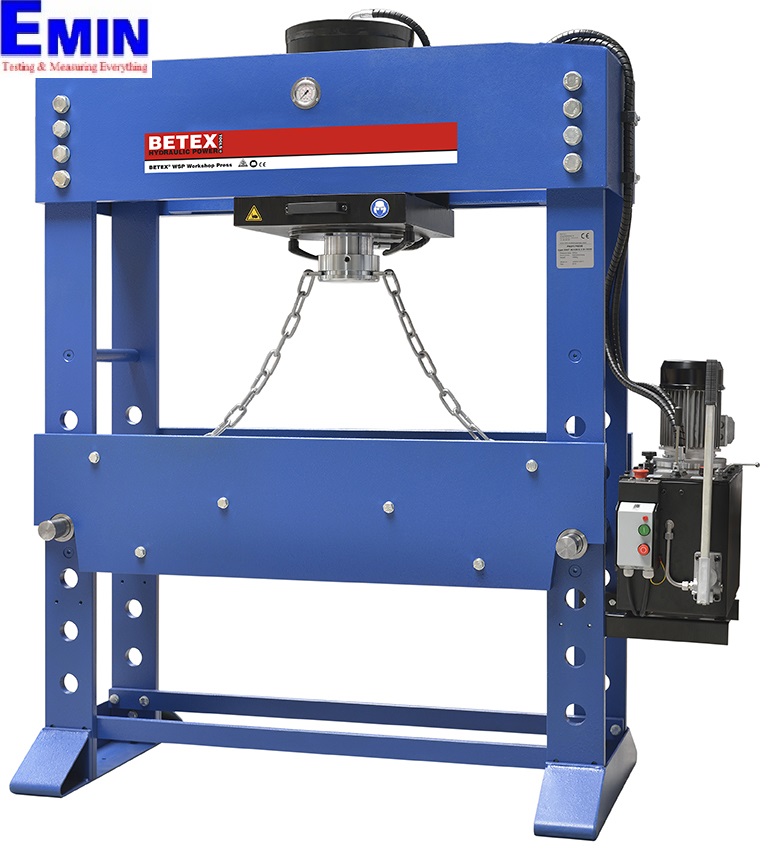
How hydraulic presses work in practical applications
The operating principle is based on Pascal's law: pressure applied to hydraulic fluid is transmitted through the system and converted into pressing force at the cylinder. In practical terms, this allows a relatively small input force to create much higher output force at the ram, which is why hydraulic presses are common in repair bays, machine shops, and manufacturing lines.
A typical press system includes a frame, hydraulic cylinder, pump mechanism, working bed, and control elements that guide the pressing action. Depending on the design, the force can be generated manually or assisted by compressed air. If you are evaluating the broader hydraulic system around the press, it can also be useful to review related components such as a hydraulic cylinder or a hydraulic pump.
Common hydraulic press structures and key components
Although models vary in size and force capacity, most presses share the same core structure. The rigid frame supports the load and keeps the work area aligned, while the cylinder and piston create the pressing movement. Control valves, hydraulic oil flow paths, and the reservoir work together to maintain stable pressure and smooth operation.
For buyers comparing machines across this category, the most important construction details are usually the frame opening, working distance, piston stroke, and the accessibility of the pressing area. These factors influence whether the press is better suited for bearing insertion, shaft work, component removal, bending operations, or general-purpose service work.
Manual and pneumatic-hydraulic presses: choosing the right operating method
A useful way to compare this category is by operating method. Hand-operated hydraulic presses are often selected for maintenance jobs, lower duty cycles, or workshops that need solid pressing force without relying on an air supply. Pneumatic-hydraulic presses, by contrast, reduce operator effort and are often preferred when pressing operations are repeated frequently or when higher tonnage is needed in a more efficient workflow.
In the current range, hand-operated examples include the KOCU TY12001, KOCU TRSP15HL, KOCU TY20001, and KOCU TY40002. For users needing air-assisted operation, models such as the KOCU TRSP20HAM, KOCU TRSP30HAM, KOCU TRSP50HAM, and KOCU TY75021 illustrate the move toward heavier-duty pressing with less manual effort. Horizontal configurations also exist for specific forming or bending tasks, as seen with the METALEX HHB-22.
Examples across tonnage ranges in this category
Capacity is one of the first filters buyers use, but tonnage should always be considered together with stroke and working space. Lower-capacity presses such as the 12-ton KOCU TY12001 or the 15-ton KOCU TRSP15HL may be appropriate for lighter workshop jobs and component service. Mid-range options like the KOCU TY20001, KOCU TRSP20HAM, KOCU TY30002, and YATO YT-55582 support more demanding repair and assembly work.
For heavier applications, the category also includes 40-ton, 50-ton, and 75-ton examples such as the KOCU TY40002, KOCU TY50001, KOCU TRSP50HAM, and KOCU TY75021. These models are typically considered when users need more pressing force for larger parts, more resistant fits, or a wider range of workshop and industrial tasks. If you want to browse more equipment from one of the key brands in this segment, the KOCU product range is a natural place to continue.
What to evaluate before selecting a hydraulic press
Force rating matters, but it is only one part of the decision. A more reliable selection process starts with the type of workpiece, the frequency of use, available installation space, and whether the operator needs manual or air-assisted control. The distance between columns, the vertical working range, and the piston stroke all affect whether the machine can accommodate your parts comfortably and safely.
It is also important to consider operator workflow. A press used occasionally for maintenance may not need the same speed or convenience as a machine installed in a production support area. Some users also prefer models with easier force monitoring or a more suitable head arrangement for alignment. In this context, models like the KOCU TY50001 with gauge or the KOCU TY12001 with top center dial head can be relevant depending on how the press will be used.
Typical applications in workshops and industrial environments
Hydraulic presses are used in a wide variety of settings because they support both service and production-related tasks. Common applications include fitting and removing bearings, bushing work, shaft and sleeve assembly, metal straightening, and other operations where controlled compressive force is required. In automotive service, they are often used for maintenance and repair procedures involving interference-fit components.
In fabrication or manufacturing environments, presses may also support forming and bending work, especially when paired with the right tooling and working geometry. Users comparing vertical frame presses with specialized alternatives may also find it helpful to look at related lifting and force-application equipment, including hydraulic spreader and lifting tools, depending on the application environment.
Brands represented in the category
This category prominently features solutions from YATO, KOCU, and METALEX. Each brand appears in different use cases within the hydraulic press segment, from straightforward hand-operated workshop presses to higher-capacity pneumatic-hydraulic units and horizontal press designs for specialized operations.
KOCU is especially visible in the current selection, with multiple tonnage levels that make it easier to compare manual and air-assisted configurations within one brand family. YATO offers a practical hand-operated option for workshop users, while METALEX adds a horizontal hydraulic press format that can suit bending and forming tasks where a conventional vertical frame is not the ideal choice.
Final considerations for hydraulic press selection
The right hydraulic press depends on matching force capacity, stroke, frame dimensions, and operating method to the real work being done. For occasional service tasks, a compact hand-operated model may be sufficient, while repetitive or higher-load applications often benefit from pneumatic-hydraulic assistance and a larger working envelope.
By comparing capacity ranges, structural layout, and application fit across the products in this category, buyers can narrow down the most suitable solution for workshop maintenance, automotive service, or industrial pressing work. If your process also depends on supporting hydraulic components, reviewing the wider hydraulic equipment ecosystem can make the final selection more efficient and technically consistent.
-
-
-
-
-
-
-
-
-
-
-
-
-
-
-
-
-
-
-
-
-
-
-
-