

Solar simulation test chamber
When photovoltaic cells, modules, and related materials need to be evaluated under controlled light conditions, test repeatability becomes just as important as raw irradiance. A solar simulation test chamber helps create a stable and measurable environment for light soaking, IV characterization, and solar exposure testing, supporting both product development and quality verification in research and industrial workflows.
In this category, you can find systems designed for different test scales, from compact integrated IV platforms to large-area solar simulators and dedicated light soaking chambers. These solutions are relevant for solar cell laboratories, PV module manufacturers, reliability testing programs, and organizations that need controlled illumination with defined spectral and thermal conditions.
Where solar simulation test chambers are used
Solar testing does not always mean the same thing. In some workflows, the goal is to measure electrical performance under simulated sunlight. In others, the priority is exposing samples to controlled irradiance over time, or verifying behavior under elevated temperature and stable back-surface conditions. That is why this category covers more than one equipment format.
These systems are commonly used in PV cell and module evaluation, material screening, incoming inspection, process validation, and R&D. For example, a chamber-based light soaking setup may be chosen for preconditioning and prolonged exposure, while an integrated simulator with measurement capability is often preferred when IV testing and parameter calculation need to be performed in one platform.
Typical equipment types in this category
One important group is the integrated solar simulator and IV test system. Models such as the OAI TSS-300 Integrated IV Test System and OAI TSS-500 are designed for controlled illumination together with electrical characterization. In practical terms, this type of system supports measurement of key PV parameters while maintaining specified light output and uniformity.
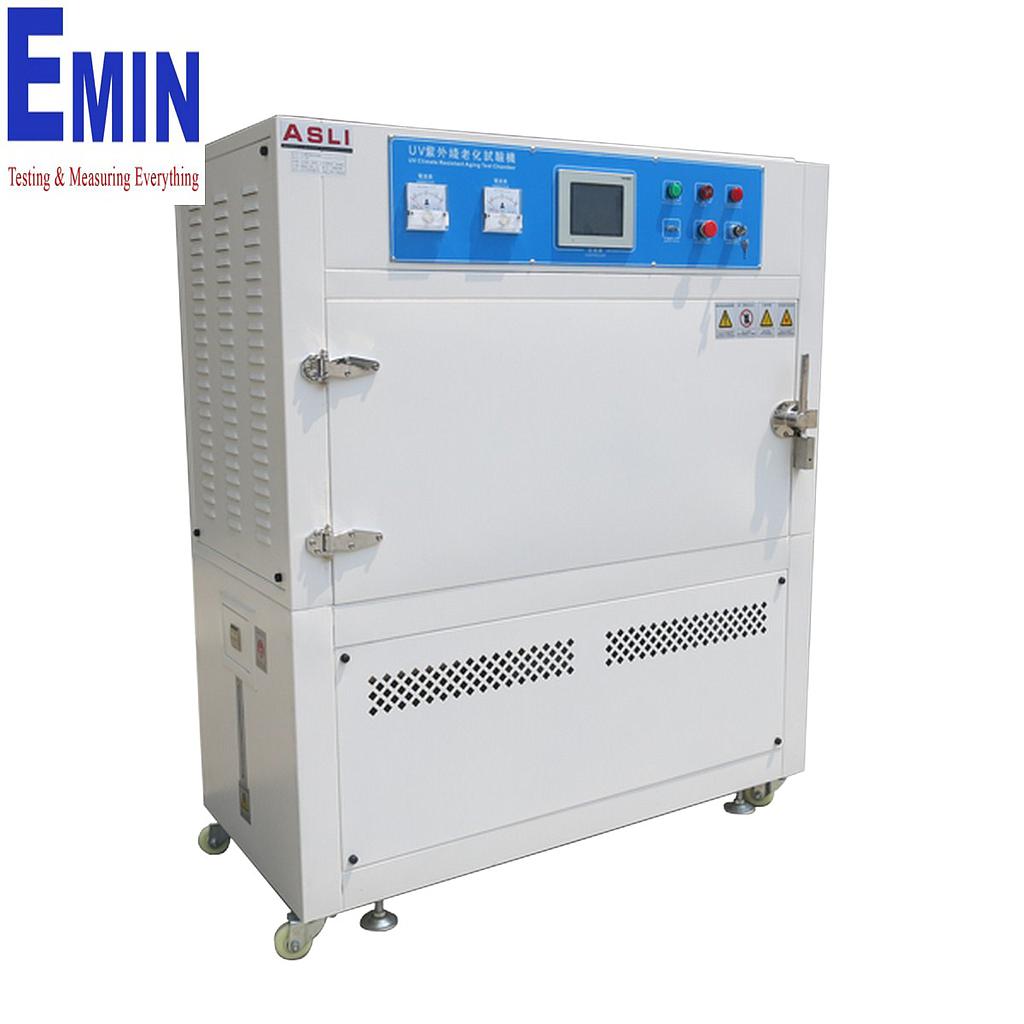
Another group focuses on light soaking and environmental control during irradiation. The T-MACHINE TMJ-9769 Light Soaking Chamber is an example of equipment intended for module-level exposure under controlled temperature conditions. This type of chamber is useful when the test procedure requires not only illumination but also stable thermal management across the sample.
For larger test objects or specialized solar applications, the category also includes large-area and CPV-oriented simulators. OAI solutions in this range cover compact concentrated photovoltaic testing as well as large illuminated areas for panels, assemblies, or room-scale setups, depending on the test objective.
Key performance factors to compare
When selecting a solar simulation test chamber, the first point to review is the required irradiance level and spectrum. Some applications target standard 1 Sun conditions, while others require multiple Suns for CPV-related testing. Spectrum options such as AM 1.5G, AM 1.5D, or AM0 can also matter depending on whether the work is terrestrial, concentrator, or aerospace oriented.
Uniformity and temporal stability are equally important. A simulator may provide sufficient power, but if spatial distribution is inconsistent or intensity drifts during the measurement window, the data can become difficult to compare across batches or test runs. For this reason, many buyers evaluate spatial uniformity, temporal stability, and spectral match together rather than looking at lamp power alone.
Sample size is another practical filter. Smaller integrated systems may suit cell- or coupon-level testing, while module and large-area work requires a significantly larger illumination field. In chamber-based setups, internal dimensions, working distance, and accessible sample area should be reviewed alongside handling needs and test throughput.
Examples of solutions for different testing needs
For lab-scale performance testing, OAI offers several integrated platforms with different illuminated areas and lamp power levels. Systems such as the TSS-156, TSS-208, and TSS-300 help address varying sample sizes while keeping the workflow centered on simulator-based electrical characterization. This makes them suitable for users who need a balance between compact installation and dependable PV measurement capability.
Where larger modules or broader illuminated surfaces are involved, the OAI portfolio extends into large-area PV and IR solar simulators. These configurations are relevant when the test setup must accommodate wider targets, more demanding working distances, or room-scale exposure concepts that go beyond a standard benchtop simulator.
For controlled preconditioning or irradiation under defined thermal conditions, T-MACHINE provides a more chamber-oriented approach. A light soaking chamber can be especially useful when standards or internal protocols require stable backside temperature control, exposure repeatability, and enclosed operation during long-duration tests.
How to choose the right system
A practical selection process starts with the sample itself: cell, small panel, full module, material coupon, or CPV device. From there, it becomes easier to match the required illuminated area, beam geometry, and intensity range. If the workflow includes direct electrical characterization, an integrated IV system is often more efficient than combining separate light and measurement equipment.
The next step is defining the test method. Some teams mainly need quick comparative measurements, while others must align with standards such as IEC 60904-9 or maintain strict control over class, uniformity, and repeatability. In those cases, the quality of the simulated sunlight and the consistency of the optical setup are central purchasing criteria.
It is also worth considering surrounding lab infrastructure. Larger simulators can involve substantial power requirements, working distance constraints, and safety planning. If your project also depends on supporting thermal processing or material evaluation equipment, related categories such as industrial furnaces or water vapor transmission rate test systems may be relevant in the broader qualification workflow.
Why controlled solar simulation matters
Outdoor exposure can provide valuable real-world information, but it is difficult to control and even harder to reproduce. A dedicated solar simulation test chamber allows users to work with known light conditions, defined exposure parameters, and more consistent thermal behavior. This improves comparability between samples, supports method validation, and reduces uncertainty in product development decisions.
For B2B users, the value is not only in generating a single measurement. It is in building a repeatable test process that can be used across R&D, incoming quality checks, production support, and failure analysis. The right simulator or chamber helps connect engineering work with manufacturing reality by making test data more stable and easier to interpret.
Find a suitable solar simulation platform for your application
This category brings together solar simulation systems for a range of PV testing needs, including light soaking chambers, integrated IV systems, CPV simulators, and large-area solar simulators. Whether the priority is module exposure, cell characterization, concentrated solar testing, or controlled irradiation at scale, the right configuration depends on the relationship between spectrum, intensity, sample size, and thermal control.
If you are comparing options, start with the intended test method and sample format, then narrow down by illumination area, stability, and environmental control requirements. That approach usually leads to a more suitable solar simulator setup than choosing by wattage or system size alone.
-
-
-
-
-
-
-
-
-
-
-
-
-
-
-
-
-
-
-
-
-
-
-
-