


Water Purifier
Access to clean, ready-to-use drinking water is a practical requirement in offices, reception areas, meeting rooms, workshops, and shared commercial spaces. In these environments, the right dispensing solution helps improve convenience, reduce handling of bottled drinks, and provide hot or cold water on demand for staff and visitors.
Water Purifier products in this category are focused on workplace-friendly water dispensing solutions, especially hot and cold water dispensers suited to everyday office use. The range includes compact units, three-faucet designs, and higher-capacity models that support different installation spaces and user volumes.
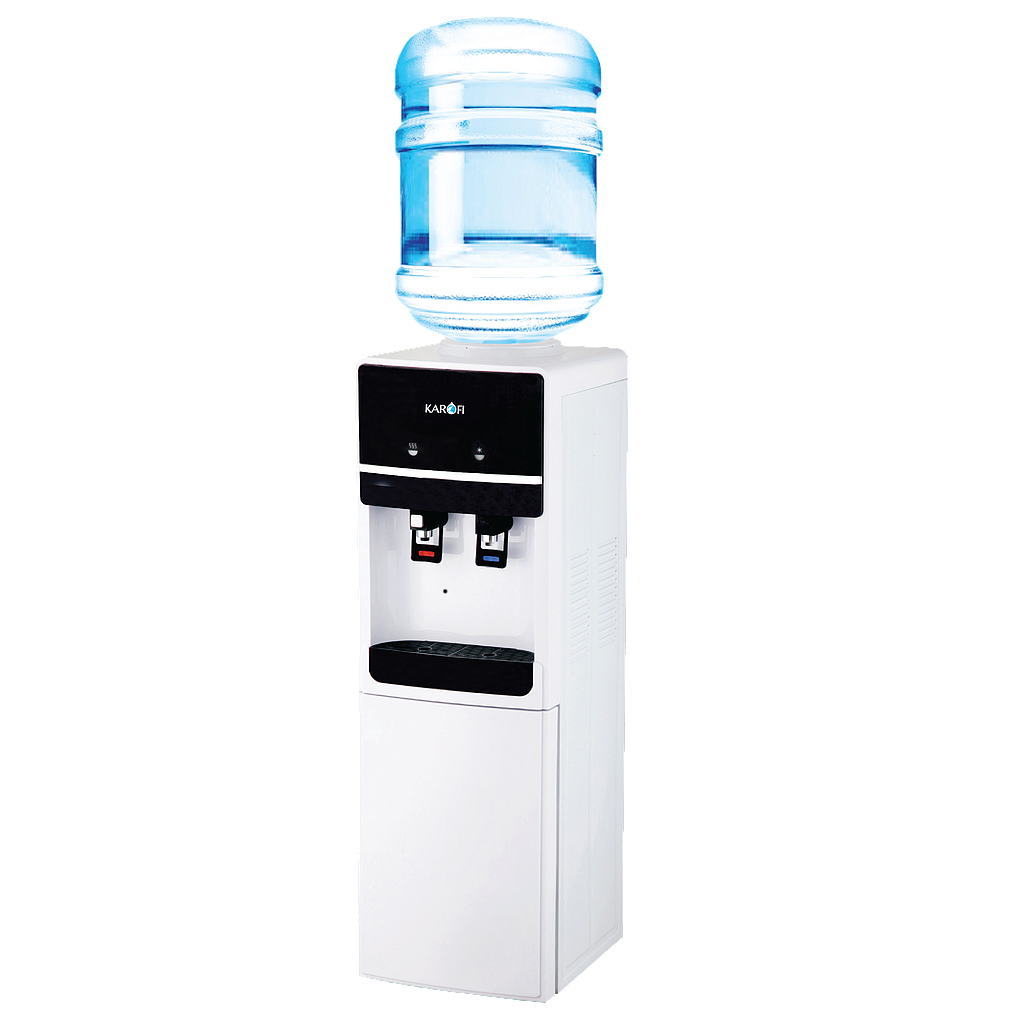
Designed for daily office and commercial use
In a typical office setting, water equipment needs to be simple to operate, easy to place, and suitable for repeated daily use. That is why many systems in this category combine hot and cold water functions in one unit, allowing users to prepare drinking water, tea, coffee, or other hot beverages without separate appliances.
Compared with general pantry appliances, these dispensers are built around continuous access to drinking water and practical temperature control. Depending on the model, users can choose between electronic cooling or block technology, along with different heating capacities and faucet configurations.
Typical product formats available
The category includes several common formats to match different workplace needs. Compact models are useful where floor space is limited, while taller freestanding units are often preferred for shared office corners, waiting rooms, or pantry areas.
Some examples from the FUJIE lineup illustrate this well. The FUJIE WD1700E is a smaller hot and cold dispenser format that can fit tighter spaces, while the FUJIE WDBY300 and FUJIE WDBY400 are more substantial freestanding options with stronger cooling performance. For users who need separate hot, normal, and cold outputs, models such as FUJIE WDBD20C and WDBD20E provide a three-faucet configuration that improves convenience in shared-use environments.
How to choose the right model
Selection usually starts with user demand rather than appearance alone. In low-traffic rooms, a lighter-duty electronic cooling model may be sufficient. In busier offices or reception areas, a dispenser with faster cooling and heating recovery can help reduce waiting time during peak use.
It is also useful to compare the expected water temperature range. Some models are designed for moderate cooling, while others can deliver colder water, such as 2-10℃ or around 4-10℃ depending on the unit. On the hot side, many options support water temperatures suitable for tea and instant beverages, and some specialized models reach boiling-level output for more demanding pantry applications.
Physical footprint matters as well. Before choosing, buyers should check available floor space, user access around the machine, and whether a simpler front-facing layout or a higher-capacity design better suits the location.
Comparing cooling and heating performance
Not every workplace uses water dispensers in the same way. A small office may only need occasional chilled and heated water throughout the day, while a customer-facing location may require faster dispensing and more stable temperature output. This is why cooling speed, heating speed, and temperature range are among the most practical comparison points.
For example, FUJIE WDX5GE and FUJIE WD1500E represent typical hot and cold units for standard daily use. If colder water output is a priority, FUJIE WDX5PC or FUJIE WDBY400 may be more relevant because they are positioned with lower cold-water temperature ranges. Meanwhile, FUJIE WD3000C stands out as a more multifunction-oriented option, combining dispenser use with a tea or coffee table concept and a higher heating temperature up to 100°C.
When reviewing specifications, buyers should focus on usable performance in real conditions: how many people will use the machine, how often hot water is needed, and whether colder output is important in the local working environment.
Brand context and product ecosystem
This category is strongly represented by FUJIE, with multiple water dispenser models covering different cooling methods, capacities, and exterior formats. That makes it easier for procurement teams to compare similar units within one brand family when they want a consistent product line across multiple office locations.
Where buyers are evaluating related workplace equipment beyond drinking water solutions, it can also be useful to review adjacent categories such as office supplies for general facility support items. In document-heavy environments, equipment such as a banding machine may also be part of the broader office operations setup.
Features that matter in shared-use environments
For office and commercial deployment, usability and safety are often just as important as raw temperature performance. Several models in this category include design elements that are especially relevant in shared spaces, such as hot-water safety locks, multiple faucet arrangements, and practical freestanding dimensions.
These details can make a noticeable difference in daily operation. A safety lock helps reduce accidental contact with hot water, while separate faucets for hot, normal, and cold water simplify use for different preferences. In reception or lounge areas, product appearance and footprint may also influence the final decision, especially when the unit is placed in a visible location.
Where these dispensers are commonly used
Water dispensers in this category are suitable for a wide range of professional environments, including offices, schools, clinics, showrooms, retail back offices, and staff rest areas. Their role is straightforward but important: provide reliable access to drinking water with less manual handling and more convenience than separate kettles and bottled beverages.
They can also be useful in service counters, meeting spaces, and waiting areas where visitors may need quick access to cold or hot water. Choosing a model with the right balance of size, temperature capability, and faucet layout helps ensure the unit fits the actual use case rather than simply meeting a basic specification.
Choosing with long-term practicality in mind
A good category comparison should go beyond model names and focus on how the unit will perform in the intended environment. For most buyers, the key questions are simple: how many users will rely on it, what temperature range is needed, how much space is available, and whether a standard or three-faucet layout is more practical.
With a range that includes compact units, higher-capacity hot and cold dispensers, and multifunction designs, this Water Purifier category supports different office and commercial water service needs. Reviewing cooling method, output speed, safety features, and installation footprint will help narrow the selection to a dispenser that fits everyday use more effectively.
-
-
-
-
-
-
-
-
-
-
-
-
-
-
-
-
-
-
-
-
-
-
-
-