


Spray gun
Surface finishing quality often depends as much on the application tool as on the coating itself. In workshops, body shops, maintenance areas, and industrial painting lines, the right spray gun helps improve transfer efficiency, coating consistency, and operator control while reducing waste and rework.
This category brings together pneumatic spray equipment and related accessories used for paint application, cleaning, and supporting tasks. Whether you need a compact gun for detail work, a larger cup setup for broader coverage, or supporting items such as hoses, cups, and pressure gauges, the selection is aimed at practical B2B requirements where reliability and process fit matter.
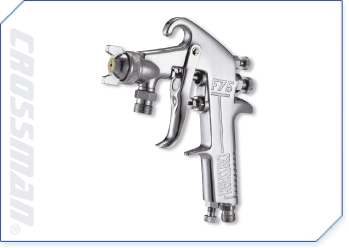
Where spray guns are used in industrial and workshop settings
Pneumatic spray guns are widely used for paint, primer, coating, and touch-up jobs across manufacturing, metal fabrication, automotive refinishing, woodworking, and general maintenance. They are chosen when a project needs an even finish, repeatable coverage, and faster application than manual brushing or rolling can provide.
In many facilities, spray equipment is part of a broader compressed-air workflow alongside tools such as air impact wrench systems and other workshop air tools. This makes compatibility with available air pressure, hose connection, and compressor capacity an important part of the buying decision.
Typical product range in this category
The category centers on air spray guns, but it also includes supporting items that help keep the coating process stable and easier to manage. Alongside standard paint guns, buyers may also look at accessories for pressure monitoring, paint supply, cup replacement, hose routing, and cleaning after use.
Examples from the current range include the TOPTUL KANA14N6 Gravity Feed Spray Gun with a 600 ml cup for general coating work, the compact Yato YT-2355 with a 100 ml fluid cup for smaller jobs, and the Yato YT-2341 with a 0.6 L cup and 1.5 mm nozzle for more typical workshop spraying tasks. For broader coverage or heavier material flow, the Yato YT-2346 provides a 1 L cup and 1.8 mm nozzle format. Supporting equipment such as the JONNESWAY JA-39760 spray gun cleaning machine and the Anest Iwata PHU-6100 paint hose also play an important role in maintaining workflow.
How to choose the right spray gun
A good starting point is the nozzle size, because it affects atomization and material flow. Smaller nozzles are often preferred for lighter coatings, touch-up work, or finer control, while larger nozzles are typically considered for higher-output application or thicker materials. The examples in this category show a useful spread, from compact 1.0 mm class options up to 1.8 mm and beyond depending on the task.
The second factor is cup capacity and gun configuration. A smaller cup can be useful when mobility and detail matter, while 600 ml or 1 L formats are more practical for continuous work over larger surfaces. Gravity-feed designs such as the TOPTUL KANA14N6 are commonly selected for efficient paint delivery and easier cleaning in many workshop environments.
Air consumption and operating pressure should also be matched to the actual compressor setup. If the gun requires a higher airflow than the air system can sustain, spray quality may become unstable. For buyers comparing multiple pneumatic tool types, it can also be useful to review related categories such as air grinder tools when planning a complete compressed-air workstation.
Brands and product ecosystems available
This category includes products from recognized names used in professional workshops and industrial maintenance. Anest Iwata is especially relevant for users looking for spray guns and accessories within the same application ecosystem, including paint hoses, pressure gauges, and replacement cups.
Other notable names in the range include YATO, TOPTUL, SATA, JONNESWAY, and IWATA. The value of brand selection in this category is not only the gun itself, but also the availability of compatible accessories and maintenance items that support daily operation over time.
Accessories and maintenance matter more than many buyers expect
A spray setup works best when the surrounding components are chosen carefully. Accessories such as the Anest Iwata AJR-02S-VG pressure gauge help operators monitor line conditions at the gun, while the Anest Iwata PCG600-P2 plastic cup supports compatible upper-cup spray systems. A suitable hose, such as the PHU-6100 paint hose, also contributes to smoother handling and consistent air and material delivery.
Cleaning is equally important. Dried residue inside the fluid path or around the nozzle can quickly affect spray pattern and finish quality. Equipment such as the JONNESWAY JA-39760 cleaning machine helps standardize post-use cleaning, which is especially useful in professional settings where multiple guns are used repeatedly through the day.
Matching the tool to the application
Not every spray task requires the same setup. For detail work, repairs, or small-part finishing, a lighter gun with a small cup may be easier to control and may reduce material waste. For larger panels or routine workshop painting, a medium-capacity gravity-feed gun is often a practical balance between output and handling.
Some buyers visiting this category may also need adjacent pneumatic tools for preparation and finishing steps. Depending on the workflow, related air-powered equipment such as air drill solutions can support fixture preparation, assembly, or maintenance activity around the coating process, even though they serve a different application than paint spraying.
What to review before placing a B2B order
For procurement teams and technical buyers, selection should go beyond the model name. It is useful to confirm nozzle size, cup volume, air inlet format, working pressure range, and expected air consumption against the site’s real operating conditions. This reduces the risk of choosing a gun that is technically compatible on paper but inefficient in daily use.
It is also worth considering whether you need a standalone gun or a more complete setup with hose, gauge, cup, and cleaning support. In many cases, the best purchasing result comes from choosing a spray system rather than looking at the gun in isolation, particularly for repeat production or maintenance-heavy environments.
Choosing with long-term use in mind
The most suitable option depends on the coating material, required finish, duty cycle, and the compressed-air resources available at the site. A compact model may be ideal for touch-up and controlled application, while larger cup and nozzle configurations are better suited to higher-volume work. Accessories and maintenance equipment should be treated as part of the decision, not as optional extras.
By comparing operating pressure, air demand, cup type, and accessory compatibility, buyers can narrow the range to tools that fit their process more naturally. That approach leads to a more stable finishing workflow and makes this spray gun category more useful as a practical sourcing point for professional workshop and industrial applications.
-
-
-
-
-
-
-
-
-
-
-
-
-
-
-
-
-
-
-
-
-
-
-
-