


SS, MLSS Controller
Stable solids measurement is a practical requirement in wastewater treatment, sludge handling, and process water control. When operators need reliable visibility into suspended solids or mixed liquor concentration, choosing the right SS, MLSS Controller helps improve process consistency, support dosing and aeration decisions, and reduce the risk of running outside target operating conditions.
This category brings together instruments used to monitor suspended solids, mixed liquor suspended solids, turbidity-related process values, and sludge blanket conditions depending on the sensor and system design. It is particularly relevant for treatment plants, industrial water systems, and facilities that need continuous solids monitoring rather than occasional grab-sample testing alone.
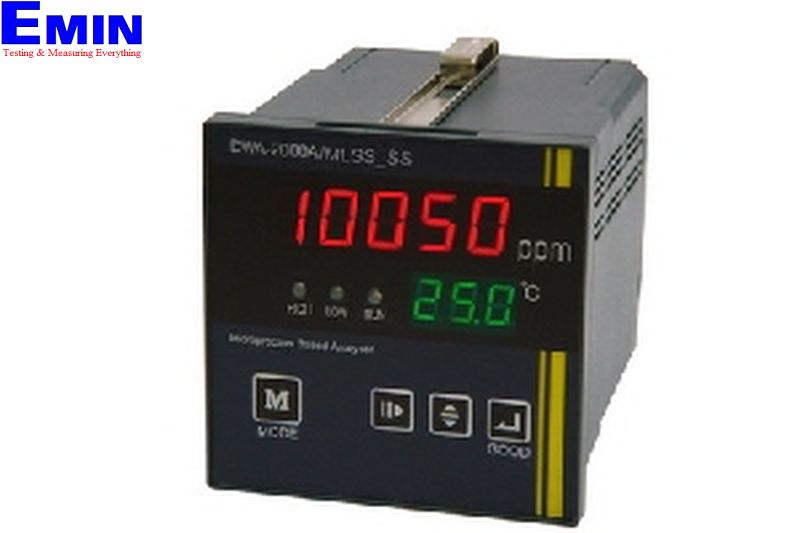
Where SS and MLSS control is used
In activated sludge processes, MLSS is one of the key operating values because it reflects the concentration of biomass in the aeration tank. Keeping that value within the intended range supports more predictable settling behavior, treatment efficiency, and sludge return control. In clarifiers and settling applications, solids-related measurement also helps operators observe sludge blanket movement and identify changing process conditions earlier.
Industrial users may also monitor suspended solids in wash water, recycling loops, or discharge streams where particulate loading affects process stability or compliance. For broader instrumentation needs across water analysis, related solutions can also be found in water quality controllers and monitors.
What these controllers typically measure
Although this category is centered on SS and MLSS, the product mix shows that solids monitoring can be implemented in different ways depending on the installation. Some devices are dedicated panel or field monitors for continuous MLSS indication, while others are portable meter sets or transmitter-based systems that can measure solids, turbidity, and sludge blanket parameters with compatible probes.
For example, the KASAHARA MC-700 and MC-502 are MLSS monitors intended for direct concentration monitoring in mg/L ranges suited to wastewater applications. In contrast, several Aqualabo ODEON meter sets are designed as portable measurement systems and can be useful when operators need field verification, spot checks, or flexible measurement at different locations. This makes the category relevant not only for fixed process control but also for maintenance and operational diagnostics.
Representative product approaches in this category
KASAHARA focuses here on dedicated MLSS monitoring. The MC-700 uses a near-infrared transmission light system and offers a wide measuring range for solids monitoring, making it suitable when continuous indication and calibration functions are important. The MC-502 is a compact MLSS monitor with analog transmission output, which fits applications where panel integration and signal transmission to a higher-level control system are required.
Aqualabo appears in this category with several ODEON open One meter sets and an ACTEON 5000 transmitter package. The ODEON configurations combine a handheld meter, digital probe, cable, and software-oriented workflow, which is useful for mobile measurement and data handling. The ACTEON 5000-based sludge blanket package is more aligned with fixed installations that need transmitter functions, programmable outputs, and integration with plant instrumentation.
How to choose the right SS, MLSS controller
The first question is whether you need continuous online monitoring or portable measurement. A fixed controller is typically preferred when solids concentration is used for routine process control, trending, alarm handling, or signal transmission to PLC/SCADA. A portable meter set is often more suitable for temporary checks, multi-point verification, commissioning, or maintenance support.
The second point is the actual parameter required at the measuring point. Some applications specifically need MLSS in aeration tanks, while others are more concerned with suspended solids, turbidity behavior, or sludge blanket level. Even when the technologies are related, the required sensor type, mounting method, and calibration workflow may differ. Buyers should also confirm whether a simple local display is enough or whether analog outputs, digital communication, memory, or relay functions are needed.
It is also worth checking installation environment, cable length, and enclosure requirements. In field installations, protection rating, cleaning strategy, and ease of calibration can affect long-term maintenance effort just as much as measuring range. If oxygen control is part of the same process area, users may also compare options in DO controllers for a more complete wastewater monitoring setup.
Fixed monitoring versus portable verification
A permanent controller is usually the better choice when operators need trend data and real-time visibility. In a biological treatment line, that can support decisions on return sludge rate, wasting strategy, or general load balancing. Dedicated units such as the KASAHARA MLSS monitors fit this type of duty because they are intended to remain part of the installed control architecture.
Portable systems serve a different but equally useful role. Aqualabo ODEON sets with 3 m, 7 m, or 15 m cable options can help technicians verify readings at different tanks or basins, especially when sampling locations vary. They can also be useful during troubleshooting, comparison checks against lab results, or temporary campaigns before a fixed measurement point is finalized.
Integration with broader water and wastewater instrumentation
Solids monitoring rarely operates in isolation. In many plants, SS or MLSS data is interpreted alongside dissolved oxygen, COD/BOD-related indicators, or other water quality parameters to understand the overall treatment condition. That is why transmitter capability, analog output, and communication options matter in real projects, especially when values need to be shared with a supervisory system.
Where the process requires additional analytical control, related categories such as COD and BOD controllers can complement solids measurement. For applications focused on purified or treated water circuits rather than sludge processes, a water resistivity controller may be more relevant than an SS or MLSS instrument.
Practical buying considerations for B2B users
When selecting equipment for a plant, it is helpful to define the measurement objective before comparing models. Clarify whether the instrument is intended for process control, data logging, operator indication, compliance support, or maintenance verification. That single step often narrows the choice between a compact controller, a transmitter-based architecture, and a portable meter set.
Buyers should also review maintenance expectations, calibration method, and installation constraints. In solids measurement, sensor fouling, sample characteristics, and process variability all influence long-term performance. A well-matched controller is not just the one with the widest range, but the one that fits the actual process, the required output signals, and the service routine of the site.
Conclusion
This SS, MLSS Controller category is designed for users who need dependable solids-related measurement in water and wastewater applications, from fixed MLSS monitoring to portable field verification and transmitter-based sludge blanket systems. With solutions from Aqualabo and KASAHARA, the range covers different operating styles and installation needs without forcing every application into the same instrument format.
If you are comparing options, start with the parameter to be measured, the preferred installation method, and the level of system integration required. That approach will make it easier to choose a controller that supports daily operation, maintenance efficiency, and clearer process visibility over time.
-
-
-
-
-
-
-
-
-
-
-
-
-
-
-
-
-
-
-
-
-
-
-
-