


Assembly and Inspection Line
Modern production depends on more than standalone machines. To keep throughput stable and product quality consistent, manufacturers increasingly rely on integrated systems that combine handling, process control, inspection, and traceable data across each stage of the line. That is where an Assembly and Inspection Line becomes a practical foundation for electronics and industrial manufacturing.
In this category, the focus is on equipment and solutions that help automate assembly steps, verify product quality in-line or near-line, and reduce manual variation. From board-level inspection to plasma surface preparation and test support, these systems are used to build more repeatable, scalable production environments.
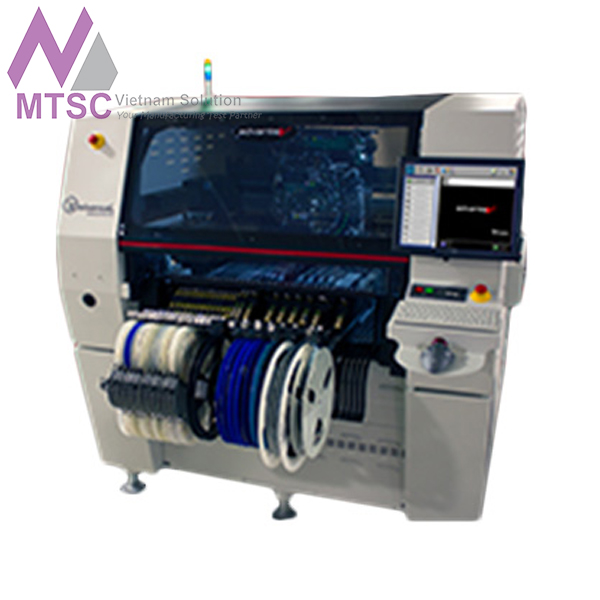
Why assembly and inspection systems matter in production
As production volumes increase and product designs become more compact, manufacturers need better control over both assembly accuracy and defect detection. An effective line is not only about moving parts from one station to another; it also needs to identify process drift early, support stable cycle times, and provide feedback that operators and engineers can act on.
This is especially important in electronics manufacturing, where small variations in solder paste, placement, surface condition, or electrical contact can affect downstream yield. A well-designed assembly and inspection setup helps reduce rework, improve first-pass performance, and support a more connected manufacturing workflow. For broader digital integration, many companies also review smart factory solutions alongside line-level equipment.
Typical equipment found in an assembly and inspection line
This category covers a broad range of systems used before, during, and after assembly. Depending on the process, a line may include workpiece handling, conveyors, soldering-related stations, inspection modules, board testing, coating equipment, or specialized automation for connectors and bonding operations.
Inspection technology plays a central role because it closes the loop between process execution and quality verification. Visual inspection, board test, flying probe testing, and surface treatment steps are often selected together rather than as isolated investments. In many cases, plasma treatment equipment is added upstream to improve cleanliness and surface energy before bonding, coating, or other critical steps.
Inspection and quality control across the line
Inline inspection is one of the most effective ways to detect defects before they propagate to later stages. In SMT and electronics assembly, solder paste inspection is particularly valuable because paste volume, height, area, and alignment directly influence solder joint quality. A system such as the TRI TR7007D Solder Paste Inspection illustrates this role well, using 3D optical inspection concepts to identify conditions such as insufficient paste, excess paste, missing paste, shape deformity, and bridging.
When process verification extends beyond optical checks, electrical test equipment becomes equally important. Flying probe systems are often chosen for flexible board testing, especially when fixture cost, product change frequency, or prototype-to-medium volume production makes conventional bed-of-nails testing less practical. If your process requires that type of test coverage, it is worth exploring the related board test and inspection systems available for electronics manufacturing workflows.
Supporting ecosystem: probes, sockets, and service parts
An assembly and inspection line is not built only around major machines. Consumables and support components also affect uptime, test reliability, and maintenance planning. In flying probe environments, items such as probe wires, probe sockets, and probe pins are essential for keeping testers in working condition and maintaining stable contact performance over time.
Examples in this category include Takaya LS-457-01 Probe Wire (2.3), Takaya LS-458-01 Probe Wire (1.4), Takaya SA941-46616PO Probe socket, and Takaya xxx-00221 Probe Pin for Takaya Flying Probe Tester. These are not standalone production systems, but they are important parts of the test ecosystem and should be considered in spare parts planning, preventive maintenance, and line support readiness. For users working specifically with this platform, the Takaya brand page can provide additional context.
Plasma treatment as a preparation step before inspection or assembly
Some production challenges cannot be solved by inspection alone. When adhesion, wetting, cleanliness, or surface activation is part of the process requirement, plasma treatment is often introduced before coating, bonding, or other sensitive operations. This makes plasma systems a relevant part of the wider assembly and inspection environment rather than a separate niche.
The product range shown here includes several Nordson plasma treatment systems, such as the AP-600, AP-1000, StratoSPHERE, FlexTRAK, FlexTRAK-S, FlexTRAK-2MB, and FlexTRAK-CDS. These examples reflect different chamber sizes and integration formats, from compact treatment systems to line-oriented configurations. Selection usually depends on substrate size, process throughput, gas control needs, and how closely the equipment must integrate with upstream and downstream stations.
How to choose the right line configuration
Choosing an assembly and inspection solution starts with the process itself. Engineers typically look at product type, takt time, inspection coverage, defect risk, changeover frequency, and the level of automation required. A line for PCB assembly will not be configured the same way as a line for connector press-fit, conformal coating, or automotive subassembly.
It is also important to consider whether the need is for a single process module, a semi-automated cell, or a connected line architecture. For some operations, adding one inspection point can significantly improve yield; in other cases, the higher value comes from linking multiple stations with traceability, handling, and feedback control. Companies comparing broader layouts may also want to review the wider assembly and inspection line portfolio in relation to future expansion plans.
Manufacturer landscape and integration considerations
This category includes solutions associated with manufacturers such as Nordson, Takaya, and TRI, while the broader automation ecosystem may also involve brands like SIEMENS, Universal Instruments, Vitrox, Huntron, Polar, Anda, and ProT Ar-Ge (FADOS). Each brand may contribute differently, whether through inspection, test, control, or process modules.
In practice, the most suitable choice is usually determined by application fit rather than brand name alone. Buyers should evaluate compatibility with existing production flow, maintenance expectations, available service parts, interface requirements, and whether the equipment supports the level of process visibility needed by manufacturing and quality teams.
Building a more reliable production flow
An effective assembly and inspection line helps manufacturers do more than automate movement or add checkpoints. It supports a more controlled process, earlier defect detection, and better consistency between batches, operators, and product variants. That is especially valuable in environments where quality, throughput, and traceability must improve at the same time.
Whether the requirement is solder paste inspection, flying probe test support, plasma surface treatment, or a wider line-level automation strategy, this category brings together relevant solutions for building a more stable production process. Reviewing the equipment in the context of your actual product flow will usually lead to a better decision than comparing machines in isolation.
Types of Assembly and Inspection Line (87)
- Automate automobile production line (8)
- Automatic workpiece feeding system (4)
- Board Test & Inspection System (BTIS) (36)
- Connector press-fit machine (4)
- Conveyor (3)
- Flying Probe Tester (9)
- Hot Bar Bonding (1)
- Multifunctional Automatic Machine (1)
- Plasma Treatment Machines (11)
- Selective Conformal Coating Machines (3)
- Soldering Station
- Vision Inspection System
- X-ray inspection system (2)
-
-
-
-
-
-
-
-
-
-
-
-
-
-
-
-
-
-
-
-
-
-
-
-