


Multifunctional Automatic Machine
In high-mix manufacturing, production teams often need more than a single-purpose station. They need equipment that can adapt to changing processes, reduce manual handling, and support stable throughput without forcing a full line redesign. That is where a Multifunctional Automatic Machine becomes valuable, especially in assembly and inspection environments where flexibility and repeatability must work together.
Within modern production lines, this type of equipment is used to combine several automated tasks into one compact platform. Instead of building separate stations for every small operation, manufacturers can streamline pick-and-place, dispensing, fastening, labeling, handling, or test-related steps in a more integrated way. This helps improve line utilization while making future process changes easier to manage.
Why multifunctional automation matters in production
A multifunctional machine is typically selected when a line must handle product variation, changing batch sizes, or a mix of assembly and inspection tasks. In these situations, dedicated equipment can become restrictive because every product change may require mechanical modification, additional floor space, or a separate handling concept.
By contrast, a more flexible platform supports process reconfiguration with less disruption. This is especially relevant for manufacturers working with electronics, precision components, or semi-automated assembly cells that need to evolve over time. The goal is not only to automate, but to do so in a way that remains practical as production requirements shift.
Typical functions of a multifunctional automatic machine
Depending on the application, these systems may perform several operations within a single machine frame or work cell. Common tasks include part handling, pick and place, dispensing, screwdriving, labeling, and support for test handling. In many cases, the machine also interfaces with feeders, fixtures, sensors, and software logic that coordinate each step of the cycle.
This multifunctional approach is useful when manufacturers want to reduce handoffs between stations. It can also simplify integration with upstream and downstream equipment such as an automatic workpiece feeding system or a conveyor, helping material flow remain consistent across the line.
Where these machines are commonly used
Multifunctional automation is well suited to applications where one product family may require different assembly sequences, or where production teams need to combine handling with process execution. This can include electronic assembly, component preparation, sub-assembly lines, labeling steps, fastening tasks, or test transfer operations.
They are also relevant in larger solution environments, including projects related to automobile production line automation. In that context, compact and reconfigurable automation can support auxiliary assembly processes, operator assistance cells, or modular stations that need to fit into lean manufacturing layouts.
An example: Universal Instruments UFlex
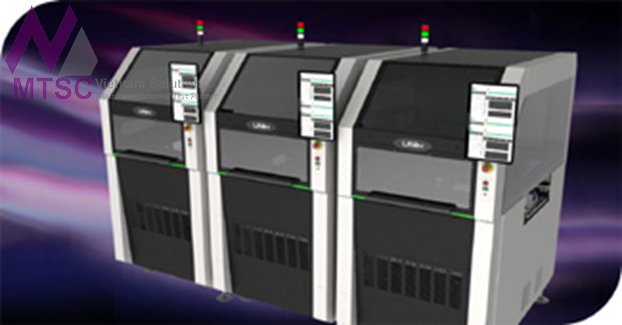
One representative product in this category is the Universal Instruments UFlex Flexible Automation Platform. This platform is designed around the idea of flexible automation for single-process tasks that may need to change over time. Its positioning is especially relevant for higher-mix production, where fast reconfiguration can be just as important as raw cycle speed.
The UFlex platform supports operations such as pick and place, dispensing, screw driving, labeling, and test handling. It is also described as a scalable system with a compact footprint, which makes it easier to deploy in lean lines or use as an in-line replacement for certain manual assembly activities. Rather than treating automation as fixed hardware only, this kind of platform emphasizes easier adaptation at the user level.
How to evaluate the right machine for your process
Choosing the right solution starts with the actual task mix. A buyer should consider whether the machine is mainly needed for assembly, handling, inspection support, or a combination of these. It is also important to look at the expected product range, required changeover frequency, board or part size, positioning accuracy, and the type of end effectors or feeders needed for daily operation.
Another key point is integration. A multifunctional station should fit the wider line concept, not create a bottleneck. That means reviewing how parts enter and leave the machine, how recipes are managed, and whether additional quality tools such as a vision inspection system may be needed to support verification and traceability.
Benefits for high-mix and evolving production lines
The main advantage of this category is flexibility without losing automation value. When a machine can be adapted for different operations or product variants, manufacturers may avoid investing in multiple dedicated stations too early. This can help shorten implementation time for new products and reduce the risk of underused equipment later.
There is also a practical benefit in day-to-day engineering. Reconfigurable automation can simplify process optimization, support shorter product life cycles, and make it easier to balance manual and automated work. For companies moving from semi-manual production toward greater automation, a multifunctional platform can serve as a more scalable step than a highly specialized machine.
What to look for on a category page like this
Products in this category should be reviewed not only by headline function, but by how well they match the intended manufacturing scenario. Useful comparison points include supported operations, machine footprint, motion performance, accuracy, compatible part sizes, and the level of programming or reconfiguration available to the user.
It is also worth considering whether the equipment is intended as a standalone cell or as part of a broader assembly and inspection workflow. In many projects, the most effective solution is not a single machine in isolation, but a coordinated system that connects handling, processing, checking, and transfer steps in a balanced way.
Final considerations
A multifunctional automatic machine is most useful when production needs are dynamic and process flexibility has real operational value. For manufacturers that want to combine multiple tasks in one platform, reduce manual intervention, and keep future product changes manageable, this category offers a practical starting point.
Reviewing platforms such as Universal Instruments UFlex can help clarify what level of reconfigurability, motion capability, and process coverage is appropriate for your line. The right choice depends on the product mix, required operations, and how the machine will integrate with the rest of the manufacturing system.
-
-
-
-
-
-
-
-
-
-
-
-
-
-
-
-
-
-
-
-
-
-
-
-