


Combiner
When multiple RF paths need to be brought together without adding unnecessary complexity, choosing the right Combiner becomes an important part of system design. In telecom, RF distribution, lab setups, and high-power signal routing, a combiner helps merge signals from two or more channels into a single output while maintaining controlled impedance and predictable insertion loss.
This category focuses on broadband combiner solutions for telecommunication components, with an emphasis on practical selection factors such as frequency range, port count, connector style, power handling, and matching performance. Whether the requirement is for lower-band installations, wideband RF integration, or higher-frequency microwave paths, understanding these parameters makes it easier to select a device that fits the application instead of forcing the application to fit the device.
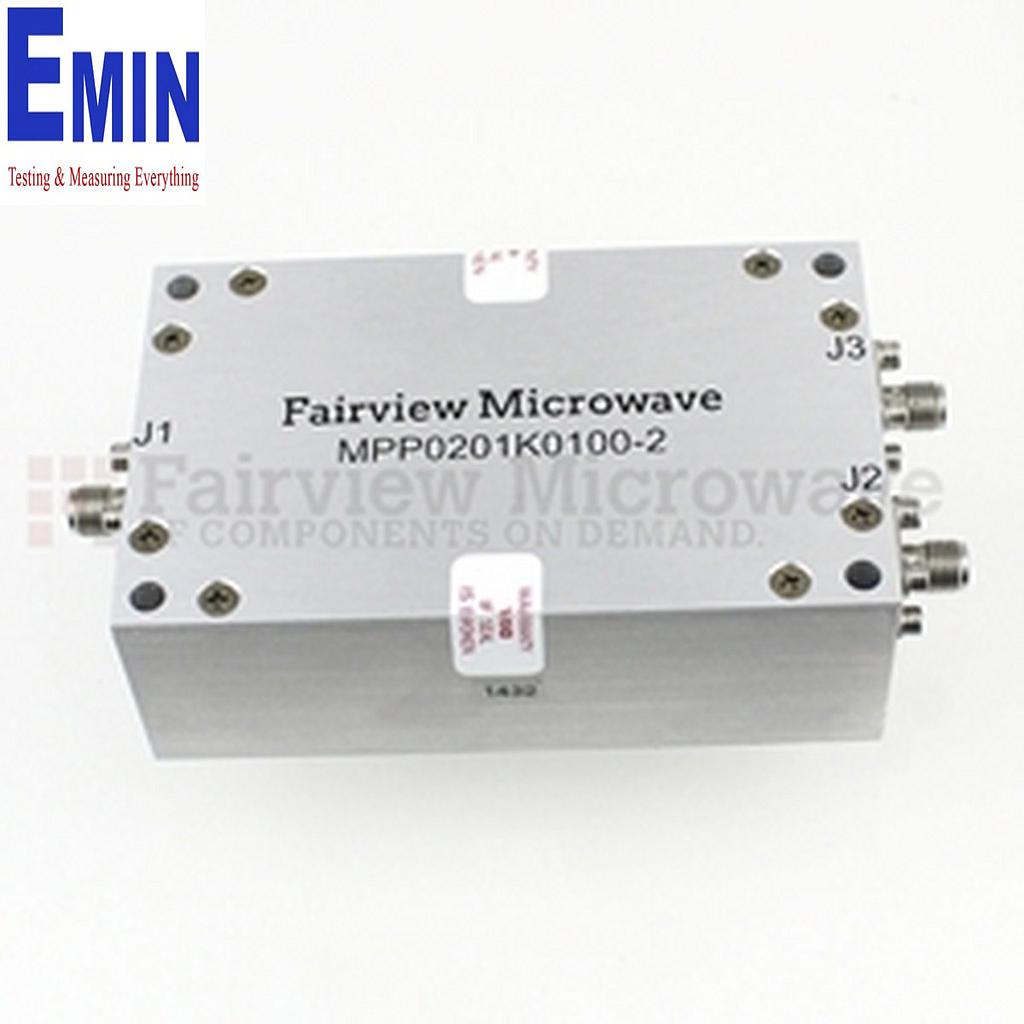
Where combiners are used in RF and telecom systems
A combiner is typically used when several RF signals must share a common transmission path, test line, or antenna feed under defined electrical conditions. In practice, this can appear in distributed communication infrastructure, signal conditioning benches, coverage systems, and integration environments where multiple channels need to be merged efficiently.
In a broader RF chain, combiners are often considered alongside related components such as power dividers, which perform the reverse function in many architectures. Depending on the system layout, engineers may also review supporting components like isolators to improve signal flow stability and reduce the impact of reflected power.
Key selection criteria for a combiner
The first parameter to check is the frequency range. A combiner should fully cover the operating band of the RF system, not just its center frequency. In this category, available examples span from as low as 20 MHz up to 6 GHz, which supports a wide set of broadband and microwave use cases.
Next, engineers usually compare insertion loss, VSWR, and isolation. Lower insertion loss helps preserve signal power, while a controlled VSWR supports better impedance matching in 50 Ohm systems. Isolation matters when interaction between input ports must be limited, especially in multi-channel environments where one path should not significantly influence another.
Power handling is equally important. Some projects only require moderate RF power, while others demand much higher capacity for transmission, distribution, or stress-test conditions. Connector type also affects installation: SMA is common in compact, higher-frequency setups, while N connectors are often preferred where higher power and more robust mechanical interfaces are needed.
Typical product configurations in this category
This selection includes both 2-way and 4-way broadband combiners, allowing buyers to match the number of input paths to the architecture of the system. A 2-way unit can be suitable for simpler signal merging tasks, while a 4-way design is more relevant when several channels must be consolidated into one line without adding multiple stages of RF hardware.
For example, the Fairview MPP5002K5200-2 is a 2-way SMA combiner covering 500 MHz to 2.5 GHz with low insertion loss characteristics suitable for general broadband applications. For wider frequency demands, the Fairview MPP8004K2200-2 extends to 4.2 GHz, while the Fairview MPP2K06K0100-4 supports operation from 2 GHz to 6 GHz for higher-frequency work.
On the multi-port side, models such as the Fairview MPP8002K5200-4 and Fairview MPP8004K2200-4 provide 4-way combining across broad operating bands. These are relevant where several RF channels must be merged in one stage, reducing the need for extra interconnects and helping simplify overall signal routing.
Broadband coverage and power handling options
One useful aspect of this category is the spread of frequency and power combinations. Lower-frequency broadband options such as the Fairview MPP0201K0200-4 and Fairview MPP0801K0200-4 cover wide ranges starting from 20 MHz or 80 MHz up to 1,000 MHz. These are suitable reference points for applications that need broad low-to-mid frequency support in 50 Ohm environments.
For higher power requirements, there are N-connector models including the Fairview MPP8002K5600-4 rated at 600 W, the Fairview MPP0801K0500-4 rated at 500 W, and the Fairview MPP2K06K0400-4 rated at 400 W. These examples show how connector format and power capacity often go together when selecting hardware for demanding RF distribution or transmission paths.
If the installation must balance broadband performance with connector compactness, SMA-based models remain attractive. If mechanical durability and elevated RF power are central to the application, N-connector versions may be the more practical choice.
How combiners fit into a broader telecom component ecosystem
In real deployments, a combiner rarely works in isolation. It is usually part of a larger RF path that may include transitions, matching interfaces, switching elements, and protection-oriented components. That is why buyers often evaluate nearby categories such as RF adapters when connector conversion or interface compatibility is part of the project.
Systems that require path selection or routing logic may also involve telecommunication switches. Looking at the combiner within this broader ecosystem helps avoid common issues such as mismatched connectors, unnecessary transition losses, or under-specified supporting hardware.
Manufacturer focus
The featured products in this category are from Fairviewmicrowave, a recognized name in RF and microwave connectivity components. Here, the product range highlights broadband combiners with multiple power levels, connector options, and 2-way or 4-way configurations, making it easier to compare devices within a consistent design approach.
For B2B sourcing, that consistency can be valuable. It supports more straightforward comparison across similar product families, especially when engineers need to shortlist components based on operating band, port count, and installation constraints rather than search across unrelated specifications.
How to choose the right combiner for your application
A practical starting point is to define the operating band, number of inputs, and expected RF power. Once those are clear, compare connector preferences and then review electrical characteristics such as insertion loss, VSWR, and isolation. This sequence helps narrow down suitable options quickly and avoids selecting a device that is electrically acceptable but mechanically inconvenient for the final installation.
It also helps to think one step beyond the combiner itself. Consider cable assemblies, connector interfaces, the upstream source behavior, and the downstream load. In many RF projects, overall system performance depends less on one headline specification and more on how well each component works together across the full signal chain.
Final considerations
This combiner category is designed for engineers, integrators, and technical buyers who need reliable options for merging RF signals across a broad frequency span. With examples covering 20 MHz to 6 GHz, power levels up to 600 W, and both SMA and N connector formats, the range supports everything from compact broadband setups to more demanding high-power telecom applications.
If you are comparing solutions for an RF distribution or signal integration project, focus on the real operating conditions first: band, power, connector interface, and port configuration. A well-matched combiner improves signal handling, reduces integration friction, and helps the wider telecom system perform as intended.
-
-
-
-
-
-
-
-
-
-
-
-
-
-
-
-
-
-
-
-
-
-
-
-