


B-Type Temperature Sensor
When a process runs at extremely high temperatures, sensor selection becomes less about convenience and more about material stability, signal reliability, and long-term measurement confidence. In these environments, B-Type Temperature Sensor solutions are often considered for demanding heat treatment, laboratory, furnace, and high-temperature industrial applications where platinum-rhodium thermocouple materials are relevant.
This category focuses on B-type thermocouple sensing elements and related wire options used to build, replace, or maintain high-temperature measurement assemblies. For engineers, maintenance teams, and OEM buyers, the key considerations usually include operating range, wire construction, required response characteristics, installation method, and compatibility with the rest of the temperature measurement chain.
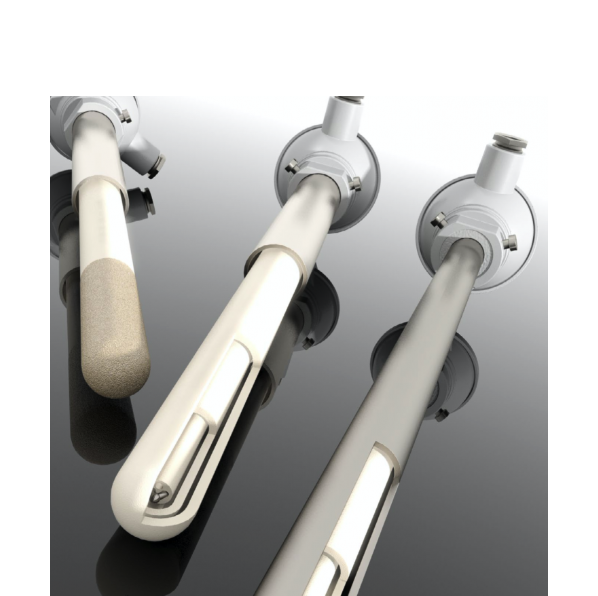
Where B-type temperature sensing is typically used
B-type thermocouple technology is associated with high-temperature measurement where noble metal thermocouple materials are preferred. It is commonly evaluated for furnaces, kilns, thermal processing equipment, materials testing setups, and other applications where elevated temperatures can exceed the practical range of many general-purpose sensor types.
Compared with lower-temperature sensing technologies, the selection process here is usually driven by thermal endurance, process stability, and the need to maintain measurement integrity over time. In broader system design, users may also compare these options with industrial temperature sensors used in less extreme environments.
What defines a B-type thermocouple sensor
A B-type thermocouple uses a matched pair of dissimilar conductors that generate a voltage related to temperature. In the products shown in this category, the positive and negative legs are represented by platinum-rhodium alloys, making them suitable for applications that demand resistance to very high process temperatures.
The listed examples include matched bare thermocouple wires for both B (+) and B (-) legs, with process temperature capability shown up to 1704 °C. Because these are bare fine-diameter wires rather than fully assembled probes, they are especially relevant for custom sensor fabrication, replacement of sensing elements, research setups, and specialist thermal instrumentation work.
Product examples in this category
This range includes representative OMEGA wire options such as SP30RH-032, SP30RH-020, SP30RH-015, and SP30RH-010 for the B-type positive leg, along with SP6RH-032, SP6RH-020, SP6RH-015, and SP6RH-010 for the corresponding negative leg. Finer constructions such as SP30RH-008, SP30RH-003, SP6RH-008, and SP6RH-003 are also included for applications where smaller wire diameter is desirable.
These examples illustrate an important part of category selection: wire gauge and diameter influence handling, durability, and response behavior. A heavier wire may offer better mechanical robustness in some builds, while a finer wire can be useful where lower thermal mass or compact sensor construction is important.
How to choose the right wire construction
For many buyers, the first practical question is whether they need a complete probe assembly or bare wire for custom construction. The products in this category are bare thermocouple wire, which means they are generally chosen by users who already understand junction fabrication, sheath design, insulation strategy, and integration into a measurement system.
Diameter matters because it affects installation and service life. Fine wire can help support faster thermal response and compact sensor geometry, but it may also require more careful handling during assembly and maintenance. Larger diameters are often selected where the build must tolerate more mechanical stress or where a longer service interval is a priority.
It is also important to order the correct matched pair. In thermocouple construction, the positive and negative legs are not interchangeable, and performance depends on using the intended alloy combination. Buyers comparing technologies for lower-range processes may also review options such as a K-type temperature sensor when application temperature and material requirements are different.
System considerations beyond the sensing wire
Choosing a B-type sensing element is only one part of a reliable temperature measurement system. Performance also depends on junction quality, wiring practices, instrumentation compatibility, installation geometry, and how the signal is routed back to the controller, indicator, or data acquisition device.
Because these products are matched solid wires with no insulation listed, users should verify that the surrounding assembly design is appropriate for the process environment. That includes selecting suitable insulation or protection methods, planning for mechanical support, and ensuring the final sensor build matches the thermal and chemical conditions of the application.
How B-type sensors fit within a broader temperature sensing strategy
Not every application requires noble metal thermocouple materials. In many machines and control panels, designers may instead use board mount temperature sensors, thermistors, or industrial probe-based devices depending on temperature range, packaging constraints, and required response characteristics.
That is why this category is most useful for applications with a clear need for thermocouple-grade high-temperature capability. If the environment does not demand that level of thermal resistance, a different sensing technology may provide a simpler or more economical path. On the other hand, when the process genuinely operates in an extreme range, the right B-type materials can be essential to a stable measurement design.
Who typically buys from this category
This category is relevant to furnace builders, process engineers, thermal lab teams, maintenance departments, and specialist OEMs that build or service high-temperature measurement assemblies. It is especially useful when the requirement is not just “a temperature sensor,” but a specific thermocouple alloy combination for fabrication, repair, or controlled experimental work.
Buyers often arrive here with detailed requirements already defined, including wire gauge, polarity, maximum process temperature, and sensor construction method. In that context, category pages like this help narrow the choice to the right material family before moving to the individual product level.
Final considerations before ordering
Before selecting a part, confirm whether you need the positive leg, negative leg, or a matched pair for your build, and check that the chosen diameter aligns with your mechanical and thermal design priorities. It is also worth reviewing how the sensing wire will be terminated, protected, and connected within the complete measurement loop.
For high-temperature applications where material choice directly affects measurement reliability, this B-type range provides a focused starting point. By matching the wire construction to the process conditions and assembly method, buyers can choose components that fit the technical demands of their temperature sensing system more effectively.
-
-
-
-
-
-
-
-
-
-
-
-
-
-
-
-
-
-
-
-
-
-
-
-