


Electrical & Automated equipment
Reliable electrical and automation hardware is the foundation of stable production, safe power distribution, and accurate machine monitoring. When buyers search across a broad range of components, they are usually not looking for a single device in isolation—they need equipment that fits into a larger control, protection, and measurement system. This category brings together practical options for industrial environments where uptime, panel integration, and compatibility matter.
Electrical & Automated equipment in this range covers both power-side components and control-side devices, from digital panel instruments to protection hardware and supporting measurement elements. It is suited to engineering teams, panel builders, maintenance departments, and procurement professionals who need dependable products for factories, utilities, building systems, and machine installations.
Built for monitoring, protection, and control in industrial systems
Industrial electrical systems require more than simple on/off operation. In real applications, teams often need to measure current, display operating values clearly on a panel, protect incoming or outgoing feeders, and maintain stable control across multiple loads. That is why this category spans several functions rather than focusing on one narrow device type.
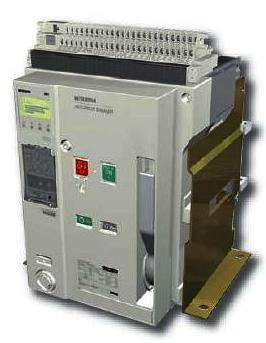
For example, a digital panel meter may be used to display electrical values locally for operators, while an air circuit breaker provides high-capacity protection at the distribution level. A current transformer supports safe current measurement by stepping down the measured signal for instruments and monitoring devices. Together, these components help create a more visible and manageable electrical infrastructure.
Typical product groups found in this category
One important group is panel-mounted measurement devices. These are commonly used to display current or power-related values in control panels, switchboards, and machine enclosures. Products such as the Autonics MT4W-AA-4N Digital Panel Meters and the Autonics M4W-P Power factor meter illustrate how compact instrumentation can support local indication without adding unnecessary system complexity.
Another major group is power protection equipment, especially for larger distribution systems. Models such as the Mitsubishi AE2500-SW ACB, AE2000-SW, AE1600-SW, and AE630-SW represent the kind of air circuit breaker solutions used in high-current applications where fault interruption and system protection are critical. Supporting products like the Ideal Industries 45-075 Current Transformer, Ideal Industries 45-076 Current Transformer, and Merlin Gerin 48021 Current Transformer fit naturally into measurement and metering setups around these systems.
How panel meters support operational visibility
In many plants, quick access to electrical values at the cabinet door is still essential. Operators and maintenance teams often rely on a local display to confirm whether current levels are within expected ranges or whether power factor is trending abnormally. A compact digital unit with LED indication can simplify troubleshooting and reduce the need to connect portable instruments for every basic check.
The listed Autonics examples show the role of dedicated display instruments in practical use. The MT4W-AA-4N is positioned as a digital panel meter for AC current indication, while the M4W-P is intended for power factor display using a 4-20 mA input from a transducer. These kinds of devices are especially useful where a straightforward front-panel readout is preferred over a more complex HMI or software-based interface.
Where air circuit breakers fit in larger power distribution systems
At the distribution level, protection strategy becomes more demanding because the equipment handles higher current and fault duties. Air circuit breakers are commonly selected for main incomers, tie breakers, and major outgoing feeders in industrial facilities or large buildings. Their role is not just to interrupt a fault, but to help maintain coordinated protection across the system.
The Mitsubishi ACB models highlighted in this category cover multiple current classes, from 630 A up to 2500 A, with different breaking capacity levels shown in the product examples. This makes them relevant for projects where engineers need to align breaker rating with feeder size, available fault level, and installation architecture. For buyers focusing on this manufacturer, the broader MITSUBISHI product range can also provide additional context for matching electrical equipment across a project.
The role of current transformers in measurement and integration
Current transformers are essential when measured current must be safely adapted for meters, monitoring relays, or energy management devices. Instead of feeding high primary current directly into an instrument, the transformer provides a scaled secondary signal that is easier to handle inside a panel. This is a standard approach in industrial power monitoring and helps improve both safety and instrument compatibility.
Items such as the Ideal Industries 45-075, Ideal Industries 45-076, and Merlin Gerin 48021 show the supporting nature of these components within a complete measurement chain. They are especially relevant when combined with panel meters or other monitoring hardware, allowing users to build a practical system for current indication, trend observation, or protection-related measurement.
What to consider when selecting electrical and automation equipment
Selection should begin with the application rather than the product name. Buyers typically need to confirm whether the requirement is local indication, upstream protection, signal conversion, or broader automation integration. From there, key checks include electrical rating, mounting format, input type, supply requirement, and how the device will interact with the rest of the panel or distribution system.
For panel instruments, input signal type and display function are usually the first filters. For protective devices such as ACBs, current rating and interrupting capability are much more important. For current transformers, the main concern is how they support the measurement architecture. If the project extends beyond standalone electrical hardware, it may also be useful to review the Autonics range for additional industrial instrumentation and automation devices from the same manufacturer family shown in this category.
Brands commonly associated with this category
This category includes products from recognized industrial names used across electrical control and automation projects. Among the manufacturers represented in the wider range are ABB, Allen-Bradley, Autonics, Delta, Fuji, Ideal Industries, Merlin Gerin, and MITSUBISHI. Different brands may be preferred depending on whether the priority is panel instrumentation, protection hardware, control integration, or project standardization.
In practice, many purchasing teams narrow options by installed base, service familiarity, and panel design standards already used in their facility. That means brand choice is often tied to long-term maintainability as much as to the immediate technical need. A balanced category with both measurement and protection products helps buyers compare suitable options without losing sight of system-level requirements.
Choosing with the full application in mind
Industrial electrical procurement works best when components are evaluated as part of a complete operating environment. A meter should be easy to read and compatible with the available signal. A breaker should match the distribution duty it will protect. A transformer should support accurate and practical measurement within the panel design. Looking at these devices together usually leads to a more robust solution than selecting each item in isolation.
Whether the need is local electrical indication, high-current circuit protection, or supporting components for measurement integration, this category provides a useful starting point for specifying the right mix of equipment. Reviewing the application, installation method, and operating conditions first will make it easier to choose products that fit the system and remain serviceable over time.
Types of Electrical & Automated equipment (1,071,182)
- Air circuit breaker (9)
- Autonics sensors (1,923)
- Capacitor (1,060,432)
- Current transformer (263)
- Deal logger for Automation system (21)
- Fiber unit, Fiber sensor (844)
- Inverter (6,081)
- Other automated equipment (64)
- Panasonic
- SCADA Component (33)
- Siemens (477)
- Signal counter and Speed meter (11)
- Smart home (85)
- Soft Starters (939)
-
-
-
-
-
-
-
-
-
-
-
-
-
-
-
-
-
-
-
-
-
-
-
-