


Smart switch
Lighting and load control often become the first step when building a more practical connected space. For homes, offices, apartments, and light commercial projects, a smart switch helps replace manual on/off operation with more flexible control through touch panels, wireless communication, and app-based access.
On this page, you can explore smart switch options suited to different installation needs, from standard wall switches for lighting circuits to higher-capacity models for heavier loads. The range also includes both WiFi-based and Bluetooth Mesh-based solutions, making it easier to match the device to the control architecture you plan to use.
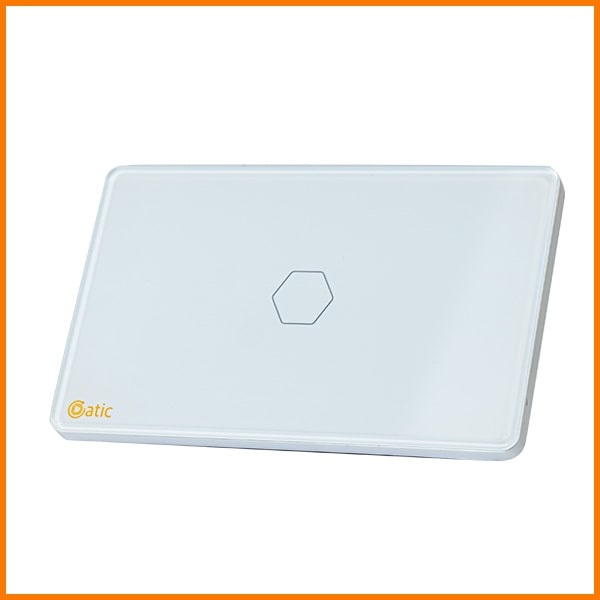
Where smart switches fit in a connected control system
Unlike a conventional wall switch, a smart switch is designed to work as part of a broader automation setup. Depending on the model, it may support direct wireless control over WiFi 2.4 GHz or operate through Bluetooth Mesh with a central controller. This gives users more options for scheduling, remote access, scene control, and integration with other smart home devices.
In practice, these devices are commonly selected for lighting circuits, decorative lighting, and selected electrical loads where convenient switching is more important than full industrial automation. If you are also planning to expand the system beyond switching, related categories such as smart home sensors can help add automation triggers based on motion, environment, or occupancy.
Common smart switch types in this category
This category covers several product styles rather than a single fixed format. Some models are designed as touch switches with multiple buttons for wall-mount control, while others are compact basic switching modules intended for more discreet installation. There are also larger-capacity versions intended for loads that exceed the range of standard lighting circuits.
For example, the Datic DTSW02D and DTSW04D are touch switch options with 2-button and 4-button control layouts, suitable for users who want a cleaner front-panel interface. In the HUNONIC range, products such as HNPRE01VD through HNPRE04VD provide BLE Premium touch control in multiple button configurations, while large-capacity variants like LAHU01 are intended for applications where higher switching power is required.
WiFi and Bluetooth Mesh: choosing the right communication method
One of the main selection points for a smart switch is the communication platform. WiFi smart switches are often preferred when users want direct connectivity without adding a central hub, especially for straightforward lighting control in smaller installations. Products such as the Datic DTSW04D, Datic DTSW02D, and HUNONIC DTBS01 illustrate this approach, using 2.4 GHz wireless communication for convenient deployment.
Bluetooth Mesh models are typically more suitable when the project is planned as a coordinated control network with multiple devices working together. HUNONIC BLE Premium touch switches, including HNPRE01VD, HNPRE02VD, HNPRE03VD, HNPRE04VD, and HNPREP1VD, are examples of switches intended to operate through a central controller. For users building a more complete ecosystem, it can also be useful to review compatible smart socket options where load control needs extend beyond wall switches.
How to evaluate load capacity and button configuration
Not every switching point in a project has the same electrical requirement. Standard lighting control often works well with switches rated around 500 W per channel for resistive loads, with separate considerations for LED lighting. That is why checking the actual load type matters, especially in projects with mixed fixtures, decorative LEDs, or multi-gang switching requirements.
Button count also affects usability. A 1-button or 2-button switch may be enough for a bedroom, corridor, or simple office room, while 3-button or 4-button layouts can be more practical in living areas or spaces where multiple circuits need to be grouped at one location. Models such as HUNONIC LAHU02 and LAHU04 show how multi-channel control can simplify operation when several lighting zones are involved.
Examples from Datic and HUNONIC
Datic is represented here with WiFi touch switches that focus on direct wireless control and familiar wall-switch operation. The DTSW02D and DTSW04D are suitable references when comparing 2-button and 4-button configurations, tempered glass front design, and typical voltage ranges used in residential and light commercial installations.
HUNONIC offers a broader spread across basic WiFi switching, BLE Premium touch switches, and large-capacity Lahu switch models. The DTBS01 can be considered for basic wireless switching, while the HNPRE and HNPREP series are more relevant for projects built around centralized BLE control. For heavier loads, the LAHU01 stands out with its higher capacity compared with standard per-channel lighting control models.
Selection considerations for real projects
When choosing a smart switch, it is useful to start with the application rather than the appearance alone. Check whether the installation is intended for single-room convenience, multi-room scene control, or a broader connected system. Then confirm the number of channels, communication method, voltage compatibility, and load characteristics for each circuit.
It is also important to think about future expansion. A standalone switch may solve an immediate need, but a coordinated setup can become much more useful when combined with devices such as smart curtain motors or connected monitoring through smart cameras. Planning around the wider ecosystem can reduce later retrofit work and improve control consistency across the site.
Who typically uses these smart switches?
This category is relevant for electrical contractors, system integrators, smart home installers, facility upgrade teams, and buyers sourcing connected switching devices for residential or small commercial environments. It is also useful for retrofit projects where users want smarter control without rebuilding the full electrical system from the ground up.
Because the product range includes both simple wireless switches and more structured network-based options, the category can support different project scales. Some buyers prioritize easy installation and app control, while others need a platform that can be expanded with sensors, sockets, and additional automation endpoints over time.
Choosing a suitable smart switch for your setup
A well-matched smart switch should fit the electrical load, control method, and user experience expected at the installation site. In this category, you can compare touch switches, basic wireless switching modules, and larger-capacity models from Datic and HUNONIC based on practical needs rather than marketing claims alone.
If you are building or upgrading a connected environment, start by defining the number of circuits, the preferred wireless architecture, and whether the project will remain standalone or grow into a wider automation system. That approach makes it easier to narrow down the right smart switch for reliable day-to-day control.
-
-
-
-
-
-
-
-
-
-
-
-
-
-
-
-
-
-
-
-
-
-
-
-