


Bending Testing
When coating flexibility, material ductility, or low-temperature brittleness must be verified, the right test setup makes results easier to compare and easier to trust. In many labs and production environments, Bending Testing equipment is used to evaluate how a sample behaves when it is bent around a defined radius or under controlled conditions, helping users assess cracking, adhesion loss, deformation behavior, or failure limits.
This category is relevant for coating inspection, materials development, quality control, and application-specific durability checks. The available range focuses on practical bending test methods, from mandrel-based coating flexibility tools to specialized instruments used for brittle behavior or related mechanical evaluation in broader force and strain workflows.
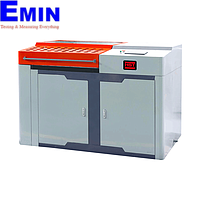
Where bending tests are commonly used
Bending methods are widely used when a flat or prepared specimen needs to be stressed in a repeatable way. A common example is coated metal, where the test helps determine whether the coating can withstand bending without visible cracking, flaking, or detachment. This is especially useful in paint, plating, finishing, and surface treatment processes.
Depending on the method, a test may focus on flexibility, crack initiation, resistance to deformation, or temperature-related brittleness. For users working with force-related instrumentation across a wider measurement setup, related devices such as strain meters can also support broader material evaluation and data interpretation.
Typical equipment found in this category
One of the most familiar tool groups here is the mandrel bend tester. Conical and cylindrical mandrel systems are widely used to assess coating performance by bending a specimen over a gradually changing or fixed diameter. This type of method is practical because it gives a clear visual indication of when cracking or other surface defects begin to appear.
Examples in this category include the ELCOMETER 1510 Conical Mandrel Bend Tester and the ELCOMETER 1500 Cylindrical Mandrel on a Stand, together with metric and imperial mandrel sets such as the ELCOMETER 1506 series. The TQCSheen SP1835 set of metric mandrels is another relevant option for cylindrical bend testing where a controlled set of diameters is needed for repeatable comparison.
Conical vs. cylindrical mandrel testing
A conical mandrel is useful when the goal is to identify the point at which a coating begins to fail across a continuously changing bend radius. Because the radius varies along the cone, the operator can observe where defects first occur and relate that area to the approximate bend severity.
A cylindrical mandrel, by contrast, applies a fixed radius and is often chosen when testing must be performed against standard diameters or when results from one sample to another need to be compared under the same bending condition. Sets with multiple mandrel sizes provide flexibility for routine QC, incoming inspection, or development work where different material systems are being evaluated.
Specialized instruments for low-temperature and mechanical behavior
Not every bending-related test in industrial practice is limited to coatings on mandrels. Some applications require a more specialized approach to determine brittle behavior under controlled cooling or under defined mechanical loading conditions. In such cases, the test objective is less about simple flexibility screening and more about identifying a transition point or failure condition.
An example is the Anton Paar BPA 5 Fraass Breaking Point Tester, which is used to determine brittle behavior at low temperature conditions. Although it serves a more specific application area, it illustrates how bending-based methods are also important in material characterization beyond standard coating flexibility checks.
How to choose the right bending testing solution
The best fit depends first on the specimen and the test purpose. If the task is routine coating inspection, a conical or cylindrical mandrel solution is often the most direct option. If your procedure requires fixed diameters, a mandrel set with clearly defined sizes is usually more suitable than a variable-radius setup.
It is also important to consider specimen dimensions, the thickness range being tested, and whether the workflow is manual bench testing or part of a more formal laboratory procedure. In some environments, users may also need related signal handling or system integration products such as a load cell transmitter when the overall measurement setup extends into force capture and process monitoring.
Representative products and their role in the workflow
The ELCOMETER 1510 Conical Mandrel Bend Tester is suitable for coating flexibility checks where a changing bend radius helps identify the onset of cracking. For fixed-radius testing, the ELCOMETER 1500 Cylindrical Mandrel on a Stand provides an organized bench setup, while the ELCOMETER 1506 Metric Mandrel Set and Imperial Mandrel Set support testing across defined diameter ranges.
The TQCSheen SP1835 set serves a similar role for cylindrical bend applications, especially where a complete metric range is required. Elsewhere in the broader force and strain field, products such as the Mark-10 WT3-201M and WT3-201A wire crimp pull testers, or the Mark-10 MR06-200 pull sensor, address different mechanical test needs rather than classic bend testing. Their presence helps show how bending evaluation fits into a larger testing ecosystem that may also include peripheral devices for data handling and workflow support.
What matters for reliable results
Repeatability in bending tests depends on more than the instrument alone. Sample preparation, substrate condition, coating cure state, bending speed, visual inspection method, and the chosen test radius all influence how results should be interpreted. Even a simple mandrel test is only meaningful when the procedure is applied consistently.
For that reason, many buyers look not only at the tool itself, but also at the practicality of the setup: whether the mandrel sizes match the standard being followed, whether the stand improves handling, and whether the equipment fits the volume of testing performed in the lab or plant. This is often more important than chasing unnecessary complexity.
Finding a suitable setup for your application
This category brings together bending test equipment used for coating flexibility checks, radius-based comparison, and selected specialized brittle behavior testing. The available range includes practical mandrel systems from ELCOMETER and TQCSheen, as well as application-specific solutions such as the Anton Paar BPA 5 for low-temperature breaking point determination.
If you are comparing options, start with the test method you need to follow, the sample format, and the level of repeatability expected in your process. That usually leads more quickly to the right instrument than focusing on model names alone, and it helps ensure the selected bending testing equipment fits both the application and the workflow around it.
-
-
-
-
-
-
-
-
-
-
-
-
-
-
-
-
-
-
-
-
-
-
-
-