


Bottle cap torque meter
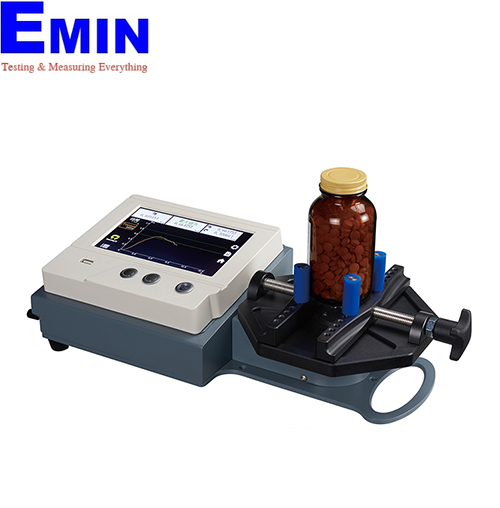
Reliable cap torque control is essential wherever bottles, jars, and similar containers need to be opened safely, sealed consistently, and verified against quality standards. In production and laboratory environments, even small variations in application or removal torque can affect product integrity, user experience, and packaging compliance. That is why a Bottle cap torque meter is widely used in packaging QA, incoming inspection, and process validation.
Within force and strain measurement workflows, these instruments help quantify the torque required to tighten or loosen closures on containers with repeatable, documented results. They are especially relevant for beverage, food, pharmaceutical, cosmetics, and packaging operations where closure performance must be monitored rather than judged by feel alone.
Why bottle cap torque measurement matters
Closure torque is directly linked to sealing consistency, leak prevention, tamper evidence, and ease of opening. If torque is too low, caps may loosen during transport or storage. If torque is too high, users may struggle to open the package, and the closure or bottle neck may be stressed more than intended.
A dedicated cap torque tester provides a more stable and repeatable method than manual checking. For quality teams, this means clearer pass/fail decisions, better traceability, and easier comparison between production batches, packaging suppliers, or closure designs.
Typical applications in packaging and quality control
These instruments are commonly used to measure both application torque and removal torque on round containers. Typical use cases include testing screw caps on drinking bottles, validating closure consistency after filling and capping, and checking whether packaging remains within target torque ranges after storage or transport simulation.
They are also useful during packaging development, where engineers compare cap materials, liner designs, neck finishes, and closure dimensions. In regulated or documentation-heavy environments, models with memory and PC connectivity can simplify data collection and reporting. If your workflow also involves signal conditioning or data integration, related equipment such as load cell transmitters may be relevant elsewhere in the measurement chain.
Common features to look for in a cap torque tester
Most bottle cap torque meters in this category are designed for tabletop testing with adjustable grips or clamping fixtures to hold containers securely during measurement. A key point is bidirectional torque measurement, since many users need to assess both clockwise and counterclockwise rotation depending on the test method.
Other useful features include LCD displays, selectable engineering units, peak capture, internal memory, and USB communication for exporting data. Some instruments also support comparator functions or software-based analysis, which can be helpful when operators need to compare measured values against defined limits and maintain a documented quality process.
Choosing the right measuring range
Selecting the appropriate range is one of the most important steps. In general, the best results come when the expected torque values fall well within the instrument’s working range rather than too close to the upper limit. For lighter closures and smaller containers, a lower-range model may provide finer resolution, while heavier caps or tighter closures may require a higher-capacity tester.
For example, the PCE lineup in this category includes the PCE CTT 2, PCE CTT 5, and PCE CTT 10, covering 2 Nm, 5 Nm, and 10 Nm applications. Similarly, Alluris offers options such as the CTT-300B2, CTT-300B5, and CTT-300C1 for users who need to match capacity more closely to their closure testing requirements. Choosing a suitable range can improve readability, repeatability, and confidence in the measurement result.
Examples of instruments available in this category
This category includes several well-known solutions for closure torque testing. From IMADA, the DTXS-10N Screw Cap Torque Tester is suited to routine cap testing where functions such as peak hold, memory, and data output are valuable for inspection and documentation. Its design reflects the needs of users who want a more feature-rich digital workflow.
For straightforward bottle cap checks, the PCE CTT series offers practical testing capability with rubberized holders, LCD display, USB interface, and onboard memory for measured values. Alluris models such as the CTT-200 and CTT-300 series add options for different ranges and data handling needs, while SAUTER DA models provide another path for users comparing bench torque measurement solutions in the same general application area.
How these devices fit into a broader measurement setup
A bottle cap torque meter is often one part of a wider quality assurance process. Teams may combine torque testing with weight checks, leak tests, dimensional checks, and other packaging verification steps to build a more complete view of product quality. In that context, data consistency and repeatable test methods are often just as important as the absolute torque value itself.
Where force and deformation behavior must also be monitored, users may work alongside products such as strain gauges or strain meters in related testing applications. While these are different measurement categories, they belong to the same broader effort to quantify mechanical behavior accurately instead of relying on subjective inspection.
Practical selection criteria for buyers
When comparing models, start with the expected torque range and the container diameter you need to clamp. Then review the required resolution, accuracy, data storage, interface options, and whether your team needs basic testing or more advanced software-assisted analysis. For production-floor use, display readability and ease of sample loading can also make a real difference in day-to-day efficiency.
It is also worth checking whether the instrument supports your preferred reporting workflow. Some users only need local display and occasional spot checks, while others need USB output, stored readings, or structured analysis for audits and quality records. Paying attention to these details can help prevent over-specifying or under-specifying the instrument.
Find a bottle cap torque meter that matches your process
Whether you are validating a new closure design, monitoring capping consistency, or setting up a routine QC station, the right cap torque testing solution should align with your expected torque values, sample dimensions, and data requirements. This category brings together bench instruments from established manufacturers such as IMADA, PCE, Alluris, and SAUTER for different packaging and laboratory needs.
Review the available models carefully, paying attention to measuring range, resolution, fixture compatibility, and connectivity. A well-matched bottle cap torque meter can make closure testing more repeatable, more defensible, and easier to integrate into your overall quality process.
-
-
-
-
-
-
-
-
-
-
-
-
-
-
-
-
-
-
-
-
-
-
-
-