


Load Cell Transmitter
When a load cell signal needs to move reliably from a sensor into a PLC, indicator, data logger, or control system, signal conditioning becomes the critical step. A raw mV/V output is highly useful for measurement, but in many industrial environments it must be converted into a stable analog signal that can travel cleanly and integrate with existing equipment. That is where Load Cell Transmitter devices play an essential role.
In force and strain measurement systems, these transmitters help bridge the gap between sensing and control. They are widely used in weighing, pressing, assembly verification, tension monitoring, and general load monitoring applications where accuracy, repeatability, and practical signal output matter just as much as the sensor itself.
What a load cell transmitter does in a measurement system
A load cell transmitter receives the low-level output from a strain gauge based load cell and converts it into a more usable electrical signal. In practice, this often means current outputs such as 0~20 mA, 4~20 mA, or 0~40 mA, and voltage outputs such as 0~5 V, 1~5 V, or 0~10 V. These output formats are easier to connect to controllers, monitoring devices, and automation systems.
This conversion is not only about compatibility. It also helps improve signal handling across longer cable runs and reduces the difficulty of working directly with very small sensor outputs. For users building a broader force measurement setup, a transmitter often sits between the load cell and other devices such as a weighing indicator or a process control input.
Common output types and why they matter
Output selection should match the downstream device, not just the sensor. Current outputs are often preferred in industrial installations because they are widely accepted by PLC and control systems and can be more practical for transmitting signals in electrically noisy environments. In this category, examples include the CURIOTEC CTT-Ⅰ420 with 4~20 mA output, the CTT-Ⅰ020 with 0~20 mA output, and the CTT-Ⅰ040 with 0~40 mA output.
Voltage output transmitters are often chosen when the receiving device expects direct analog voltage input. Models such as the CURIOTEC CTT-V005, CTT-V105, and CTT-V010 support common voltage ranges used in test benches, instrument panels, and compact control systems. The right choice depends on input requirements, wiring conditions, and how the measurement signal will be processed afterward.
Typical product formats in this category
This category includes both compact transmitters and more advanced signal handling devices used in force and torque measurement systems. Compact units such as the CURIOTEC STT-12V and STT-24V are suitable when installation space is limited and a straightforward analog output is required. They are useful in embedded measurement assemblies, machine retrofits, and compact monitoring panels.
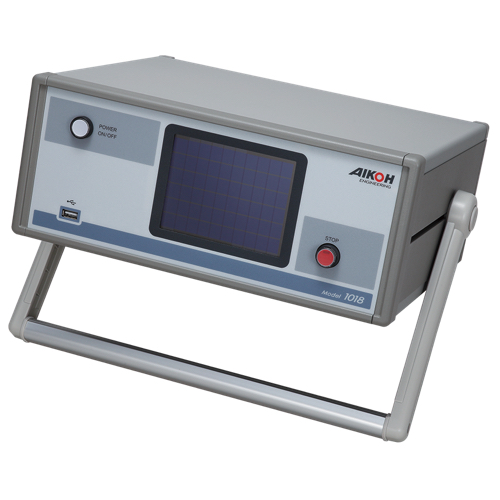
For applications requiring more than simple signal conversion, amplifier and evaluation instruments may also be relevant. The Aikoh 1018 Force Measuring Amplifier is designed for force and torque tester sensors and stand control, while the KISTLER 4700B CoMo Torque serves torque sensor evaluation with higher-speed measurement capability and interface functions. If your application involves broader test system integration rather than simple analog conversion alone, related peripheral devices may also be worth reviewing.
How to choose the right transmitter
The first point to check is sensor compatibility. Many load cell transmitters are designed around strain gauge full bridge inputs in a given mV/V range. Matching the transmitter input range to the load cell output is essential for proper scaling and stable measurement. Power supply requirements also matter, especially in systems standardized around 12 VDC or 24 VDC.
The second point is output format. If the control cabinet or PLC analog card is designed for current loop input, a 4~20 mA transmitter may be the practical choice. If a local instrument or controller expects voltage input, 0~10 V or 1~5 V can be more suitable. It is also useful to review available excitation voltage, allowable load resistance, installation dimensions, and environmental conditions before final selection.
Finally, consider whether you need only signal conversion or a broader measurement interface. Some systems need local adjustment, threshold response, display capability, digital I/O, or communication ports. In those cases, products from CURIOTEC, Aikoh, and other specialized manufacturers may serve different roles depending on the complexity of the application.
Applications across industrial and test environments
Load cell transmitters are used anywhere a force signal must be converted into a form that a machine or monitoring system can understand. Common use cases include hopper and tank weighing, press force monitoring, web tension systems, assembly load verification, material testing rigs, and simple machine feedback loops. In these environments, the transmitter helps translate the sensor output into an actionable process signal.
They are also valuable in retrofit work. Many existing machines were not originally designed to read low-level strain gauge signals directly, but they can often accept analog current or voltage signals. Adding a transmitter allows a load cell to be integrated into legacy control architecture without redesigning the entire measurement chain. Where direct sensor handling or raw bridge analysis is required, users may also compare options in strain meters depending on the level of signal analysis needed.
Featured manufacturers and representative products
KISTLER is well known in force and torque measurement, and the KISTLER 4700B illustrates the category’s more advanced end, where evaluation, display, digital I/O, and communication functions are important. This type of device is especially relevant in dynamic torque measurement or laboratory and test-bench environments where data handling goes beyond analog retransmission.
Aikoh provides solutions oriented toward force and torque tester systems. The Aikoh 1018 Force Measuring Amplifier is a good example of equipment that combines measurement and stand control functions in a single unit, making it relevant for structured testing workflows.
CURIOTEC is strongly represented in this category with multiple current and voltage output transmitters. The CTT series covers standard analog output needs, while the STT series offers compact DC-powered transmitter options. This makes the brand particularly relevant for users looking for practical load cell signal conversion in industrial installations.
Building a stable force measurement chain
A reliable measurement system depends on more than the transmitter alone. Cable quality, grounding, power stability, sensor matching, and downstream input configuration all affect final performance. Choosing the correct transmitter is therefore part of a larger signal chain decision, especially in applications where repeatability and calibration stability are important.
If your system starts at the sensing element level, it may also be useful to review related components such as strain gauges for broader context within force and strain measurement. From compact analog conversion to more advanced amplifier and evaluation platforms, this category supports a wide range of integration needs across industrial automation and test applications.
Conclusion
The right transmitter makes a measurable difference in how easily a load cell can be integrated into real-world equipment. Whether the goal is simple analog output conversion, control system interfacing, or a more advanced force or torque evaluation setup, this category brings together practical options for different system architectures. Reviewing sensor input range, output type, power requirements, and integration needs will help narrow the selection to the most suitable device for your application.
-
-
-
-
-
-
-
-
-
-
-
-
-
-
-
-
-
-
-
-
-
-
-
-