


Strain Meters
When strain signals need to be converted into stable, readable values for testing, monitoring, or production control, the quality of the meter matters as much as the sensor itself. Strain Meters are used to receive low-level signals from strain gauge transducers, condition them correctly, and present the result in a form that engineers and operators can trust for setup, evaluation, and process decisions.
In force and strain measurement systems, these instruments are often selected for bench testing, machine monitoring, material evaluation, and integration into control panels. Depending on the application, the priority may be portability, panel mounting, analog retransmission, digital communication, or compatibility with bridge-based strain inputs.
What strain meters are used for in practical measurement setups
A strain meter is typically placed between the sensor and the user or control system. Its role is to acquire the electrical output from a strain gauge or related transducer, apply filtering or scaling where needed, and display a usable engineering value. This makes it easier to validate load conditions, observe trends, and support repeatable measurements across different tasks.
These instruments are common in load and deformation measurement, fixture verification, structural testing, and production equipment where a stable display is needed close to the process. In some systems, users may also compare strain meter options with a load cell transmitter when the goal is signal conversion for downstream PLC or controller input rather than direct local indication.
Key differences between portable and panel-mounted strain meters
One of the first selection points is whether the application needs a portable indicator or a fixed panel instrument. Portable models are useful for field checks, temporary measurement points, maintenance support, and lab work where mobility and quick setup are important. Panel-mounted units are more suitable for machine integration, control cabinets, and continuous monitoring environments.
The TEAC TD-01 Portable Digital Indicator is a good example of a compact handheld approach for strain gauge transducers. It supports battery operation or USB bus power, includes a color display, and is designed for users who need measurement capability without committing to a permanent panel installation. By contrast, many OMEGA DP7600 and DP7700 series models follow a 1/8 DIN panel format intended for permanent mounting and routine operator access.
Input compatibility and signal handling considerations
Not every meter is intended for exactly the same signal type, so input compatibility should be checked early. Some models are aimed specifically at strain gauge inputs and bridge-based measurement, while others can also handle voltage or current process signals. This matters when the same installation may involve both strain measurement and general process indication.
Several OMEGA models in this category illustrate that difference clearly. The DP7600 variants are oriented toward strain input applications, while DP7700 models may support voltage, current, and strain-related measurement functions depending on the version. For users building a wider measurement chain, related products such as strain gauges can also be relevant when specifying the complete sensing and display path.
Features that help improve readability and measurement stability
In real-world use, signal quality is rarely perfectly clean. Electrical noise, mechanical vibration, and changing test conditions can all affect readability. For that reason, practical strain meter selection often focuses on signal conditioning features such as digital filtering, calibration support, update rate, and display behavior under changing loads.
The products listed in this category show several useful examples. TEAC TD-01 includes digital filtering and TEDS-related capability, which can help streamline setup in compatible sensor environments. OMEGA DP7600 and DP7700 series units offer high-speed reading capability, digital filtering, and front-panel parameter setting, making them useful where users need a balance between response speed and stable indication. In panel applications, analog outputs or setpoint functions may also be important when the meter needs to do more than display a value.
Examples of product types available in this category
This category includes multiple styles of strain measurement instruments from established manufacturers such as OMEGA, TEAC, and MITUTOYO. The range is not limited to one use case, which is why comparing the intended role of each instrument is more useful than looking only at model names.
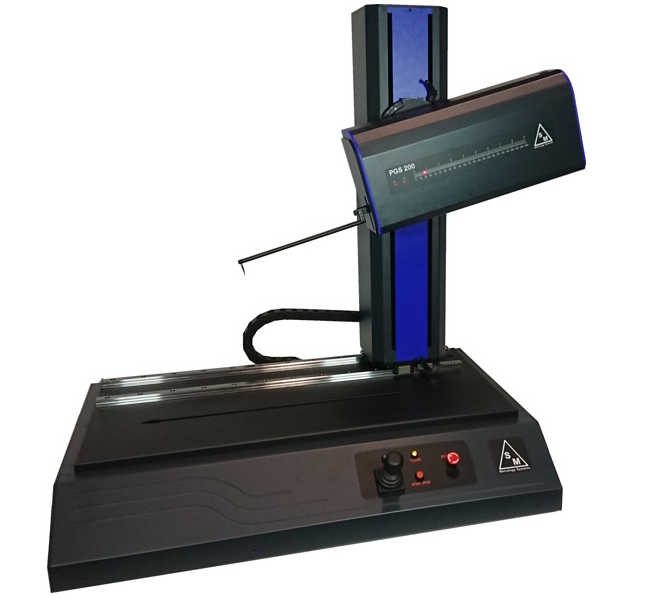
For example, the TEAC TD-01 Portable Digital Indicator fits mobile and bench-oriented work with strain gauge transducers. OMEGA DP7600-A10, DP7600-AMA, and DP7600-S2-A10 represent panel-mounted solutions for strain input measurement, with some variants offering analog output or serial communication options. OMEGA DP7700 models extend into broader process and voltmeter functions where voltage, current, and strain-related monitoring may need to coexist in one family of instruments. The MITUTOYO FTA-S4 C3000-D Formtracer Avant appears here as a more specialized measurement instrument, showing that some strain-related workflows overlap with precision inspection and evaluation tasks.
How to choose the right strain meter for your application
The most effective way to choose is to start with the measurement point itself. Confirm the sensor type, expected signal range, power availability, installation style, and whether the reading is for local observation only or also needs retransmission to another system. A compact portable unit may be ideal for maintenance or lab checks, while a DIN-format model is usually the better fit for installed equipment.
It is also important to think about the surrounding system. If your application needs local display plus analog output, alarm handling, or serial communication, those functions should be part of the selection criteria from the start. In some projects, users may also need supporting items from the peripheral device range or may compare with a weighing indicator when the measurement task is closer to load-based process control.
Why the broader measurement ecosystem matters
A strain meter rarely works as a standalone purchase decision. Performance in the field depends on the full measurement chain, including the sensor, cabling, excitation method, mounting approach, environmental conditions, and the way data is interpreted by operators or automation systems. A well-matched instrument helps reduce setup time, improves repeatability, and makes diagnostics easier when readings do not behave as expected.
That is why this category is best approached as part of a complete force and strain measurement solution. Looking at input type, display method, communication options, and installation format together will usually lead to a more reliable result than selecting by price or form factor alone.
Final considerations before ordering
Before selecting from this category, review whether you need a handheld or panel-mounted instrument, whether the input is strictly bridge-based strain or may include voltage and current signals, and whether outputs or communication functions are necessary. Small differences between models can have a major effect on installation effort and day-to-day usability.
With options ranging from portable digital indication to integrated panel meters with analog and serial capabilities, strain meters can support both test environments and permanent industrial setups. Choosing the right unit means matching the instrument to the actual measurement workflow, not just the signal itself.
-
-
-
-
-
-
-
-
-
-
-
-
-
-
-
-
-
-
-
-
-
-
-
-