


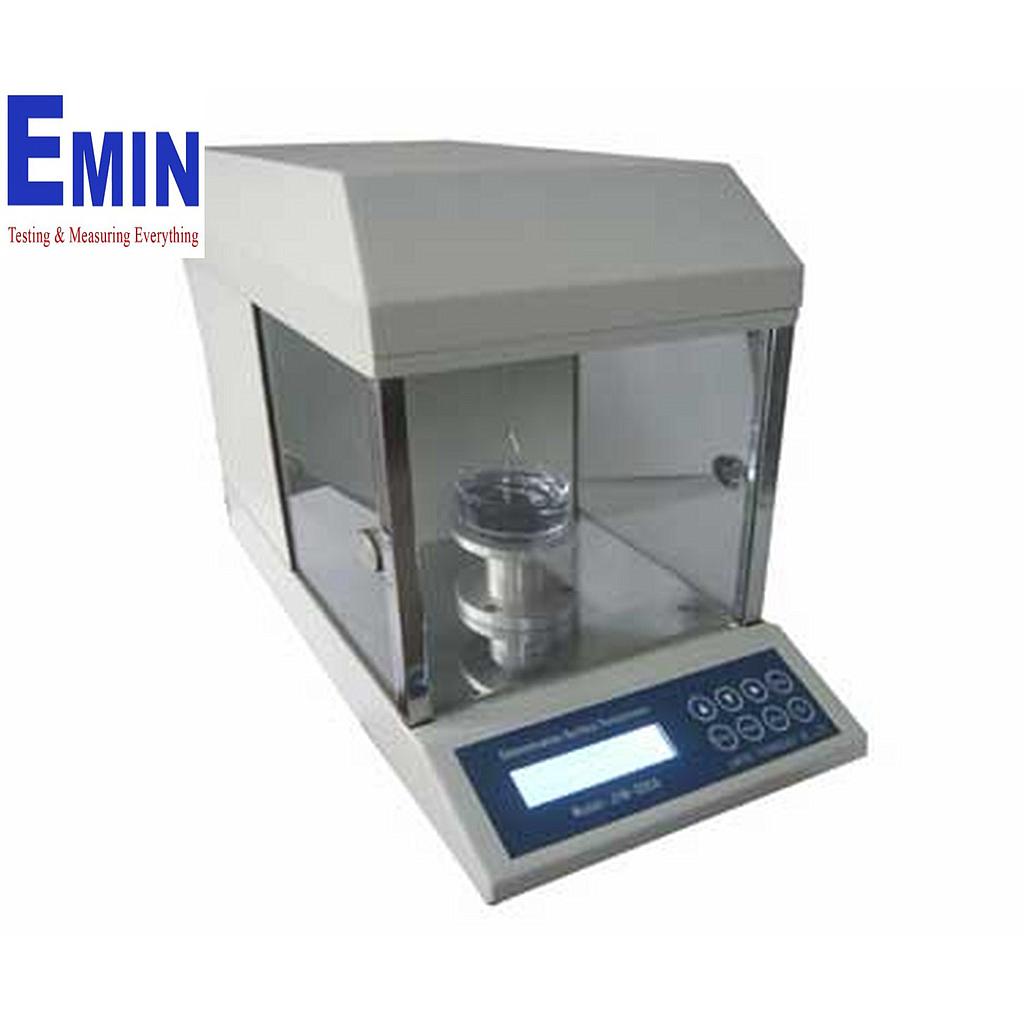
Surface determination tension meter
When wetting, coating, cleaning, bonding, or formulation performance needs to be verified, a reliable Surface determination tension meter becomes an important tool in the lab and on the production floor. Surface tension and interfacial behavior influence how liquids spread, adhere, foam, emulsify, or separate, so the right measuring instrument helps engineers turn a difficult process variable into usable data.
In this category, you will find instruments used for surface tension checks in liquids, formulation development, process monitoring, and material evaluation. The range covers compact handheld devices, laboratory tensiometers for higher-resolution analysis, and simple dyne test pens for quick surface condition checks on treated materials.
Where surface tension measurement matters in practice
Surface tension is closely related to wetting and adhesion. If a liquid does not spread correctly on a substrate, coating defects, poor printability, uneven cleaning results, or unstable formulations can appear. That is why these instruments are commonly used in coatings, inks, detergents, chemicals, electronics cleaning, oil testing, and general materials research.
For technical teams, the goal is usually not just to obtain a number in mN/m. It is to understand whether a process is stable, whether a surfactant concentration is appropriate, or whether a surface treatment step has achieved the required condition. In broader measurement systems, these checks may sit alongside devices such as strain meters and other test instruments used for production quality control.
Different instrument types within this category
This category includes several practical approaches to measurement. Handheld tensiometers are useful when operators need portability and fast checks near the process. A model such as the SITA DynoTester+ is designed for mobile use and is well suited to routine monitoring where speed and ease of handling matter.
For more advanced laboratory work, automatic or dynamic tensiometers provide wider measuring capability and finer resolution. Instruments such as the Dataphysics DCAT 15 Dynamic Tensiometer or the WGM Sigma 200 Fully Automatic Tensiometer are better suited to detailed method development, comparison of formulations, and reproducible testing under controlled conditions.
There are also simpler tools such as the Arcotest 26 mN/m, 38 mN/m, and 44 mN/m Dyne Test Pen. These are not substitutes for a full laboratory tensiometer, but they are practical for quick go/no-go evaluation of surface condition in production or incoming material checks.
Common measurement methods and what they help you evaluate
Several instruments in this category support established techniques such as the Du Nouy ring method and the Wilhelmy plate method. These methods are widely used to assess liquid surface tension and, depending on the instrument, interfacial tension as well. They are especially useful when comparing raw materials, validating formulation changes, or checking consistency between batches.
Some portable instruments focus on dynamic behavior, which is valuable when fresh liquid surfaces are created during spraying, dipping, or high-speed processing. The SITA Pro Line T15+ Allroud tensiometer, for example, is positioned for analysis and optimization tasks where bubble lifetime and surface age can influence the result. This type of measurement can be highly relevant for surfactant-containing systems.
In applications involving oils or liquid-liquid systems, dedicated instruments such as the EPHIPOT EPT402 Oil Interfacial Tension and Surface Tension Tester can support process and quality evaluation where interfacial effects are important, not only the surface behavior of a single liquid.
Examples of instruments available from leading manufacturers
The portfolio includes equipment from manufacturers such as Dataphysics, Arcotest, SITA, Bonnin, EPHIPOT, and WGM. Each brand serves a slightly different need, from quick shop-floor screening to more advanced laboratory analysis.
For portable use, the SITA DynoTester+ offers a compact format with a measuring range suitable for routine liquid checks. For deeper analysis and optimization work, the SITA Pro Line T15+ expands capability with broader method control and onboard data handling. If you need a high-resolution lab instrument with a wider application range, the Dataphysics DCAT 15 is a strong fit for research and analytical environments.
Bonnin models such as the BZY100, BZY200, Q500, and Q1000 address users looking for bench-top liquid surface or interface tension measurement with automated stage movement and direct data display. Meanwhile, Arcotest dyne pens remain a practical choice when the task is to verify whether a treated surface has reached a target wetting level before printing, coating, or bonding.
How to choose the right Surface determination tension meter
The first selection factor is the measurement objective. If the task is quick pass/fail evaluation of surface treatment, a dyne test pen may be enough. If the task is formulation development, interfacial studies, or process optimization, a laboratory tensiometer with better resolution and method support is usually more appropriate.
Next, consider range, resolution, automation level, and workflow. Some applications need only routine readings in a narrow range, while others require high sensitivity, adjustable stage movement, data storage, USB or printer output, or support for ring and plate methods. Portable battery-powered devices are useful when testing must be performed directly at the production line rather than in a fixed laboratory.
It is also worth checking whether your test setup needs density-related functions, temperature monitoring, or dynamic measurement behavior. In a broader industrial setup, supporting equipment and signal handling may also be part of the measurement chain, which is why some users also review related categories such as peripheral devices for a more complete workflow.
Typical users and application scenarios
These instruments are relevant to R&D teams, quality control laboratories, chemical production, surface treatment lines, and technical service groups. In coatings and inks, they help confirm whether liquids will wet the target substrate correctly. In cleaning and pretreatment processes, they can indicate whether bath chemistry remains within a usable operating window.
In packaging, plastics, and film processing, dyne testing is often used to verify whether corona or other surface treatment has prepared a material for downstream printing or lamination. In oils and specialty liquids, interfacial measurement can support contamination checks, formulation assessment, or process condition monitoring.
Because results are often used for comparison over time, repeatability and method consistency matter as much as headline measurement range. For many buyers, the right instrument is the one that matches the real operating environment rather than the most complex platform available.
Why category-level comparison is useful before buying
Looking across the category makes it easier to separate simple screening tools from analytical instruments. A handheld unit, an automatic bench-top tensiometer, and a dyne pen can all relate to surface determination, but they serve very different levels of technical decision-making.
Comparing products at the category level also helps identify whether you need a portable instrument like a SITA device, a research-oriented system from SITA, a bench-top option from Bonnin, or a quick verification tool from Arcotest. That saves time and reduces the risk of selecting a device that is either too limited or unnecessarily complex for the task.
Find a suitable instrument for your testing workflow
This category is built for users who need practical surface tension and surface condition measurement, from routine production checks to more detailed laboratory analysis. Whether your priority is portability, automated testing, dynamic measurement, or simple dyne verification, the available range supports different levels of technical control and budget.
If you are comparing options, start with the sample type, the test method you need, and the level of data quality required for your process. That approach makes it much easier to narrow the selection to the most appropriate Surface determination tension meter for your application.
-
-
-
-
-
-
-
-
-
-
-
-
-
-
-
-
-
-
-
-
-
-
-
-