


Torque sensor
Accurate torque measurement is essential when you need to verify rotational force in assembly, testing, calibration, and machine development. In industrial environments, the right sensor helps improve repeatability, protect equipment from overload, and provide dependable data for quality control or process analysis. This category brings together torque sensor solutions suited to both static and dynamic measurement tasks within force and strain applications.
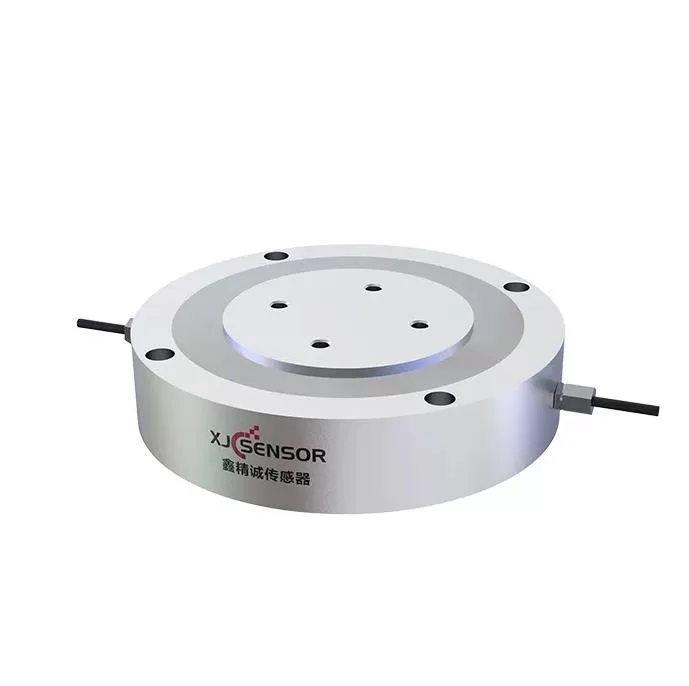
Where torque sensors are used
Torque sensors are commonly selected for applications where rotational force must be monitored with more precision than a mechanical tool or indirect calculation can provide. Typical use cases include bench testing, motor and drivetrain evaluation, fastening verification, production quality checks, and research setups where torque data needs to be captured consistently over time.
Depending on the task, users may be measuring a fixed applied load or monitoring torque while a shaft is rotating. That distinction matters because it affects the sensor design, mounting method, signal output, environmental protection level, and the supporting electronics required to read and condition the signal.
Static and rotating torque measurement
A practical way to evaluate this category is to separate static torque measurement from rotating or shaft-based measurement. Static sensors are often used in test fixtures, calibration stands, and controlled loading applications where the torque is applied without continuous shaft rotation. They are typically chosen for straightforward installation and stable measurement in laboratory or production settings.
Rotating torque sensors are intended for systems where torque must be measured directly on a moving shaft. In these cases, users often need additional information such as rotational speed, dynamic response, and analog output compatibility for integration into a broader measurement chain. For signal conditioning and integration with control or monitoring systems, related products such as load cell transmitters can also be relevant in the overall setup.
Representative products in this category
Among the featured options, the KISTLER 4520A shaft torque sensor is a good example of a dynamic measurement solution for rotating applications. Based on the available data, this model covers rated torque values up to 200 N·m, supports shaft speed measurement, and provides an analog voltage output. That makes it relevant for test benches and systems where torque and rotational behavior must be observed together.
For static measurement, several KERN DC series models illustrate a broad range of nominal capacities. Examples such as the KERN DC 5-Y1, DC 20-Y1, DC 50-Y1, DC 100-Y1, and DC 500-Y1 show how the category addresses different torque ranges without forcing users into a one-size-fits-all approach. Some round-design versions such as the DC 10-Y2, DC 20-Y2, and DC 50-Y2 also indicate the importance of mechanical form factor and ingress protection when selecting a sensor for a specific fixture or work area.
What to consider when choosing a torque sensor
The first selection point is the measuring range. Choosing a sensor too close to the maximum expected torque can reduce safety margin, while oversizing too much may limit useful signal resolution in low-torque operation. A realistic review of nominal torque, overload conditions, and expected operating profile usually leads to a more reliable choice.
Next, consider whether you need static or rotating measurement, the required output type, and the installation environment. Cable connection style, connector type, protection rating, and mounting geometry all affect how easily the sensor fits into the machine or test rig. If the torque value will be monitored together with other force-related channels, accessories and peripheral devices may also be part of the complete measurement system.
Signal quality and integration into measurement systems
In torque measurement, the sensor itself is only one part of the data chain. Signal stability, linearity, hysteresis behavior, and thermal drift can influence how useful the measurement is in real operation. For that reason, engineers often evaluate not only nominal capacity but also the electrical output characteristics and the compatibility with downstream indicators, controllers, or data acquisition hardware.
Where strain-based sensing is part of a larger test architecture, supporting technologies such as strain meters can help with analysis, setup validation, or related measurement tasks. This is especially relevant in labs and industrial test environments where torque is monitored alongside force, strain, or deformation parameters.
Materials, protection, and mechanical design
Mechanical construction directly affects durability and suitability for the application. In the featured products, alloy steel and steel designs are used for static torque sensing, reflecting the need for structural rigidity and repeatable response under load. For rotating shaft sensors, factors such as housing material, connector arrangement, and speed capability become more important because the device must operate reliably under dynamic conditions.
IP protection may also be a deciding factor. Some of the listed KERN models include IP65 protection, which can be useful where dust or splashing water is present. In cleaner lab or enclosed system environments, users may prioritize signal interface and mounting convenience over a higher ingress rating.
Brands commonly considered for torque measurement
This category includes solutions associated with recognized names in industrial measurement, including KISTLER and KERN, while the broader manufacturer landscape also features brands such as Snap-on, FUTEK, Mecmesin, Onosokki, SCHMIDT, CURIOTEC, and Sushma. In practice, brand selection is usually driven by application type, preferred signal interface, installation requirements, and the level of integration needed in the test or production environment.
Rather than choosing by brand alone, it is usually more effective to compare the sensor structure, torque range, environmental suitability, and measurement method. A lower-range static sensor for fixture-based verification and a shaft-mounted dynamic sensor for rotating machinery solve different problems, even though both fall under the same torque measurement category.
Finding the right fit for your application
The most suitable torque sensor depends on how torque is generated, how it will be mounted, and how the signal will be used afterward. If the application involves a fixed test setup and repeatable non-rotating loads, a static sensor may be the better fit. If you need continuous measurement on a running shaft, a dynamic sensor with speed-related capability and appropriate output characteristics is generally more suitable.
By comparing torque range, design type, environmental protection, and signal integration needs, buyers can narrow the options more efficiently and build a measurement chain that performs reliably in real use. This category is intended to support that selection process with torque sensor options that fit a wide range of industrial and technical measurement tasks.
-
-
-
-
-
-
-
-
-
-
-
-
-
-
-
-
-
-
-
-
-
-
-
-