


Vacuum Forming Machine
When plastic packaging, trays, inserts, or formed components need to be produced with repeatable shape and stable cycle time, the forming process becomes a critical part of the production line. A Vacuum Forming Machine is widely used for shaping thermoplastic sheets into practical parts for packaging, product protection, display, and many other industrial applications.
On this page, buyers can explore equipment suited to different production scales, from compact semi-automatic setups to larger automatic systems. The category is especially relevant for manufacturers working with common forming materials such as PVC, PET, PP, PS, and PC, where output consistency, controllable heating, and efficient handling are important.
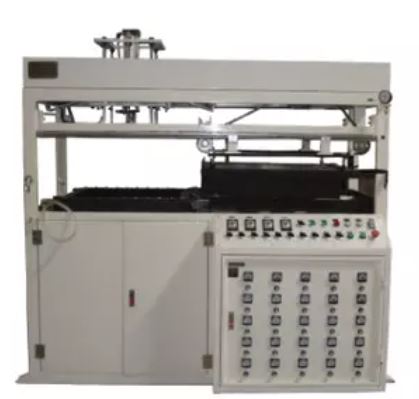
Where vacuum forming machines fit in production
Vacuum forming is a thermoforming process in which a heated plastic sheet is drawn over a mold and shaped by vacuum pressure. It is commonly chosen for packaging applications, blister packs, trays, covers, and lightweight formed parts because the process can balance productivity with relatively flexible tooling and material options.
In industrial environments, the machine itself is only one part of the wider workflow. Material feeding, temperature control, forming depth, cooling, and part collection all influence final product quality. For that reason, buyers often evaluate not only the forming area and speed, but also the surrounding support equipment such as industrial water chiller systems for cooling stability and downstream packaging equipment where required.
Common machine configurations in this category
This category includes both semi-automatic and automatic vacuum forming equipment. The right configuration depends on throughput targets, part size, material thickness, operator involvement, and how integrated the line needs to be.
For smaller production runs or workshops that need flexibility, a compact semi-automatic unit can be a practical starting point. The Danrel DR-SVF Small Semi-Automatic Plastic Sheet Vacuum Thermoforming Machine is an example of a machine designed for plastic sheet forming with a moderate footprint, making it suitable for operations that need controlled forming without a fully automated line.
For higher-volume production, automatic equipment becomes more attractive. Models such as the Danrel DR-71H-S Automatic Blister Packing Industry Vacuum Forming Machine and the Danrel DR-71H-L Large Scale Automatic Plastic Vacuum Forming Machine illustrate the move toward larger forming ranges, PLC and touch-screen operation, and faster working efficiency for continuous industrial use.
Key factors to compare before selecting a machine
A good purchasing decision usually starts with the actual product being formed. Buyers should first confirm the sheet material, typical thickness range, product dimensions, required forming depth, and expected hourly output. These points directly affect machine size, heating requirements, and whether a semi-automatic or automatic design makes more sense.
Another important factor is forming area and adjustable range. If your product portfolio includes several tray or blister sizes, adjustable forming width and length can add useful flexibility. Machines in this category also show the importance of coordinated control systems, with PLC and touch-screen operation helping operators manage process settings more consistently.
Cooling and temperature control should not be overlooked. Stable heating and reliable cooling have a direct effect on shape accuracy, cycle time, and repeatability, particularly when working with different thermoplastics. In some production environments, pairing the line with appropriate compressed air treatment equipment and cooling support can also improve overall process reliability.
Materials and application scope
Vacuum forming machines are commonly used with sheet materials such as PVC, PET, PP, PS, and PC. Each material behaves differently during heating and forming, so the choice of machine should align with the material set used in production and the quality expectations for the finished part.
Typical applications include blister packaging, custom trays, protective inserts, retail display components, product housings, and formed covers. In packaging-oriented operations, vacuum forming equipment may also work alongside a heat shrinking machine as part of a broader packing process, depending on how the finished goods are wrapped and prepared for shipment.
The category is therefore relevant not only for packaging producers, but also for contract manufacturers and factories that need formed plastic components as part of a larger assembly or product presentation workflow.
Featured Danrel models in this category
Danrel is the main featured manufacturer in this category, with representative equipment covering different production needs. Rather than focusing only on model names, it is more useful to look at how the machines fit operational requirements.
The DR-SVF semi-automatic model is suitable when space, budget, and process flexibility are key concerns. It supports plastic sheet thermoforming in a smaller machine format and can be relevant for pilot production, lower-volume jobs, or operations that still rely on manual handling at certain stages.
The DR-71H-S and DR-71H-L models represent larger automatic systems intended for more demanding production. With adjustable forming dimensions, support for multiple thermoplastic materials, and integrated control functions, these machines are better aligned with facilities that need higher cycle rates and more standardized output. The distinction between them is especially meaningful when comparing throughput expectations and the scale of the finished parts being produced.
How to match machine type to your production plan
If product demand is variable, tooling changes are frequent, or the operation is still developing its process, a semi-automatic machine can offer a more manageable entry point. It allows teams to build process knowledge while keeping equipment investment aligned with current output needs.
Automatic systems are generally a stronger fit when production is repetitive, labor efficiency matters, and the line must deliver stable volume over time. In these cases, buyers often review not only machine speed, but also utility requirements, floor space, loading and receiving layout, and integration with upstream or downstream equipment.
It is also worth considering maintenance access, operator skill level, and the expected mix of product sizes. A machine that looks sufficient on paper may become restrictive if future packaging formats or formed parts require more adjustment range than originally planned.
What this category helps buyers evaluate
This category is designed to help industrial buyers compare vacuum forming equipment by application fit rather than by model list alone. The most useful comparison points usually include production scale, supported material types, forming dimensions, degree of automation, and the supporting utilities needed to keep the process stable.
For many B2B purchasing teams, the goal is not simply to find a machine that can form plastic sheet, but to identify a system that can support consistent output, practical operation, and future expansion. Reviewing representative machines from Danrel can provide a clearer starting point for that evaluation.
Whether you are building a new packaging line or upgrading an existing thermoforming process, this category offers a practical way to narrow down equipment options based on how your production actually runs.
-
-
-
-
-
-
-
-
-
-
-
-
-
-
-
-
-
-
-
-
-
-
-
-