


Integrating Sphere Test System
Accurate optical measurement often depends on one thing: creating a stable, uniform light environment that removes variables from the test setup. That is why Integrating Sphere Test System solutions are widely used in photometry, radiometry, display evaluation, sensor calibration, and laboratory characterization of light sources. For engineers and technical buyers, this category is especially relevant when measurement repeatability, traceable calibration, and controlled luminance or spectral output are part of the workflow.
These systems are used across R&D, production, and quality control environments where direct measurement of a source is not enough. By diffusing light within a coated sphere, they help create a highly uniform optical field, which supports more reliable comparison of LEDs, lamps, displays, cameras, and optical detectors.
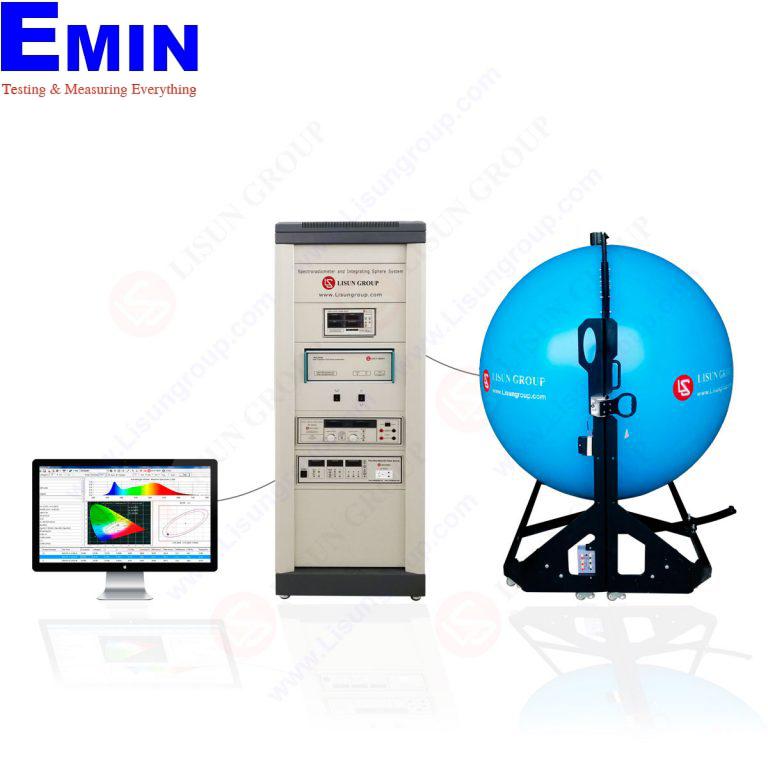
Why integrating sphere systems matter in optical testing
An integrating sphere is designed to spatially average incoming light through multiple diffuse reflections on the inner coating. In practical terms, this makes it possible to measure optical characteristics with less sensitivity to source directionality, beam shape, or local intensity variation. That is particularly useful when testing LEDs, display components, image sensors, and calibrated light sources.
In many labs, the sphere is not just a passive accessory but part of a broader test system that may include detectors, monitor sensors, variable apertures, control electronics, and calibration data. This system-level approach helps users move beyond simple spot measurements and toward reproducible luminance, radiance, or spectral evaluation under defined conditions.
Typical applications in laboratories and production environments
This category is well suited for applications such as uniform light generation, pixel uniformity calibration, camera and image sensor matching, and spectral radiance reference work. In imaging and display-related setups, an integrating sphere can provide a controlled output field that supports adjustment, verification, and comparison of devices under test.
Several listed models also indicate use as reference lamps or calibration standards, including work involving spectral radiance and luminance. For teams building broader optical benches, integrating spheres are often used together with instruments such as light meters for illuminance checks or camera testers when validating imaging performance in a repeatable light environment.
What you can find in this category
The product range here includes compact spheres for localized output as well as larger systems intended for more demanding calibration or source simulation tasks. A model such as the Gigahertz-Optik ISS-8P-LED-VA is positioned for high luminance output and variable intensity control, making it suitable for pixel uniformity calibration and adjustment. By contrast, the Gigahertz-Optik ISMS-30-VAS features a 300 mm sphere diameter and high uniformity, which can be useful when larger optical interfaces or stable diffuse conditions are needed.
There are also systems configured for specific spectral or application requirements. The Gigahertz-Optik ISS-17-RGBW and ISS-15-RGBW illustrate RGBW-based solutions for calibrated radiance or luminance work, while the ISS-30-TLS Tunable LED Light Source shows how a sphere-based system can be integrated into tunable, multi-channel LED configurations. For spectral radiance calibration over a broader range, the ISD-5P-SR-FS extends into 1700 nm, which is relevant in specialized optical and fluorescence-related setups.
Key selection factors for an integrating sphere test system
Choosing the right system starts with the measurement objective. If the goal is source characterization, key points include spectral range, calibration scope, and detector compatibility. If the goal is creating a reference light source, output port size, luminance stability, and intensity control become more important. Engineers should also consider whether the setup is intended for lab calibration, production verification, or environmental testing.
Physical configuration matters as well. Sphere diameter, port size, aperture options, and coating type influence how the light is distributed and how the device under test can be coupled to the system. For example, some models in this category provide small, controlled output ports, while others support larger openings or optional reducers for different source geometries. Temperature range and system electronics should also be checked carefully, especially when the equipment will be used in chambers or multi-instrument benches.
Calibration, uniformity, and controllability
For many buyers, the value of an integrating sphere system is closely tied to measurement confidence. Models in this category frequently reference calibration certificates, traceability information, and uncertainty data. This is important when measurement results must be documented, compared across sites, or used to support validation work in development and quality processes.
Uniformity is another critical factor. Several Gigahertz-Optik systems specify better than 98% uniformity, which is highly relevant when the sphere is used as a uniform source for sensor or display testing. In addition, features such as monitor detectors, variable apertures, and multi-step intensity control can improve repeatability and help users adapt the optical output to different DUT conditions without changing the entire test arrangement.
Manufacturer focus in this category
Gigahertz-Optik is the most visible manufacturer in this category based on the listed products, with a broad selection covering compact integrating spheres, calibrated reference sources, RGBW variants, and tunable LED-based systems. This makes the brand especially relevant for users who need application-specific configurations rather than a one-size-fits-all instrument.
Depending on the wider project scope, buyers may also review offerings from Opsytec Dr.Grobel or TES where suitable. In most cases, however, the final choice should be driven by the required optical output, calibration needs, mechanical interface, and intended test method rather than by brand alone.
How integrating spheres fit into a broader optical measurement setup
In real-world use, an integrating sphere is rarely the only instrument in the workflow. It often serves as the controlled optical source or measurement interface within a larger chain that includes photometric instruments, sensor readout, imaging tools, and alignment equipment. That is why system compatibility matters just as much as the standalone sphere specification.
Teams working on spectral or color-sensitive applications may also need related tools such as color sensors to monitor output consistency, while optical alignment or beam conditioning tasks can involve a collimator in the same test environment. Looking at the sphere as part of the full measurement ecosystem usually leads to a better long-term equipment decision.
Finding the right system for your application
The most effective way to compare options in this category is to start with the use case: calibration source, luminance reference, spectral radiance work, image sensor matching, display testing, or chamber-based evaluation. From there, narrow the list by optical range, output geometry, controllability, and calibration requirements. This approach is more practical than comparing model names alone, especially in technical projects with strict validation criteria.
If your application requires a stable and diffuse optical source, controlled luminance levels, or documented calibration performance, this category provides a strong starting point. Reviewing the intended test method alongside sphere size, port configuration, and measurement range will help you identify the integrating sphere test system that best fits your lab or production process.
-
-
-
-
-
-
-
-
-
-
-
-
-
-
-
-
-
-
-
-
-
-
-
-