


Superficial Rockwell Hardness Tester
When testing thin sheet, small parts, plated surfaces, or shallow case-hardened layers, standard Rockwell methods can apply too much force and influence the result. In these situations, a Superficial Rockwell Hardness Tester is often the more appropriate choice because it uses lighter test forces and is better suited to delicate or relatively thin specimens.
This category is intended for users who need more reliable hardness evaluation on parts where indentation depth and material thickness matter. It is commonly relevant in metalworking, tube production, quality control, incoming inspection, and applications where conventional Rockwell testing may be too aggressive for the sample.
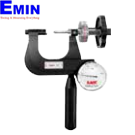
Why superficial Rockwell testing is used
The superficial Rockwell method is designed for materials and geometries that require lower preliminary and total test forces than standard Rockwell testing. This helps reduce the risk of over-penetration and makes the method practical for thin steel plate, softer metal sheet, and small cylindrical components where maintaining test integrity is important.
In production environments, this is especially useful when comparing batches, checking heat treatment consistency, or inspecting finished parts without causing excessive marking. For users handling a wider range of materials or test methods, it may also be useful to review related options such as Rockwell hardness testers for standard-force applications.
Typical applications and workpieces
Superficial Rockwell hardness testers are commonly selected for thin metal sheets, light sections, tubing, and smaller formed parts. Because the test uses lighter loads, it is better aligned with parts that would be difficult to evaluate accurately using heavier-force hardness methods.
Examples in this category context include tube and cylindrical specimen measurement. Some listed models are intended for workpieces with small minimum diameters, defined internal diameter requirements, and thin-wall conditions, making them relevant for precision fabrication and tube processing workflows.
Representative models in this category
Among the products shown here, the SADT range provides clear examples of superficial Rockwell testing for lighter-load inspection. The SADT M1S and SADT M2S support superficial Rockwell scales including 15N, 30N, 45N, 15T, 30T, and 45T, using a 29.42N preliminary test force with total test forces of 147.1N, 294.2N, and 411.3N depending on the selected scale.
The difference between these two models is not only the naming but also the test space. The SADT M1S offers a smaller opening and depth, while the SADT M2S provides a larger opening and depth, which can be helpful when the part size or access condition is less compact. For tubing-focused Rockwell inspection under different force conditions, the SADT M1ST is another relevant reference in this broader hardness testing ecosystem.
How to choose the right tester
A practical selection process starts with the workpiece geometry. Check whether you are testing flat sheet, cylindrical samples, or tube sections, then match that to opening, depth, and minimum specimen size requirements. These factors directly affect whether the indenter can reach the test point correctly and whether the sample can support the test without distortion.
The next step is choosing the right hardness scale and force range for the material and expected hardness window. If your inspection tasks extend beyond superficial Rockwell and include portable checks on large parts or installed components, you may also want to compare this category with Leeb and handheld hardness meters, which are useful in very different testing scenarios.
Key factors that affect measurement quality
Even with a suitable instrument, hardness results depend on proper setup and specimen condition. Surface finish, part stability, thickness, curvature, and test point location can all influence the reading. Thin materials in particular require careful support so that the reading reflects material hardness rather than flexing or local deformation during the test.
Calibration and verification are just as important. In routine quality control, using certified or application-appropriate reference blocks helps maintain confidence in repeatability and traceability. If regular verification is part of your process, related items such as standard blocks for hardness testers are worth considering alongside the main instrument.
Brand context and broader hardness testing options
This category includes products from SADT, a manufacturer represented here with superficial Rockwell and tubing-related hardness testing models. The available products reflect common industrial needs such as testing small cylindrical specimens, thin sheets, and circular tube sections under controlled direct-force conditions.
Depending on the inspection objective, superficial Rockwell is not always the only route. For portable field work, rapid screening, or larger components where bench-style testing is less practical, other methods may be more appropriate. In those cases, categories such as ultrasonic hardness testing or universal hardness systems can provide a different balance between portability, application range, and test principle.
When this category makes sense for your process
If your parts are thin, small, or sensitive to heavier indentation, this category is a strong starting point. It is especially relevant when you need repeatable bench testing on metal components that fall within superficial Rockwell scale requirements and where controlled, lower-force testing improves confidence in the result.
Before ordering, compare specimen size, scale compatibility, access dimensions, and the physical layout of the tester against your actual parts. A well-matched superficial Rockwell tester can make routine inspection more consistent, reduce retesting, and support more dependable quality decisions across production and incoming goods inspection.
-
-
-
-
-
-
-
-
-
-
-
-
-
-
-
-
-
-
-
-
-
-
-
-