


D-Type Temperature Sensor
When temperature measurement moves into very high heat, sensor selection becomes far more than a routine specification exercise. Material compatibility, junction construction, wire gauge, and operating limits all affect whether a measurement point remains stable, responsive, and usable in demanding industrial or laboratory environments.
D-Type Temperature Sensor products are typically chosen for applications where conventional thermocouple styles may not be suitable for extreme temperatures. In this category, the focus is on tungsten-rhenium based sensing elements and related assemblies designed for challenging thermal conditions, including high-temperature process monitoring, furnace work, and specialized test setups.
Where D-Type temperature sensors fit
A D-type thermocouple is associated with high-temperature measurement using tungsten-rhenium conductor combinations. This makes it relevant in environments where elevated process temperatures require materials that can maintain useful thermoelectric behavior beyond the range of more common sensor types. In practice, these sensors are often considered for research, thermal processing, and specialized industrial systems where heat resistance is a primary concern.
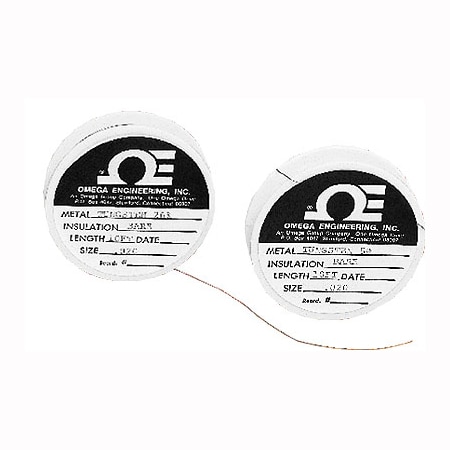
This category includes not only finished sensing assemblies, but also bare thermocouple wire and fine-gage microtemp configurations. That matters because some users need a ready-to-install probe, while others are building custom junctions, replacing worn sensing elements, or integrating thermocouple materials into a test fixture or compact measurement point.
Typical product formats in this category
The range shown here reflects several practical ways D-type sensing technology is used. Bare wire options such as the OMEGA W3W25-020 and related variants support custom fabrication, repair work, and experimental setups where the user needs direct control over junction formation and installation geometry.
There are also unsheathed fine-gage thermocouples, including models such as OMEGA T3R-020-24 and T3R-005-12, intended for applications that benefit from a very small sensing mass and exposed junction construction. For more structured installation in harsh thermal environments, probe-style designs like the OMEGA XMO-W3R25-U-125-30-H-Q-24 provide a more complete sensing assembly for demanding process conditions.
How to choose the right D-type sensor
The first point to review is the temperature range. In this category, some bare wire products are listed for process temperatures up to 2315 °C, while some assembled microtemp thermocouples are rated to lower maximum process temperatures. Selection should therefore match the real operating condition, not simply the broadest number available in the category.
The second factor is construction. Fine wire can improve response time and make it easier to form compact junctions, but thinner conductors may be better suited to controlled environments than to heavy mechanical handling. Probe construction, sheath materials, insulation systems, and junction style all influence durability, contamination resistance, and how the sensor behaves under thermal cycling.
Connection style is also important. Some products in this category use stripped leads for direct integration, while others are configured with thermocouple connectors. For OEM builds, test rigs, and replacement work, that distinction can simplify installation and reduce the amount of additional hardware needed.
Why wire gauge and junction style matter
Wire gauge has a direct impact on both handling and measurement behavior. Fine diameters such as 40 AWG or 36 AWG are useful when low thermal mass and fast response are priorities, especially in small-scale or transient measurements. Larger gauges, such as 24 AWG, can be easier to work with and may offer better robustness during assembly or repeated use.
Junction style affects exposure to the process and the balance between response speed and protection. Exposed junction designs can react quickly because the sensing point is in closer contact with the environment, but they may be less protected from mechanical damage or contamination. Ungrounded or more isolated constructions are often preferred when electrical isolation or process separation is part of the installation requirement.
Examples from OMEGA for high-temperature applications
OMEGA is the primary manufacturer represented in this category, with products covering raw thermocouple materials, fine-gage assemblies, and extreme-temperature probes. This gives buyers flexibility whether they are sourcing a finished sensor or selecting component-level materials for custom builds.
For example, the W3W25 series offers matched-pair tungsten-rhenium bare wire in multiple diameters, including W3W25-015, W3W25-010, and W3W25-003. The T3R series provides unsheathed microtemp thermocouples with exposed junctions in different gauges and lead lengths, while the XMO series extends into specialized probe configurations for severe heat conditions. Together, these products show the broader ecosystem around D-type measurement rather than a single one-size-fits-all format.
Comparing D-type with other high-temperature sensor options
Not every high-temperature measurement task points to the same thermocouple family. Depending on the environment, users may also compare this category with C-type temperature sensors or review G-type temperature sensors for adjacent application needs. The right choice depends on process temperature, atmosphere, mechanical design, and the form factor required at the measurement point.
That is why category-level selection should start with the application itself: continuous or intermittent duty, open-air or controlled atmosphere, custom junction or finished probe, and the level of mechanical protection needed. Once those practical constraints are clear, narrowing the suitable D-type product format becomes much easier.
Common use cases for this category
D-type sensor products are often evaluated for situations where extreme temperature sensing is central to process control, validation, or experimental measurement. This may include furnace-related thermal work, materials testing, sensor development, or specialized high-heat instrumentation where fine-gage thermocouple materials are required.
Within such applications, bare wire is commonly used for custom junction creation, while microtemp thermocouples help where small size and fast thermal response are valuable. Probe-style assemblies are more suitable when the installation calls for a defined geometry, a specific sheath material, or a more structured electrical connection.
Find the right configuration for your installation
This category is built for buyers who need more than a generic temperature sensor. From tungsten-rhenium bare wire to exposed-junction microtemp assemblies and extreme-temperature probe formats, the available options support a range of high-heat measurement tasks with different installation and performance priorities.
If you are selecting a D-type sensor, focus on the actual process temperature, required sensor form, connection method, and the handling demands of the application. A careful match between sensor construction and operating environment will usually deliver better long-term performance than choosing only by maximum temperature rating.
-
-
-
-
-
-
-
-
-
-
-
-
-
-
-
-
-
-
-
-
-
-
-
-