


Temperature Sensor Elements
Accurate temperature measurement often starts with the sensing element itself. In applications that range from embedded electronics and equipment monitoring to laboratory systems and low-temperature research, the right Temperature Sensor Elements help determine signal stability, installation flexibility, and overall measurement quality.
This category focuses on core sensing components used to detect temperature at the point of measurement. Rather than complete probe assemblies, these elements are typically selected for integration into instruments, custom housings, thermal fixtures, or specialized process setups where response characteristics, mounting style, and output behavior matter.
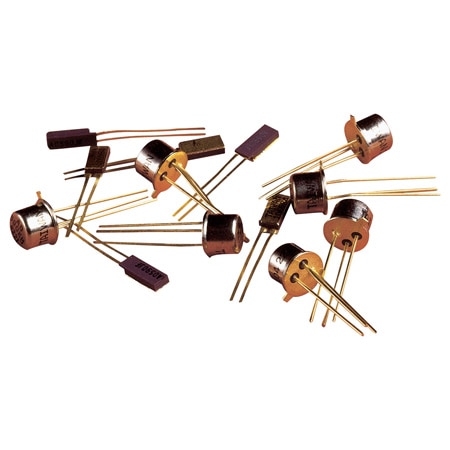
Where temperature sensor elements fit in a measurement system
Sensor elements are the functional heart of many temperature measurement solutions. They convert thermal conditions into an electrical signal that can be interpreted by a controller, transmitter, data acquisition system, or dedicated monitoring circuit. In B2B environments, this makes them especially relevant for OEM design, test benches, instrumentation development, and retrofit projects.
Compared with fully assembled probes, sensor elements give engineers more freedom in packaging and mechanical integration. They can be embedded into compact spaces, attached to thermal masses, or incorporated into custom assemblies where a standard probe is not the best fit. If your application requires a broader sensor selection beyond this category, you may also want to review other temperature sensing options.
Typical sensor technologies in this category
This category includes silicon diode temperature sensors with different electrical output behaviors and mounting formats. One important group is represented by linear current output devices such as the OMEGA AD590KH and OMEGA AD590KF. These are often considered when designers want a sensor element with a current output proportional to absolute temperature and a straightforward interface into conditioning electronics.
Another notable group is the cryogenic silicon diode family, including examples such as OMEGA CY670D-SD, CY670D-LR, and CY670D-ET. These devices are relevant where cryogenic temperature measurement and repeatable low-temperature sensing are required. The available mounting forms help adapt the same sensing principle to different mechanical and thermal interfaces without changing the broader measurement concept.
How to choose the right temperature sensor element
Selection usually begins with the operating temperature range and the required signal type. Some applications prioritize a linear current output for easier electronic conversion, while others need voltage-based cryogenic sensing for very low temperature environments. It is also important to consider the acceptable accuracy band, repeatability, and long-term stability expected by the system.
Mechanical integration is equally important. In this category, available formats include TO-52 case, flat pack case, screw-in designs, clamp-style versions, bolt-on styles, and bobbin-mounted constructions. These differences affect thermal contact, installation method, serviceability, and how quickly the element follows temperature changes in the target medium or surface.
For projects centered on specific sensor classifications, related categories such as C-type temperature sensors and D-type temperature sensors can help narrow the search by sensor family.
Examples from the OMEGA range
OMEGA is a key manufacturer represented in this category, with sensor elements suited to both general-purpose and specialized thermal measurement tasks. Within the AD590 series, models such as AD590KH, AD590KF, AD590JH, and AD590JF provide similar sensing principles with differences in package style and performance grade. This gives design teams options when balancing board space, assembly method, and temperature accuracy targets.
For low-temperature applications, the CY670 series demonstrates how the same sensing technology can be offered in multiple mechanical formats. Examples in this category include flat sensors, half-rounded cylinders, screw-in versions, copper bobbin styles, clamp-style units, and bolt-on configurations. That variety is useful when thermal coupling and installation geometry are just as important as the sensing element itself.
Application contexts for sensor elements
Temperature sensor elements are commonly used in custom instrumentation, research setups, thermal control assemblies, environmental chambers, and embedded monitoring systems. They are also relevant in equipment manufacturing when the designer needs to build the sensing point directly into the product rather than attach a finished probe after assembly.
Cryogenic diode elements in particular are suited to laboratory and scientific environments where very low temperatures, controlled excitation, and repeatable behavior are important. Linear current output elements are often selected for industrial electronics and compact systems where signal conditioning simplicity can support cleaner integration into analog front ends or monitoring circuits.
Why mounting style and packaging matter
A sensor element does not operate in isolation from its mechanical environment. Package type influences how effectively heat is transferred from the measured surface or medium into the sensing junction. It can also affect ease of installation, lead routing, resistance to assembly stress, and the practical response time of the measurement point.
For example, a TO-52 or flat pack device may be appropriate in compact electronic assemblies, while clamp, screw-in, or bolt-on formats can be more suitable where secure contact with a surface is required. Bobbin-style constructions may be preferred in specialized thermal setups. If your installation involves direct attachment to vessels or piping, a related category such as pipe and tank mounting solutions may provide a better fit.
What to review before ordering
Before selecting a sensor element, verify the expected temperature span, interface method, physical envelope, and mounting constraints of the final assembly. It is also good practice to check whether the system requires a particular excitation condition, wiring arrangement, or packaging style to maintain measurement consistency.
For engineering and procurement teams, this category is most useful when treated as a building-block selection page. Instead of choosing by part number alone, compare the sensing principle, form factor, and application intent of each option. That approach usually leads to better integration results and fewer redesigns later in the project.
Conclusion
Choosing the right temperature sensor element is less about finding a generic part and more about matching sensing behavior to the real mechanical and electrical conditions of the application. From linear current output devices to cryogenic silicon diode sensors, this category supports projects that need dependable thermal measurement at the component level.
If you are designing a custom measurement assembly, upgrading an existing sensing point, or sourcing components for specialized low-temperature work, these temperature sensor elements provide a practical starting point for a more precise and better-integrated solution.
-
-
-
-
-
-
-
-
-
-
-
-
-
-
-
-
-
-
-
-
-
-
-
-