


Security metal detector
Security screening often needs to be fast, repeatable, and practical in environments where large numbers of people or items must be checked without slowing operations. In those situations, a security metal detector helps teams identify concealed metallic objects while maintaining a more controlled and consistent inspection process across entry points, checkpoints, and restricted areas.
This category focuses on handheld security detectors used in applications such as access control, event screening, public buildings, industrial sites, and other locations where portable inspection tools are preferred. Product selection usually depends on factors such as sensitivity control, alarm method, battery system, ergonomics, and how the detector fits into daily screening routines.
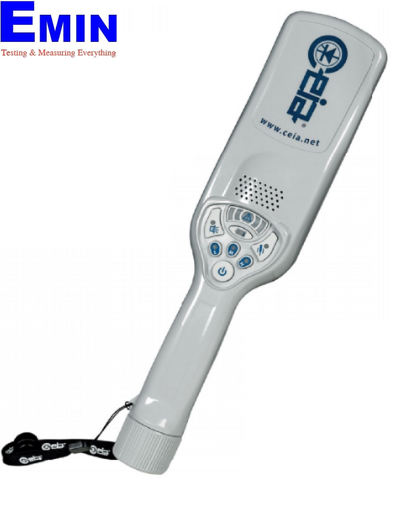
Where handheld security metal detectors are commonly used
Handheld detectors are designed for close-range inspection of people, bags, garments, and personal items after an initial screening step or as a standalone solution in lower-throughput checkpoints. They are widely used in security operations because they are portable, easy to deploy, and suitable for both fixed and temporary inspection areas.
Typical use cases include schools, offices, transport hubs, factories, warehouses, government facilities, and event venues. In some projects, users may also compare this category with tools for field detection or infrastructure tracing, such as pipe and cable locating equipment, but the intended purpose is different: security models are optimized for personnel screening rather than utility locating.
What to evaluate when choosing a security screening detector
The first point to review is detection sensitivity. Security checkpoints may need to detect small metallic items while reducing nuisance alarms from harmless objects or surrounding structures. Models with adjustable sensitivity levels can help operators adapt the detector to different site rules, threat profiles, and inspection distances.
Alarm options are also important. Many handheld units combine audio, LED, and vibration alerts so they can be used in noisy public areas or in situations where discreet screening is preferred. Power supply and battery life matter as well, especially for multi-shift use. Rechargeable systems, docking stations, and low-battery indication can simplify daily maintenance and improve availability.
Environmental durability should not be overlooked. For industrial entrances or outdoor checkpoints, operating temperature range, handling comfort, and long service time can be just as important as raw sensitivity. If your requirement is not personnel screening but searching for hidden metal in structures, a separate category such as detectors for metal and wires in walls may be more appropriate.
Representative product options in this category
Several product lines in this category illustrate different approaches to handheld screening. From CEIA, the PD140E and PD140N are compact security detectors intended for routine inspection work, with support for common alert functions and long operating time. The CEIA PD240CB extends the concept with a configurable control interface and docking-oriented workflow, which can be useful where fleets of detectors are managed across security teams.
NOKTA offers models such as the ULTRA SCANNER, ULTRA SCANNER PRO, NMS20, and NMS30. These examples show how users may choose between compact handheld screening tools and models with rechargeable operation, multiple alarm modes, and sensitivity adjustment. For cost-sensitive or general-purpose applications, products like the ZOAN MD-3003B1 and Value+ MD28A or MD28B may also be relevant depending on the operating environment and inspection procedure.
The category also includes specialized handheld formats such as the Ebinger EB 610 C Cloverleaf Hand-Held Metal Detector. While device geometry and handling style can vary, the core selection logic remains similar: reliable object detection, operator-friendly alarms, and practical day-to-day use.
Differences between basic and advanced handheld detectors
A basic handheld detector is usually chosen for straightforward checkpoint duties where operators need simple operation, audible or visual indication, and standard battery-powered use. These models can be suitable for occasional inspections, small facilities, or deployments where charging infrastructure is not a priority.
More advanced units often add features such as multiple alarm modes, configurable sensitivity, rechargeable battery systems, docking stations, and accessory support. In larger security operations, these details can make a noticeable difference by improving charging discipline, reducing downtime, and helping teams standardize screening procedures across multiple devices.
Accessories can also support practical use rather than detection itself. For example, the CEIA 64614 Belt Holster is intended for PD140E and PD140N users who need convenient carrying during active patrol or checkpoint work. This type of accessory becomes relevant when operators need hands-free mobility between inspections.
How to match the detector to your operating environment
For schools, offices, reception areas, and temporary events, compact handheld models are often enough when throughput is moderate and inspections are performed manually. In these cases, simple controls and clear alarms can be more valuable than advanced configuration menus. The goal is usually fast familiarization for security staff and dependable performance during everyday checks.
For airports, logistics centers, industrial gates, detention facilities, or high-security sites, the decision may lean toward models with better charging workflows, robust construction, and more controlled sensitivity settings. A handheld screening workflow may also include test pieces, charging docks, spare batteries, and carrying accessories, especially when detectors are used continuously over long shifts.
If the requirement is to locate metal objects buried below ground rather than scan people at checkpoints, users should instead review categories like underground metal detectors. Choosing the right detection method from the start helps avoid mismatched equipment and unrealistic performance expectations.
Practical considerations for daily security use
In routine operation, consistency is just as important as sensitivity. Operators should be able to understand the detector response quickly, distinguish alarm conditions clearly, and use the unit comfortably for repeated scans. Weight, balance, handle design, and battery replacement or charging method all influence real-world productivity.
It is also worth considering how the detector will be maintained. Models with rechargeable batteries and docking solutions can reduce recurring battery handling, while long battery life remains valuable for mobile teams or temporary checkpoints. Where formal screening procedures apply, buyers may also look for equipment aligned with recognized testing or security-use standards when that information is available in the product details.
Finding the right security metal detector for your application
This category brings together handheld screening tools for organizations that need portable metal detection in controlled access environments. The most suitable option depends less on headline features alone and more on how the detector will actually be used: checkpoint volume, operator training level, charging routine, environmental conditions, and the type of objects the team needs to detect.
By comparing sensitivity adjustment, alert methods, battery strategy, and accessory ecosystem across available models, buyers can narrow the selection to equipment that fits their workflow instead of choosing on specification lists alone. For security teams that need dependable handheld inspection, this category provides a practical starting point for selecting a detector that matches both operational demands and day-to-day usability.
-
-
-
-
-
-
-
-
-
-
-
-
-
-
-
-
-
-
-
-
-
-
-
-