


Metal Detector
Locating hidden metal, tracing buried utilities, improving security screening, or recovering small targets in the field all require different detection methods. This is why the Metal Detector category is broader than a single type of instrument: it covers handheld screening devices, underground search detectors, pinpointers, and cable locating tools used across maintenance, inspection, security, and technical fieldwork.
For B2B buyers, selecting the right equipment usually starts with the job itself rather than the product name. Detection depth, target type, operating environment, portability, and signal interpretation all matter, especially when equipment is used in industrial sites, facility management, public access control, or professional survey work.
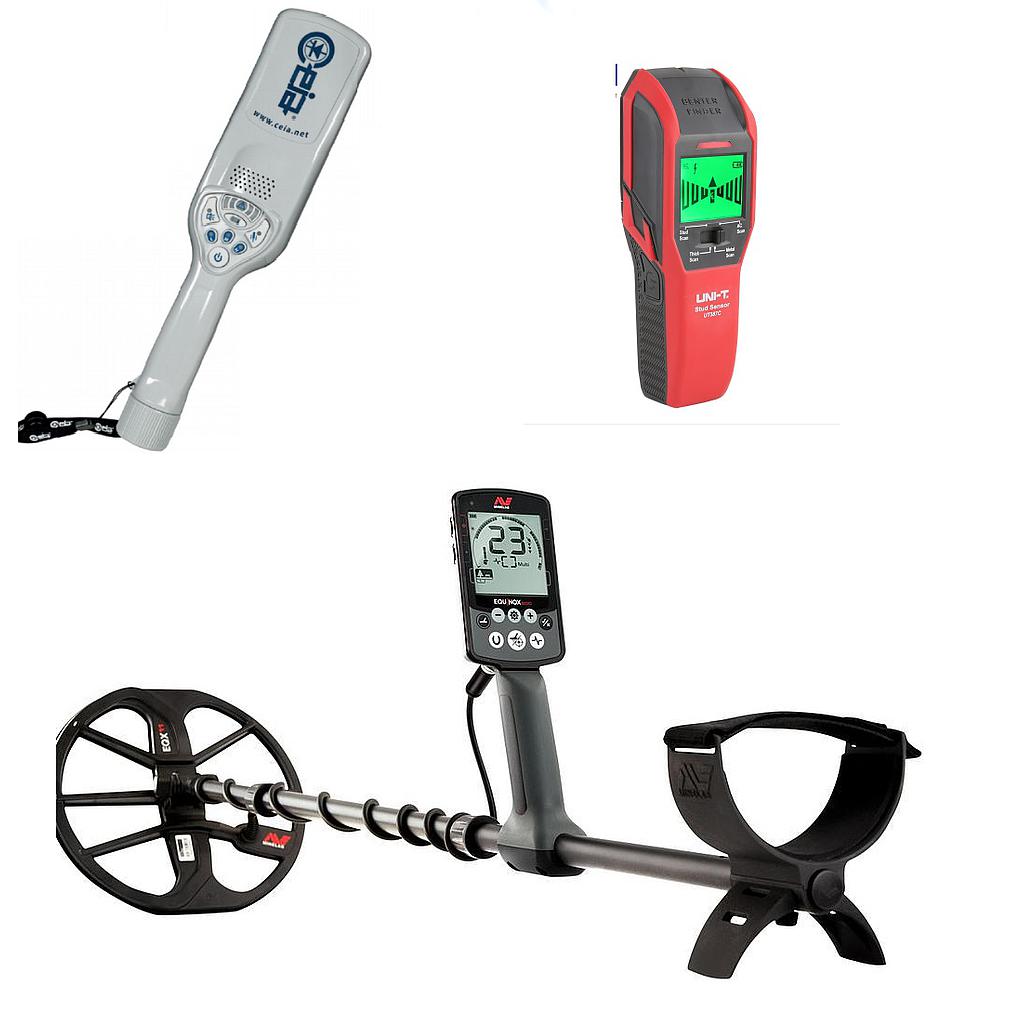
Understanding the scope of metal detection equipment
Metal detection systems are used for more than finding buried objects. In practice, they support several common tasks: identifying conductive targets underground, tracing hidden lines, checking walls and structures before drilling, and screening people or items for prohibited metal objects. The operating principle varies by application, but the goal is the same: reliable target detection with enough selectivity to reduce unnecessary excavation, rework, or manual inspection.
Within this category, users may encounter search detectors for coins, relics, or jewelry, handheld security units for personnel checks, and wire or cable locators for electrical and utility work. That variety makes it important to compare equipment by use case rather than by brand alone.
Common application areas
In maintenance and infrastructure work, cable locators help technicians identify energized or de-energized lines before cutting, drilling, or repair. Tools such as the Chauvin Arnoux CA 6683 LOCAT Cable Locator and the FLUKE FLUKE-2062 Advanced Pro Wire Tracer Kit illustrate how signal transmitters and receivers are used to trace hidden routes and reduce the risk of damaging installed wiring.
For field detection, portable search units are often chosen for locating coins, jewelry, relics, or general metallic targets in soil and mixed terrain. Models such as the MINELAB VANQUISH 340, MINELAB VANQUISH 540 Pro-Pack, and MINELAB MANTICORE show the range from straightforward entry-level searching to more advanced multi-mode operation for variable ground conditions.
Security screening is another major segment. Compact handheld units such as the CEIA PD140E Security Metal Detector are intended for controlled access points, event screening, and routine inspection tasks where fast response and operator mobility are important. If you are comparing manufacturer ecosystems, it may also be useful to browse CEIA detection equipment or MINELAB products for a broader view of available platforms.
How detection technologies affect performance
Not every detector behaves the same in the field. Search detectors can differ in operating frequency strategy, target identification logic, audio feedback, and sensitivity control. In practical use, this affects how well the device separates wanted targets from surrounding metal clutter, how stable it remains in difficult ground, and how easily the user can interpret the result.
For example, several MINELAB models in this category use multi-frequency operation, which is often valuable when users need flexibility across parks, fields, or beach environments. Dedicated pinpointers such as the MINELAB PRO-FIND 40 and MINELAB PRO-FIND 20 serve a different role: they do not replace a primary detector, but help narrow the target location once the search area has already been identified.
Wire tracing and cable locating tools rely on another logic entirely. Instead of searching for a metallic object by response alone, these instruments typically inject or follow a signal to determine a route, identify a conductor, or isolate a buried path. For electrical troubleshooting and utility tracing, that distinction is critical.
Key selection criteria for professional buyers
A useful way to compare options is to begin with the target environment. Open-field searching, beach use, building inspection, and indoor security checkpoints each place different demands on the instrument. Waterproof construction, adjustable sensitivity, battery runtime, display readability, and accessory compatibility may matter more than headline product names.
Another important factor is the balance between simplicity and control. A straightforward detector may be ideal for occasional use or standardized screening workflows, while advanced users may prefer broader adjustment of search modes, tone response, and discrimination behavior. Equipment such as the MINELAB X-TERRA PRO, MINELAB X-TERRA ELITE, and MINELAB X-TERRA ELITE EXPEDITION demonstrates how some platforms are designed for users who want more flexibility without moving into a completely different class of instrument.
For utility and electrical work, pay closer attention to safety category, energized versus de-energized tracing capability, and how clearly the receiver presents signal strength. In those cases, product families from FLUKE and Chauvin Arnoux are often considered when the priority is structured troubleshooting rather than ground target recovery.
Examples of products in this category
This category includes both primary instruments and supporting accessories. The CEIA 64614 Belt Holster, for example, is not a detector by itself but an accessory intended for compatible handheld security models such as the PD140 series. Accessories like this are relevant in professional workflows because they affect operator comfort, readiness, and day-to-day deployment efficiency.
Among field search products, the MINELAB VANQUISH series is suitable for users looking for accessible controls and portable operation, while the MINELAB MANTICORE sits at a more advanced end of the range with broader operating options. The PRO-FIND pinpointers complement larger detectors by improving final target recovery speed and reducing unnecessary digging.
Meanwhile, the Chauvin Arnoux CA 6683 LOCAT and FLUKE-2062 kit represent the diagnostic side of the category, where the goal is not treasure hunting or screening but line tracing and hidden path identification. This distinction is especially relevant for industrial buyers who may otherwise compare unlike tools.
Choosing the right setup for your workflow
If your work involves facility maintenance, renovation, or electrical troubleshooting, a cable locator or wire tracer is usually more appropriate than a general underground detector. These tools are designed to help identify routes and conductors with greater procedural clarity, especially where hidden infrastructure must be mapped before intervention.
If the job is search and recovery, detector ergonomics, ground adaptability, and target feedback become more important. A collapsible shaft, manageable weight, clear display, and suitable search modes can significantly improve efficiency during long sessions. Where accurate final pinpointing is required, pairing a main detector with a handheld pinpointer can create a more efficient workflow than relying on one tool alone.
For security applications, compact handheld detectors prioritize quick scanning, portability, and consistent alarm signaling. In these settings, ease of training and repeatable use often outweigh advanced field-search features.
Why category-level comparison matters
A broad category page helps buyers compare solution types before narrowing down to a specific model. That is especially useful when the same purchasing team may need equipment for different departments, such as security screening at entrances, buried cable tracing for maintenance crews, and portable metal search tools for field operations.
By reviewing the available range together, it becomes easier to separate search detectors, security handheld units, and technical locators by task, not just by appearance. This reduces mismatch during procurement and helps ensure the selected equipment fits the real operating conditions.
Final considerations
The right metal detection equipment depends on what you need to locate, where you need to locate it, and how the result will be used in the workflow. Some applications require rapid screening, others require signal-based tracing, and others depend on accurate target recovery in variable terrain.
Exploring this category with those use cases in mind makes product comparison more practical and more accurate. Whether the requirement is utility tracing, portable security inspection, or underground target detection, a well-matched instrument will deliver better usability and more dependable results over time.
Types of Metal Detector (230)
-
-
-
-
-
-
-
-
-
-
-
-
-
-
-
-
-
-
-
-
-
-
-
-