


Explosive/Liquid Detector
Security screening often requires more than a visual check. In facilities such as airports, government buildings, logistics hubs, public venues, and critical infrastructure sites, explosive and liquid detection equipment helps teams assess suspicious items, containers, mail, baggage, or concealed threats with greater confidence and speed.
Explosive/Liquid Detector solutions in this category are relevant for organizations that need to strengthen inspection workflows without relying on guesswork alone. Depending on the operating environment, these tools may be used as part of a layered screening process alongside other inspection technologies and established security procedures.
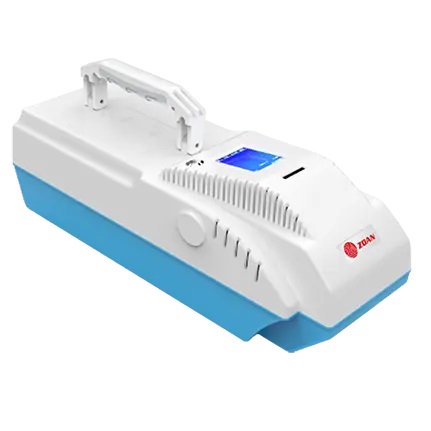
Where explosive and liquid detection equipment is used
The need for detection technology varies by site and risk profile. Some users focus on checkpoint screening for bags, parcels, and carried items, while others need field-capable equipment for search operations, perimeter control, or technical inspection work. In all cases, the goal is to improve threat detection while keeping operations manageable for security staff.
Common application areas include transportation terminals, border control, event security, correctional facilities, embassies, military environments, and high-security commercial buildings. In broader screening systems, explosive and liquid detection can also complement tools such as X Ray Baggage Scanner equipment when operators need additional verification beyond image-based inspection.
How this category fits into a layered security approach
No single device covers every threat scenario. That is why many buyers evaluate this category as one part of a wider security ecosystem that may also include under-vehicle inspection, baggage scanning, and specialized search tools. The right setup depends on whether the priority is checkpoint throughput, field mobility, technical search sensitivity, or inspection depth.
For example, sites with vehicle access controls may combine explosive screening procedures with UVSS systems to improve inspection coverage at entry points. Environments with a broader counter-surveillance requirement may also review related tools in bug and spy detection equipment, especially where security teams handle multiple inspection tasks.
Representative detection technologies and system formats
This category can involve several operating formats, from portable hand-carried devices to vehicle-based or stationary systems. In practice, buyers often compare portable screening devices, larger-area search systems, and platform-based detection equipment based on where and how the inspection will be performed.
The products highlighted here from Ebinger illustrate that range well. Compact tools such as the Ebinger MAILEX® 10 Metal Detector /Mail Scanner are suited to controlled inspection of mail and small items, while systems like the Ebinger VEMOS® 4K Vehicle Based Large Loop Detector address larger search areas and more demanding field conditions. More advanced platforms such as the Ebinger UPEX® 745 DF Advanced TDEM Pulse Induction System and Ebinger UPEX® 745 P²I Stationary PI-System show how specialized electromagnetic methods may be used in technical detection workflows.
What to consider when selecting an explosive or liquid detector
The first decision is usually based on the operating scenario. A fixed checkpoint has very different requirements from mobile field screening or inspection in harsh outdoor environments. Buyers should review whether the device needs to be battery powered, easy to transport, suitable for long operating periods, or capable of integrating into a larger technical survey process.
Another key point is the balance between sensitivity, coverage, and practicality. A highly mobile instrument may be ideal for quick inspection of specific items, while large-frame or vehicle-based systems are better suited to covering more ground. Battery runtime, weight, deployment speed, signal display method, and working temperature range all affect day-to-day usability, especially for teams operating over long shifts or in demanding climates.
Examples of equipment roles within the category
Some products are optimized for focused inspection. The Ebinger MAILEX® 10, for instance, is clearly positioned around mail screening, which can be important in facilities that process incoming correspondence or parcels. This type of equipment supports targeted checks where suspicious enclosures or metallic components may need closer evaluation.
Other systems support more specialized search tasks. The Ebinger VEMOS® AIR Airborne Detection Technology and VEMOS® 4K platform reflect use cases where area coverage and data-oriented field deployment matter more than simple handheld portability. Likewise, models such as the UPEX® 740 MF-3 PI Detection System and UPEX® 745 DF indicate a move toward advanced pulse induction or transient electromagnetic methods for users who need deeper technical capability rather than routine checkpoint screening alone.
Operational factors that matter in real deployments
In B2B procurement, performance is only part of the decision. Security managers also need to think about training requirements, ease of setup, transport logistics, maintenance expectations, and how clearly the equipment presents results to operators. A system that performs well in theory may still be difficult to use if it is too complex for the team or too slow for the site’s screening flow.
Environmental conditions are equally important. Several featured products indicate broad operating temperature ranges, battery-based operation, and portable or field-deployable construction. These details matter for outdoor checkpoints, temporary security operations, and organizations that must move equipment between locations without sacrificing reliability.
Choosing the right category fit for your security workflow
When comparing products in this section, it helps to start with the inspection target: mail, carried items, liquids, suspect objects, open-area search, or larger technical detection tasks. From there, narrow the options by deployment format, runtime, operator workflow, and the level of sensitivity or coverage required. This makes it easier to distinguish between compact screening tools and more advanced survey-oriented systems.
If the application extends beyond this category, it may also be worth reviewing other security equipment that supports broader site protection strategies. That wider view is often useful for organizations building a complete inspection and response process rather than purchasing a single device in isolation.
Final considerations
Explosive and liquid detection equipment plays an important role in modern security operations, especially where risk assessment, controlled access, and suspicious-item screening are part of daily work. The products in this category reflect different inspection approaches, from compact mail scanning to advanced field and area detection platforms.
For the best fit, focus on the real operating conditions, the type of threat screening required, and how the device will be used within your broader security procedure. A well-matched solution is not simply the most advanced one on paper, but the one that aligns with your site, your operators, and your inspection objectives.
-
-
-
-
-
-
-
-
-
-
-
-
-
-
-
-
-
-
-
-
-
-
-
-