


UVSS
Inspecting the underside of a vehicle is a critical step in perimeter security, access control, and threat screening. In many sites, the area below cars, vans, trucks, or service vehicles can become a blind spot if inspection relies only on mirrors or a quick visual check. That is why UVSS solutions are widely used in security operations that need faster, clearer, and more repeatable under-vehicle inspection.
On this page, you can explore equipment used to support under-vehicle screening in practical field conditions. The category is relevant for checkpoints, government facilities, logistics hubs, industrial plants, transport infrastructure, and other environments where security teams need a reliable way to inspect hard-to-see vehicle areas without slowing operations more than necessary.
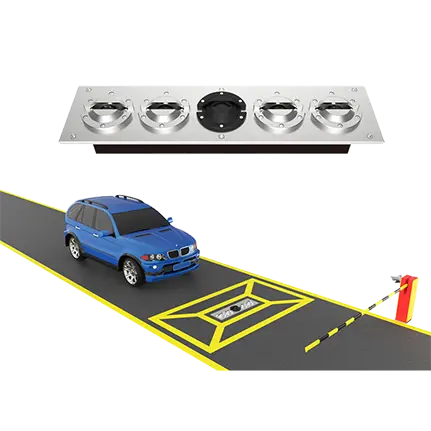
What UVSS is used for in security inspection
Under Vehicle Surveillance Systems are designed to help operators inspect the underside of vehicles for suspicious objects, tampering, hidden packages, or structural anomalies. In day-to-day use, this can support routine screening at entrances as well as more focused inspection when a vehicle requires additional checks.
The main value of UVSS equipment is improved visibility in areas that are difficult to inspect directly. Depending on the operational setup, teams may use portable visual tools, camera-based systems, or integrated inspection workflows alongside other screening technologies. This helps reduce dependence on incomplete line-of-sight checks and supports a more consistent inspection process.
Where under-vehicle inspection equipment is commonly applied
UVSS is relevant wherever vehicle access needs to be monitored with greater control. Common use cases include secure facility entrances, event security, customs and border environments, parking access points, cargo handling areas, and critical infrastructure sites. In these settings, inspection speed matters, but so does the ability to identify irregularities before a vehicle enters a sensitive zone.
In many real-world deployments, under-vehicle inspection is only one part of a broader security workflow. Facilities may combine it with screening tools such as X Ray Baggage Scanner systems for carried items or parcel inspection, especially where both vehicle traffic and visitor traffic need to be controlled within the same checkpoint design.
Portable and visual inspection tools in the UVSS ecosystem
Not every security site needs a fully fixed installation. Portable visual inspection tools can be a practical option for mobile teams, temporary checkpoints, maintenance-related inspections, or facilities where vehicle throughput does not justify a larger system. In these cases, a videoscope or inspection camera can help operators view confined or obstructed spaces more clearly.
One representative example in this category is the Ebinger EFIS® V Videoscope. As a field inspection device, it supports visual access to difficult areas and can fit into inspection routines where mobility, battery operation, and direct image display are important. For buyers evaluating portable options, the broader Ebinger range may be relevant when looking for specialized security inspection equipment.
Key factors to consider when choosing UVSS equipment
The right choice depends heavily on inspection workflow rather than on a single feature. Buyers typically compare factors such as portability, image visibility, reach, operating time, ease of deployment, and suitability for the vehicle types being checked. A compact portable device may be enough for occasional inspection, while higher-throughput checkpoints often need a more structured inspection setup.
It is also important to think about the operating environment. Lighting conditions, weather exposure, available power, required inspection distance, and whether operators need to record or review images can all affect the selection. For sites that handle mixed threats, UVSS may also sit alongside tools like explosive and liquid detection equipment as part of a layered screening process.
Why image quality and accessibility matter during under-vehicle checks
In under-vehicle inspection, a clear image is more useful than a long list of specifications taken out of context. Operators need to distinguish shapes, surfaces, attachments, and irregular details in a space that is often dark, narrow, and visually cluttered. A system that improves access to these areas can support faster decision-making and reduce the chance of missing obvious visual indicators.
Accessibility is just as important as image output. Telescopic reach, handheld usability, battery-powered operation, and screen readability can all influence whether a device is practical in the field. For portable inspection tasks, these characteristics often matter more than headline numbers alone because the equipment must work reliably in real checkpoint conditions, not just on paper.
How UVSS fits into a wider security screening strategy
Under-vehicle inspection is most effective when it is integrated into a broader security routine. Operators may first conduct identity and access checks, then perform vehicle screening, and escalate to additional inspection if something unusual is found. This creates a more structured process and helps security teams allocate time and attention where risk is higher.
Depending on the site, UVSS may be complemented by counter-surveillance tools, access barriers, or specialized detection equipment. For example, facilities concerned about covert threats in offices or meeting spaces may also review bug and spy detection devices for a different part of their security program. The categories are distinct, but both support the same goal of improving visibility where threats can remain hidden.
Evaluating a UVSS category for practical procurement
When sourcing from a UVSS category, it helps to focus on use case, operator workflow, and deployment constraints. A security manager may prioritize repeatable checkpoint inspection, while a field team may need lightweight equipment that can be carried and used across multiple locations. Procurement decisions are usually stronger when they start from the inspection scenario rather than from isolated technical terms.
This category is therefore best viewed as part of a practical inspection toolkit. Whether the requirement is a portable visual aid or equipment that supports more systematic under-vehicle screening, the goal remains the same: improve visibility, support operator judgment, and make vehicle inspection more controlled and consistent in security-sensitive environments.
Choosing UVSS equipment is ultimately about matching inspection capability to risk level, traffic volume, and field conditions. If you are comparing options for under-vehicle checks, start by defining how vehicles are screened on site, what level of visibility operators need, and whether portability or fixed-process efficiency matters more for your application.
-
-
-
-
-
-
-
-
-
-
-
-
-
-
-
-
-
-
-
-
-
-
-
-