


Sensors and Transducers
Accurate sensing is the foundation of reliable automation, process control, and embedded design. Whether you are monitoring humidity in electronics, tracking temperature in a compact assembly, or building a broader measurement system, choosing the right Sensors and Transducers category helps narrow down technologies that convert physical conditions into usable electrical signals.
This category brings together components used across industrial equipment, HVAC systems, environmental monitoring, machine design, and OEM product development. It is especially relevant when design teams need stable signal output, suitable packaging, and a practical path from prototype to production.
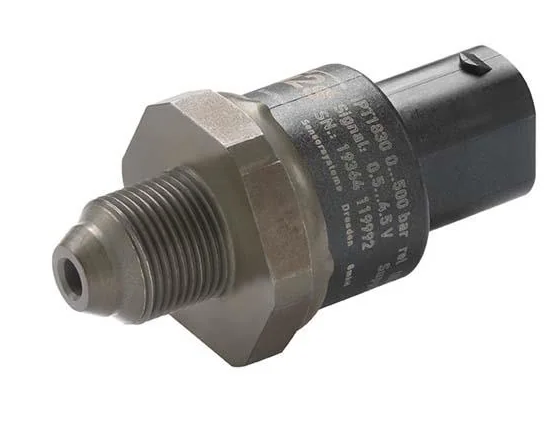
Where sensors and transducers fit in industrial and electronic systems
In technical purchasing and engineering workflows, sensors and transducers are often selected not as isolated parts, but as part of a complete measurement chain. A sensor detects a physical variable such as humidity, temperature, pressure, flow, or level, while the transducer function converts that change into an electrical output that controllers, PLCs, data loggers, or embedded boards can interpret.
This makes category-level selection important. Buyers may begin with a broad requirement such as environmental monitoring or machine condition tracking, then refine the choice based on signal type, mounting style, package format, response requirements, and operating environment. For projects involving ambient or enclosure monitoring, environmental and humidity-oriented devices are often an efficient starting point.
Common applications for humidity and environmental sensing
Humidity measurement is widely used in applications where air quality, condensation risk, or process stability must be controlled. Examples include HVAC equipment, indoor climate monitoring, storage systems, medical and laboratory equipment, consumer appliances, and industrial cabinets containing sensitive electronics.
In many of these cases, engineers do not need a generic part list; they need devices that match the design architecture. A digital humidity and temperature sensor can simplify integration into microcontroller-based systems, while a more traditional humidity sensing element may be suitable for custom signal-conditioning circuits or service replacement needs.
Typical product options found in this category
Several representative products in this category illustrate the range of approaches available. The Amphenol EHRH-2-I-F-1 humidity sensor is an example of a dedicated humidity sensing component that can support compact environmental measurement designs.
For applications requiring integrated humidity and temperature data, Honeywell offers multiple digital serial options in the HIH series. Models such as the HIH9131-021-001S, HIH9130-021-001S, HIH9130-021-001, and HIH9120-021-001S are relevant when designers want a combined sensing solution with digital communication such as I2C. Other variants, including the HIH9130-000-001S, are suited to designs that prefer SPI communication.
This category also includes more conventional humidity sensing products such as Honeywell 2455 02720001, 3100 01280005, 112-201BAJ-H01, and 3100-01080013. These parts may be of interest in legacy equipment support, replacement scenarios, or designs using discrete analog signal-processing methods rather than digital interfaces.
How to choose the right sensor for your design
A practical selection process usually starts with the measured variable and the system interface. If the design must read both humidity and temperature in one location, an integrated device can reduce board space and simplify calibration strategy. If the application already includes a dedicated temperature measurement path, a standalone humidity sensor may be enough.
Next, evaluate the electrical and mechanical integration requirements. Communication method matters: digital serial sensors are often preferred in embedded systems because they reduce analog noise concerns and simplify controller integration. Package style also matters, especially when comparing compact surface-mount options with through-hole or SIP-style parts intended for easier assembly or specific airflow positioning.
Environmental conditions should also be reviewed carefully. Exposure to condensation, temperature cycling, restricted airflow, dust, or chemically aggressive atmospheres can influence sensor placement and long-term stability. In industrial cabinets or closed enclosures, placement is often just as important as the sensor itself.
Digital versus discrete sensing approaches
One of the most useful distinctions in this category is the difference between digital humidity/temperature sensors and more basic sensing elements. Digital devices typically provide a ready-to-use output for direct connection to control electronics, making them attractive for OEM products, IoT nodes, and compact monitoring assemblies.
Discrete or traditional humidity sensors can still be the better fit where engineers want greater flexibility in signal conditioning, already have an established analog frontend, or need a replacement component for an existing design. The best choice depends less on trend and more on system architecture, maintenance strategy, and total integration effort.
Working with established manufacturers
Manufacturer choice can affect documentation quality, lifecycle planning, and consistency across production builds. Within this category, Honeywell appears prominently in humidity and combined humidity/temperature sensing, while Amphenol is also represented with dedicated humidity sensor options.
At a broader category level, engineers may also evaluate solutions from suppliers such as 3M, Adafruit, Alps Alpine, Banner Engineering, Dwyer, Endress+Hauser, Festo, and Honeywell Test & Measurement depending on the sensing task and system environment. The right brand is usually the one that matches the application requirements, preferred form factor, and integration workflow rather than simply the widest catalog.
Selection considerations for B2B procurement teams
For procurement and technical sourcing teams, category pages like this are most useful when they support quick filtering between sensing methods and application needs. Beyond the sensor specification itself, buyers often need to align availability, approved manufacturer lists, assembly compatibility, and long-term maintenance planning.
It is also helpful to think in terms of platform continuity. If your design roadmap may later expand into adjacent measurement needs, it can be useful to review related sensing technologies such as temperature sensors, pressure sensing devices, or environmental sensors for broader system coverage. This approach supports more consistent architecture decisions across product families and machine variants.
Building a more reliable sensing strategy
The value of a well-selected sensor goes beyond basic measurement. It influences control accuracy, alarm reliability, maintenance intervals, and even end-user confidence in the equipment. In humidity-sensitive applications, a poor match can lead to unstable readings, slow response, or avoidable design revisions.
By comparing interface type, package style, measured variables, and application conditions, engineers can use this category as a practical starting point for both new development and replacement sourcing. For teams working on environmental monitoring, embedded control, or industrial automation, this selection of sensors and transducers helps connect measurement needs with real-world implementation requirements.
Types of Sensors and Transducers (78,900)
- Color Sensors (1)
- Environmental Sensors (3,088)
- Flow sensors & pitot tubes (863)
- Level sensor (1,772)
- Load cell (2,747)
- Pressure sensor (29,532)
- Temperature sensor (40,897)
-
-
-
-
-
-
-
-
-
-
-
-
-
-
-
-
-
-
-
-
-
-
-
-