


Environmental Sensors
Reliable monitoring starts with knowing what is happening in the surrounding air, water, or process environment. In industrial systems, building automation, electronics, and laboratory setups, environmental sensing helps teams track conditions that affect safety, product quality, equipment life, and process stability. This category brings together devices used to measure key ambient and process-related variables in a practical, component-focused way.
Environmental Sensors are used across a wide range of applications, from compact board-level designs to larger industrial monitoring systems. Depending on the task, users may need to detect humidity, temperature, water quality parameters, smoke, or other environmental conditions. The right selection depends not only on what must be measured, but also on installation method, signal interface, response expectations, and the operating environment.
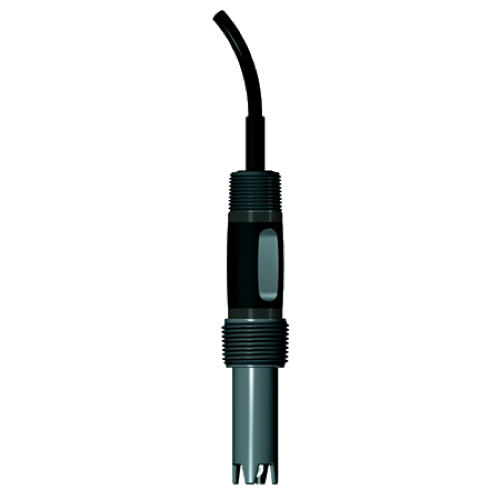
Where environmental sensors are commonly used
Environmental sensing is relevant anywhere conditions can change and influence performance or compliance. Typical use cases include HVAC systems, industrial cabinets, control panels, warehouse monitoring, electronics thermal management, laboratory instruments, and embedded devices that need local condition feedback.
In broader sensing architectures, these products often work alongside devices such as flow sensors and pitot tubes or level sensors when a system must monitor multiple process variables at once. This makes environmental sensing an important part of integrated control, data logging, and preventive maintenance strategies.
Key measurement types within this category
This category covers several sensing needs rather than a single device type. For many buyers, the first distinction is between air-related measurements such as humidity, temperature, and smoke detection, and liquid/process measurements such as pH, ORP, EC/TDS, dissolved oxygen, turbidity, or chlorine-related monitoring.
Humidity and temperature devices are especially common in electronics and compact equipment. They help control condensation risk, overheating, calibration drift, and environmental stability. Other products in the category are better suited to water treatment, laboratory analysis, or industrial liquid monitoring, where the goal is to evaluate chemical or physical conditions continuously and support more accurate process decisions.
Board-level and embedded sensing options
For OEM design, control boards, and compact monitoring hardware, board-mount sensors are often the most practical choice. These components are selected when engineers need direct integration onto a PCB and want a defined electrical output that can be read by a controller, data acquisition module, or embedded processor.
Examples from this category include the Amphenol EHRH-2-I-F-1 humidity sensor and several devices from Analog Devices, such as the AD7415ARTZ-0 digital temperature sensor and TMP37 series temperature sensors. In this type of design, selection usually revolves around output format, package style, supply voltage compatibility, and how easily the sensor can be incorporated into the overall electronics architecture.
Analog or digital output: how to choose
One of the most practical selection points is the sensor output. Analog output sensors are often preferred in simple designs or when the control hardware already includes analog input channels. They can be straightforward to implement, but signal quality, scaling, and noise handling should be considered carefully in the circuit design.
Digital output sensors are often chosen when consistent data transfer, easier interfacing, or multi-device communication is important. Devices in the product range include serial and 2-wire options that can fit embedded systems well. For example, the Analog Devices AD7418ARM-REEL and AD7415ARTZ-0 are relevant to applications where compact digital temperature measurement is required, while TMP37 variants are useful when an analog voltage output better suits the design.
Manufacturer ecosystem and product examples
This category includes products from recognized suppliers used in electronic and industrial applications. Amphenol appears in the category with humidity sensing solutions suitable for integration into broader monitoring systems, while Analog Devices is represented by several temperature and humidity-related components commonly used in board-level designs.
Representative items include the Analog Devices TMP37GS and TMP37FT9 for analog temperature measurement, along with ADM1030ARQ, ADM1031ARQ, ADM1032ARZ-REEL, ADM1034ARQ-REEL7, ADT7519ARQ, and ADM1027ARQZ-REEL as examples of humidity or environment-related sensing components listed in this category. Rather than focusing only on model names, buyers should evaluate which devices align with interface requirements, packaging constraints, and the environmental conditions of the end application.
How to evaluate environmental sensors for your application
A good starting point is to define the medium and measurement goal clearly. Measuring ambient humidity in an enclosure is very different from monitoring dissolved oxygen or pH in a process liquid. Once the variable is clear, it becomes easier to narrow down the sensing principle, installation style, and expected system integration path.
From there, review practical factors such as electrical interface, mounting method, supply voltage, maintenance expectations, and whether the sensor will be used for indication, closed-loop control, logging, or alarm generation. In some systems, environmental monitoring is combined with broader condition tracking using products from related categories such as load cell solutions or color sensors, depending on the process being monitored.
Why category-level comparison matters
Environmental sensing requirements vary widely, and not every project needs the same device form factor or measurement method. A category page like this is useful because it lets buyers compare component-style sensors, embedded options, and process-oriented devices within one broader context before moving into a more specific subcategory.
This is especially helpful for engineers and procurement teams who are still defining the sensing architecture. Instead of selecting by name alone, they can assess whether the project calls for a compact PCB sensor, an industrial field device, or a more specialized environmental measurement technology tied to water quality, air monitoring, or equipment protection.
Finding the right fit for stable monitoring
Choosing environmental sensors is ultimately about matching the sensing method to the operating conditions and the control strategy. Whether the priority is humidity tracking inside electronics, temperature feedback for embedded systems, or broader process monitoring, the best result usually comes from balancing measurement purpose, interface compatibility, and installation constraints.
By comparing suitable products from manufacturers such as Amphenol and Analog Devices within this category, buyers can narrow their options more efficiently and move toward a sensor setup that supports reliable data, easier integration, and better long-term system performance.
Types of Environmental Sensors (3,088)
- Board Mount Humidity Sensors (672)
- Chlorine Sensors (23)
- DO sensors (124)
- EC/TDS Sensors (263)
- Free Ion Sensors (77)
- Industrial Humidity Sensors (139)
- ORP sensors (78)
- pH Sensors (433)
- Smoke Detectors (82)
- SS, MLSS sensors (14)
- TBD Turbidity Sensors (38)
-
-
-
-
-
-
-
-
-
-
-
-
-
-
-
-
-
-
-
-
-
-
-
-