


Chlorine Sensors
Reliable chlorine measurement is essential anywhere water quality must be controlled continuously, from drinking water and pool systems to process water treatment and disinfection loops. Choosing the right sensing method helps operators maintain target residual levels, protect downstream equipment, and avoid under- or over-dosing chemicals. This category brings together Chlorine Sensors used for online monitoring of free chlorine, total chlorine, and related chlorine-based parameters in industrial and environmental applications.
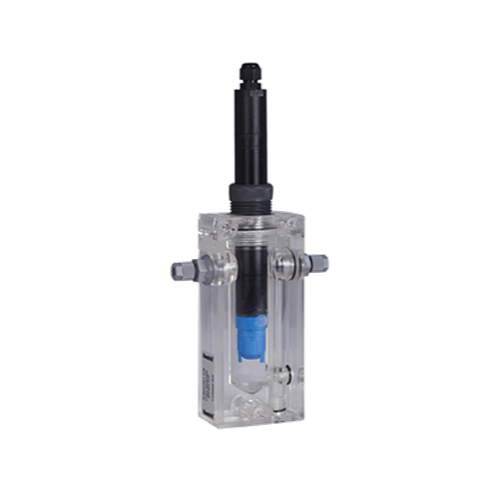
Where chlorine sensors are used
In practical water treatment, chlorine is monitored to verify that disinfection is effective while still keeping the process within the required operating window. Typical installations include potable water systems, swimming pools, utility water, and other treatment processes where residual chlorine must be tracked in real time rather than checked only by manual spot testing.
Chlorine measurement also fits into a broader water quality instrumentation setup. In many plants, it is evaluated alongside parameters such as turbidity sensors and dissolved oxygen sensors, depending on the treatment stage and process objective.
Understanding the main measurement types
Not all chlorine instruments are intended to measure the same thing. Some models focus on free chlorine, which is often the key parameter for disinfection control. Others are designed for total chlorine, while some related sensors are built for chlorine gas detection or for compounds such as chlorine dioxide and ozone in specialized applications.
This distinction matters during selection. For example, the Jumo tecLine Cl2 Sensor is intended for free chlorine measurement, while the Jumo tecLine TC Sensor addresses total chlorine. In gas monitoring applications, the SENKO SS2168 Chlorine Gas Sensor is suited to chlorine gas detection rather than dissolved chlorine in water, so the installation environment and process medium should be confirmed before choosing a device.
Product examples across different applications
Several solutions in this category illustrate how chlorine monitoring can vary by range, output, and installation style. The OMEGA FCLTX-102, FCLTX-105, and FCLTX-110 models cover different free chlorine ranges, making them relevant when the expected residual level is known in advance. Their 4-20 mA output and flow-cell based use are well suited to continuous process integration.
The SENSOREX FCL505 chlorine sensor is another example for online free chlorine monitoring, with integrated temperature compensation and a 4-20 mA signal for connection to control systems. For digital communication needs, the Probest PDCL-400A Digital Residual Chlorine Online Analyzer offers MODBUS RS485, which can be useful where data acquisition or networked monitoring is part of the system architecture.
There are also compact solutions for lower concentration ranges. The Meinsberg CL4 chlorine sensor is positioned for water applications such as pool water and utility water, while Meinsberg MV3060 and MV3060-U transmitters show how sensors may be paired with signal conditioning and display hardware for panel-based monitoring.
Key selection factors before you order
The first step is matching the measurement range to the real operating condition. Some processes require low-level residual monitoring in the sub-mg/L to low ppm range, while others may need a broader span. Selecting a range that is too high can reduce useful resolution, while a range that is too narrow may lead to overload or unstable operation during process variation.
Next, review the process conditions around pH, temperature, pressure, and flow. Many online chlorine sensors depend on stable sample flow and are specified within a defined pH window. Cross sensitivity should also be considered, especially where bromine, ozone, or chlorine dioxide may be present, because these can influence the reading depending on sensor design.
Finally, consider the required output and integration method. Analog 4-20 mA remains common for PLC and transmitter inputs, while digital options such as RS485 can be preferable in modern monitoring systems. If your application needs a broader water analysis setup, it may also be useful to compare with related categories such as free ion sensors for complementary chemistry measurement.
Why output signal and system integration matter
A chlorine sensor is rarely used alone. In most industrial installations, it is part of a larger control loop that may include dosing pumps, analyzers, controllers, transmitters, alarms, and SCADA or PLC systems. Because of that, the electrical output format is not just a specification detail; it affects commissioning effort, compatibility, and long-term maintenance.
Analog sensors with 4-20 mA output are widely used because they are straightforward to integrate into process control hardware. Digital analyzers can add communication flexibility, configuration options, and easier data handling. Depending on the installation, a standalone sensor, a sensor with transmitter, or a complete online analyzer may each be the more practical choice.
Leading manufacturers in this category
This category includes products from established names used in industrial sensing and water quality instrumentation. Jumo provides chlorine-related sensors for free chlorine, total chlorine, and chlorine dioxide or ozone applications. OMEGA offers multiple free chlorine ranges for online process measurement, while SENSOREX and Probest provide solutions aimed at continuous residual chlorine monitoring.
For gas detection, SENKO is relevant where chlorine must be monitored in air rather than in liquid media. Meinsberg adds both chlorine sensors and transmitters, which is useful when the application requires a more complete measurement chain instead of only the sensing element. The right manufacturer choice typically depends less on brand preference alone and more on the measurement principle, interface, and process fit.
Common questions about chlorine sensors
Do all chlorine sensors measure the same parameter?
No. Some measure free chlorine in water, others measure total chlorine, and some are intended for chlorine gas or related oxidants. Always match the sensor type to the medium and target parameter.
Is 4-20 mA still a good choice for chlorine monitoring?
Yes. It remains a common option for industrial integration because it works well with PLCs, transmitters, and control panels. Digital communication may be preferable when networked data access is required.
What process conditions should be checked first?
Start with concentration range, pH, temperature, pressure, and sample flow. These factors strongly influence whether a given sensor can operate reliably in the intended installation.
Choosing a suitable chlorine sensing solution
A good selection starts with a clear view of what needs to be measured: free chlorine, total chlorine, chlorine gas, or a related oxidizing disinfectant. From there, range, output signal, installation method, and compatibility with the process environment become the main decision points. Taking time to align these factors usually leads to more stable measurements and simpler integration.
Whether you need a compact online sensor, a digital analyzer, or a sensor-and-transmitter combination, this category is designed to support chlorine monitoring across a range of water treatment and industrial applications. If your system also tracks other water quality parameters, reviewing adjacent technologies such as suspended solids or dissolved oxygen can help build a more complete measurement strategy.
-
-
-
-
-
-
-
-
-
-
-
-
-
-
-
-
-
-
-
-
-
-
-
-