


pH Sensors
Accurate pH measurement is a basic requirement in water treatment, process control, laboratory work, food production, and environmental monitoring. The right sensor helps operators maintain product quality, stabilize treatment performance, and reduce troubleshooting caused by drift, contamination, or incorrect probe selection. On this page, you can explore pH sensors used for both portable measurement and fixed installation, with options suited to different sample conditions and connection methods.
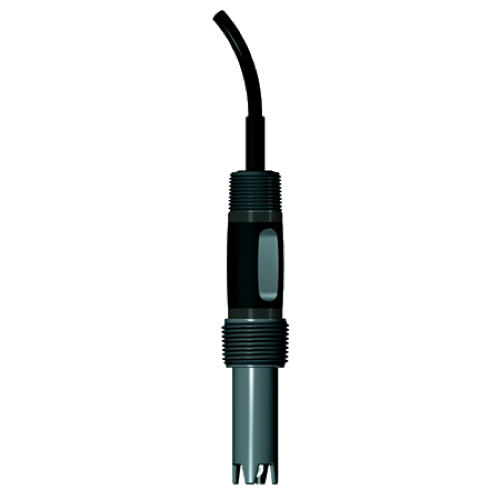
Where pH sensors are used
pH is one of the most important parameters in liquid analysis because it directly affects chemical balance, reaction efficiency, corrosion behavior, and biological activity. In practice, pH sensors are commonly selected for clean water, wastewater, chemical process streams, food samples, and field monitoring tasks where response stability matters just as much as measurement range.
Depending on the application, users may need a compact replacement electrode for a handheld meter, a rugged probe for immersion or in-line mounting, or a digital sensor for integration into a broader monitoring system. In many installations, pH measurement is used alongside DO sensors or chlorine sensors to build a more complete picture of water quality and treatment conditions.
Common pH sensor formats in this category
This category includes both conventional glass electrodes and specialized sensor designs for more demanding media. Standard glass pH electrodes remain widely used for general laboratory and field applications, while flat-surface designs are often preferred where fouling, coating, or difficult sample contact can reduce measurement reliability.
There are also digital process probes intended for continuous installation, as well as replacement sensor elements used in multiparameter systems. Some products in this category are reference electrodes or spare sensing modules rather than complete standalone instruments, so checking the intended role of the item is important before ordering.
Examples of pH sensors for different operating conditions
For general-purpose measurement with a BNC connection, the HANNA HI6100410 pH Electrode provides a practical option with a flat, non-fouling design and a broad 0 to 13 pH range. This type of sensor can be suitable when users need compatibility with meters that accept standard BNC input and want a probe form that is easier to use in coated or dirty samples.
Where continuous process measurement is required, the HANNA HI1006-3810 Process Digital pH Probe is an example of a sensor built for installation duties, with digital RS485 output and threaded mounting options for in-line or immersion setups. For higher-temperature applications, products such as the HANNA HI1006-3805 and Hana HI6101805 are more aligned with online process environments where temperature resistance and stable operation are key considerations.
For specialized sample matrices, application-specific electrodes can be more appropriate than general lab probes. The HORIBA 6252-10D pH Electrode is intended for food samples, while the HANNA HI5312 Reference Electrode is designed for samples with suspended solids. These examples show why sample characteristics matter: viscosity, suspended particles, coating tendency, and operating temperature all influence electrode behavior.
How to choose the right pH sensor
A good starting point is the measurement environment. Clean water, slurry-like media, food samples, and process chemicals place very different demands on the sensing surface, junction type, body material, and reference system. If the sample is prone to clogging or fouling, flat-tip or open-junction designs may be easier to maintain than a standard narrow glass bulb.
Next, confirm the electrical and mechanical interface. Some users need BNC connectivity for portable meters, while others need direct wire connection, integrated temperature sensing, or digital communication for controllers and transmitters. Installation style also matters: a handheld meter replacement electrode is selected differently from an in-line or immersion-mounted industrial probe.
Temperature and pressure should also be reviewed early in the selection process. Not every pH sensor is intended for elevated temperature, pressurized lines, or continuous duty. In water and wastewater systems, pH is frequently monitored together with turbidity sensors or SS and MLSS sensors, so compatibility with the wider measurement setup can simplify operation and maintenance.
Sensor construction details that affect performance
The sensing principle and electrode construction have a direct impact on service life and measurement stability. Many pH probes use a glass sensing element and a reference system such as Ag/AgCl, while some advanced designs use ISFET technology. An example is the HORIBA 0040N-10D pH Electrode, which uses an ion-sensitive field-effect transistor approach rather than conventional glass sensing.
Body material is another practical consideration. PVDF, glass, PEI, and polymer bodies are each suited to different handling conditions and process demands. Junction style, refillable or gel electrolyte design, integrated temperature sensor presence, and cable length also affect how easily a sensor can be deployed and maintained in the field or in a panel-based system.
Manufacturers commonly considered for pH measurement
This category brings together products associated with well-known instrumentation names used in environmental and process analysis. For buyers comparing brands, it can be useful to review broader product ecosystems from HANNA and HORIBA, especially when replacement probes, accessories, and meter compatibility are part of the purchasing decision.
Other recognized manufacturers in the wider pH and water analysis space include HACH, Jumo, Mettler Toledo, YOKOGAWA, TOA DKK, WTW, Lovibond, and Aqualabo. Selection usually depends less on brand name alone and more on application fit, installation method, signal type, and maintenance expectations over time.
Maintenance and replacement considerations
Even a high-quality pH sensor needs regular care to remain reliable. Drift, slow response, coating, damaged glass, junction contamination, and temperature stress are all common causes of poor readings. In continuous service, planned replacement intervals are often more efficient than waiting for complete failure, especially in critical control loops.
It is also important to distinguish between complete probes and spare parts. Items such as the HANNA HI7698194-0 Spare pH Sensor, HI7698194-1 Spare pH/ORP Sensor, or other replacement elements serve a specific role inside an existing measurement assembly. Choosing the correct replacement helps avoid compatibility issues and unnecessary downtime.
Finding a suitable pH sensor for your application
The best choice usually comes from matching the sensor to the sample, process conditions, and instrument interface rather than focusing on a single specification. Whether you need a general-purpose BNC electrode, a digital process probe, a food-oriented sensor, or a replacement element for an installed system, this category is intended to support a more accurate shortlist.
If your measurement point is part of a broader water analysis setup, it may also be useful to review related sensor types and confirm how pH data will be used in the overall process. A well-matched pH sensor improves measurement consistency, supports better maintenance planning, and helps keep environmental and industrial monitoring systems running with fewer interruptions.
-
-
-
-
-
-
-
-
-
-
-
-
-
-
-
-
-
-
-
-
-
-
-
-